


Gifting Made Simple
Give the Gift of ChoiceClick below to purchase a Prairie Mall eGift Card that can be used at participating retailers at Prairie Mall.Buy Gift CardHome
Writing Revolution: Aesthetics and Politics Hawthorne, Whitman, Thoreau
Coles
Loading Inventory...
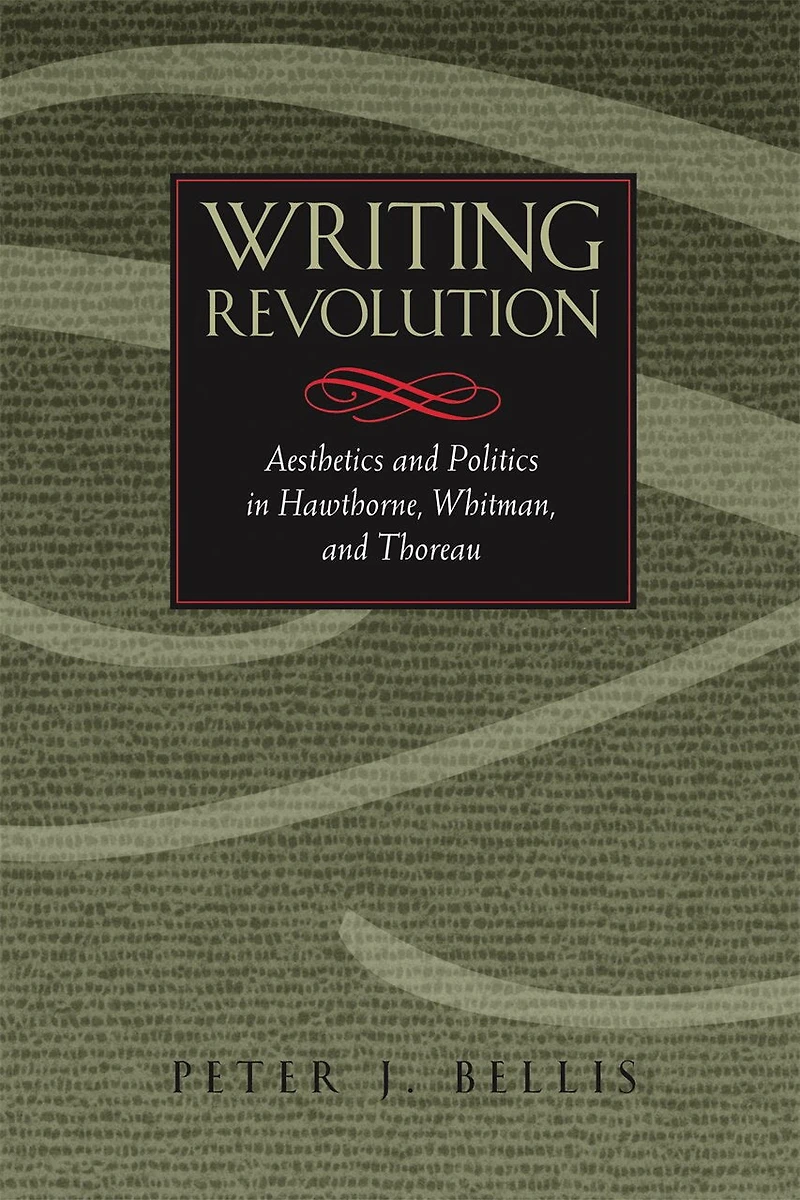
Writing Revolution: Aesthetics and Politics Hawthorne, Whitman, Thoreau in Grande Prairie, AB
Current price: $33.99
Original price: $42.01
Coles
Writing Revolution: Aesthetics and Politics Hawthorne, Whitman, Thoreau in Grande Prairie, AB
Current price: $33.99
Original price: $42.01
Loading Inventory...
Size: Kobo eBook
*Product information and pricing may vary - to confirm current pricing, availability, shipping, and return information please contact Coles. In the event of a pricing discrepancy, the retailer's price will apply.
In recent years, formalist and deconstructive approaches to literary studies have been under attack, charged by critics with isolating texts as distinctive aesthetic or linguistic objects, separate from their social and historical contexts. Historicist and cultural approaches have often responded by simply reversing the picture, reducing texts to no more than superstructural effects of historical or ideological forces. In Writing Revolution , Peter J. Bellis explores the ways in which literature can engage with-rather than escape from or obscure-social and political issues.
Bellis argues that a number of nineteenth-century American writers, including Nathaniel Hawthorne, Henry David Thoreau, and Walt Whitman, saw their texts as spaces where alternative social and cultural possibilities could be suggested and explored. All writing in the same historical moment, Bellis's subjects were responding to the same cluster of issues: the need to redefine American identity after the Revolution, the problem of race slavery, and the growing industrialization of American society.
Hawthorne, Bellis contends, sees the romance as "neutral territory" where the Imaginary and the Actual-the aesthetic and the historical-can interpenetrate and address crucial issues of class, race, and technological modernity. Whitman conceives of Leaves of Grass as a transformative democratic space where all forms of meditation, both political and literary, are swept away. Thoreau oscillates between these two approaches. Walden , like the romance, aims to fashion a mediating space between nature and society. His abolitionist essays, however, shift sharply away from both linguistic representation and the political, toward an apocalyptic cleansing violence.
In addition to covering selected works by Hawthorne, Whitman, and Thoreau, Bellis also examines powerful works of social and political critique by Louisa May Alcott and Margaret Fuller. With its suggestions for new ways of reading antebellum American writing, Writing Revolution breaks through the thickets of contemporary literary discourse and will spark debate in the literary community.
In recent years, formalist and deconstructive approaches to literary studies have been under attack, charged by critics with isolating texts as distinctive aesthetic or linguistic objects, separate from their social and historical contexts. Historicist and cultural approaches have often responded by simply reversing the picture, reducing texts to no more than superstructural effects of historical or ideological forces. In Writing Revolution , Peter J. Bellis explores the ways in which literature can engage with-rather than escape from or obscure-social and political issues.
Bellis argues that a number of nineteenth-century American writers, including Nathaniel Hawthorne, Henry David Thoreau, and Walt Whitman, saw their texts as spaces where alternative social and cultural possibilities could be suggested and explored. All writing in the same historical moment, Bellis's subjects were responding to the same cluster of issues: the need to redefine American identity after the Revolution, the problem of race slavery, and the growing industrialization of American society.
Hawthorne, Bellis contends, sees the romance as "neutral territory" where the Imaginary and the Actual-the aesthetic and the historical-can interpenetrate and address crucial issues of class, race, and technological modernity. Whitman conceives of Leaves of Grass as a transformative democratic space where all forms of meditation, both political and literary, are swept away. Thoreau oscillates between these two approaches. Walden , like the romance, aims to fashion a mediating space between nature and society. His abolitionist essays, however, shift sharply away from both linguistic representation and the political, toward an apocalyptic cleansing violence.
In addition to covering selected works by Hawthorne, Whitman, and Thoreau, Bellis also examines powerful works of social and political critique by Louisa May Alcott and Margaret Fuller. With its suggestions for new ways of reading antebellum American writing, Writing Revolution breaks through the thickets of contemporary literary discourse and will spark debate in the literary community.
You May Also Like









Find at Prairie Mall in Grande Prairie, AB
Visit at Prairie Mall in Grande Prairie, AB