


Gifting Made Simple
Give the Gift of ChoiceClick below to purchase a Prairie Mall eGift Card that can be used at participating retailers at Prairie Mall.Buy Gift CardHome
World Civilization: A Brief History
Coles
Loading Inventory...
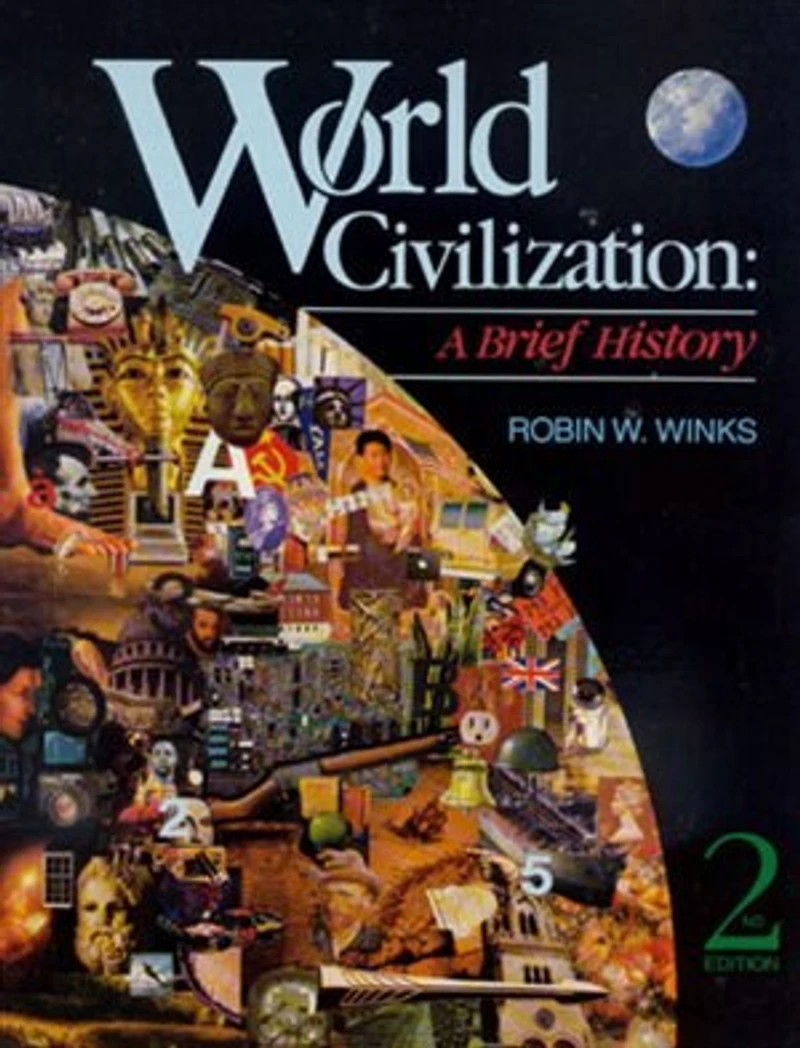
World Civilization: A Brief History in Grande Prairie, AB
Current price: $152.00
Coles
World Civilization: A Brief History in Grande Prairie, AB
Current price: $152.00
Loading Inventory...
Size: Paperback
*Product information and pricing may vary - to confirm current pricing, availability, shipping, and return information please contact Coles. In the event of a pricing discrepancy, the retailer's price will apply.
Robin W. Winks placed particular emphasis on those developments that most directly explain the nature of the modern world: social diffusion, group and national consciousness, technological change, religious identities-those aspects of intellectual history that have contributed most to our current dilemmas. In turn this means that there is more in World Civilization: A Brief History about nationalism, imperialism, or ethnic identities than there is about monarchies, feudalism, or diplomacy.
The result of the strategic and intellectual decisions made with respect to this textbook is that its proportions are not the customary ones. Particular emphasis is placed on the early origins of civilizations, on Greece and Rome, and on the period of the so-called barbarian invasions, because it is by studying these periods that students may best learn how societies are formed. Particular emphasis is also placed on the period from the French Revolution on, for it is the events of the last two hundred years that have most closely shaped our present condition.
This book can be read, straight through and in its entirety, as an interpretive statement about Western history written by a person who knew a good bit about non-Western history and who could thus throw into perspective the unusual, the commonplace, and the comparable in that sector of history conventionally labeled 'Western'.
The text draws on over thirty-five years of discovering, in the classroom, what students themselves wish to ask about the past rather than what a body of scholars may have concluded they should wish to ask.
Though this book is largely about Western civilization, it is also about world civilizations, for from the eighteenth century forward—and in many aspects of life, much earlier-the non-West has interacted with the West in such a way as to make it virtually impossible to separate one from the other when dealing at this level of generalization. As a teacher of the history of exploration and discovery, of imperialism and decolonizati
Robin W. Winks placed particular emphasis on those developments that most directly explain the nature of the modern world: social diffusion, group and national consciousness, technological change, religious identities-those aspects of intellectual history that have contributed most to our current dilemmas. In turn this means that there is more in World Civilization: A Brief History about nationalism, imperialism, or ethnic identities than there is about monarchies, feudalism, or diplomacy.
The result of the strategic and intellectual decisions made with respect to this textbook is that its proportions are not the customary ones. Particular emphasis is placed on the early origins of civilizations, on Greece and Rome, and on the period of the so-called barbarian invasions, because it is by studying these periods that students may best learn how societies are formed. Particular emphasis is also placed on the period from the French Revolution on, for it is the events of the last two hundred years that have most closely shaped our present condition.
This book can be read, straight through and in its entirety, as an interpretive statement about Western history written by a person who knew a good bit about non-Western history and who could thus throw into perspective the unusual, the commonplace, and the comparable in that sector of history conventionally labeled 'Western'.
The text draws on over thirty-five years of discovering, in the classroom, what students themselves wish to ask about the past rather than what a body of scholars may have concluded they should wish to ask.
Though this book is largely about Western civilization, it is also about world civilizations, for from the eighteenth century forward—and in many aspects of life, much earlier-the non-West has interacted with the West in such a way as to make it virtually impossible to separate one from the other when dealing at this level of generalization. As a teacher of the history of exploration and discovery, of imperialism and decolonizati
You May Also Like










Find at Prairie Mall in Grande Prairie, AB
Visit at Prairie Mall in Grande Prairie, AB