


Gifting Made Simple
Give the Gift of ChoiceClick below to purchase a Prairie Mall eGift Card that can be used at participating retailers at Prairie Mall.Buy Gift CardHome
Warden and the Air Corps Tactical School: Deja Vu
Coles
Loading Inventory...
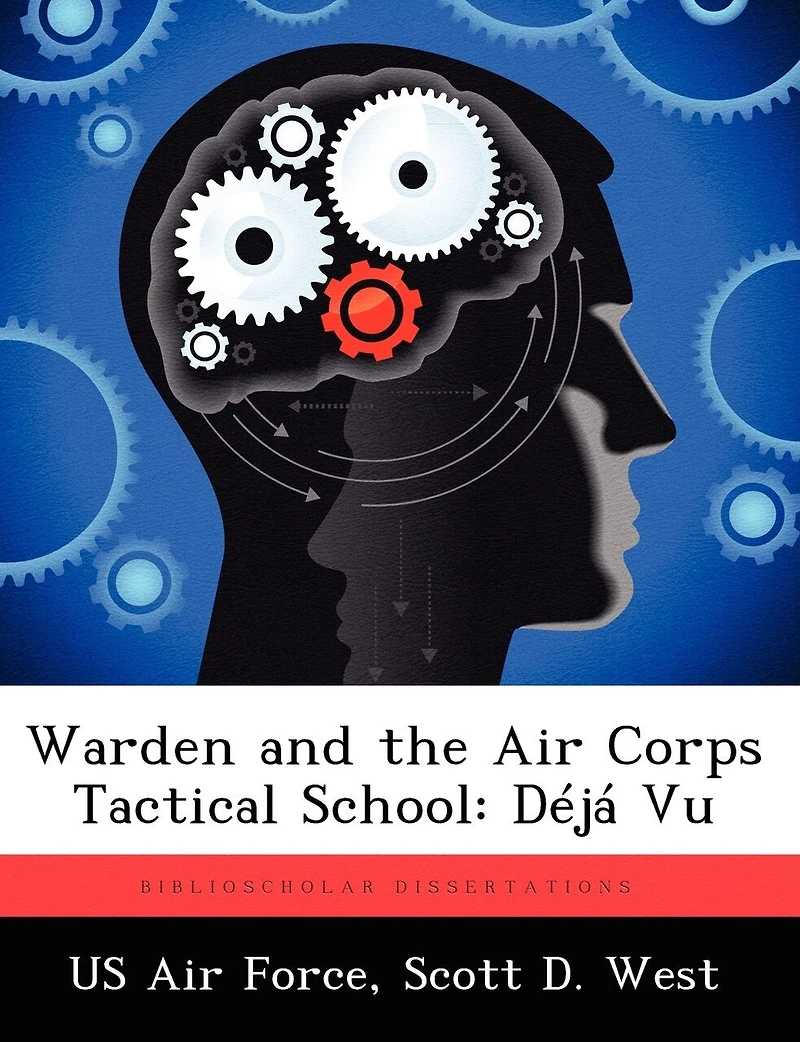
Warden and the Air Corps Tactical School: Deja Vu in Grande Prairie, AB
Current price: $60.51
Coles
Warden and the Air Corps Tactical School: Deja Vu in Grande Prairie, AB
Current price: $60.51
Loading Inventory...
Size: Paperback
*Product information and pricing may vary - to confirm current pricing, availability, shipping, and return information please contact Coles. In the event of a pricing discrepancy, the retailer's price will apply.
In this study Major West answers the following questions: Is John Warden's "The Enemy as a System" analogous to the Air Corps Tactical School's (ACTS) industrial web theory of airpower employment? If so, why (given the 50 plus years between development of these theories)? If not, what are the prime sources of divergence? The author first describes both theories using an outline from which they are compared on an "apples to apples" basis. From this analysis, similarities and differences are presented. Next, the author discusses contextual factors affecting development of both theories. A baseline is developed from which factors from both eras are compared. After linking relevant contextual factors of the 1920s-1930s and 1980s-1990s, the author explains why the theories of ACTS and Warden are more similar than different. Finally, implications are drawn from the preceding analysis to address the issue of how airpower theory should be developed.
In this study Major West answers the following questions: Is John Warden's "The Enemy as a System" analogous to the Air Corps Tactical School's (ACTS) industrial web theory of airpower employment? If so, why (given the 50 plus years between development of these theories)? If not, what are the prime sources of divergence? The author first describes both theories using an outline from which they are compared on an "apples to apples" basis. From this analysis, similarities and differences are presented. Next, the author discusses contextual factors affecting development of both theories. A baseline is developed from which factors from both eras are compared. After linking relevant contextual factors of the 1920s-1930s and 1980s-1990s, the author explains why the theories of ACTS and Warden are more similar than different. Finally, implications are drawn from the preceding analysis to address the issue of how airpower theory should be developed.
You May Also Like














Find at Prairie Mall in Grande Prairie, AB
Visit at Prairie Mall in Grande Prairie, AB