


Gifting Made Simple
Give the Gift of ChoiceClick below to purchase a Prairie Mall eGift Card that can be used at participating retailers at Prairie Mall.Buy Gift CardHome
Use of Lidocaine for preventing Propofol induced pain
Coles
Loading Inventory...
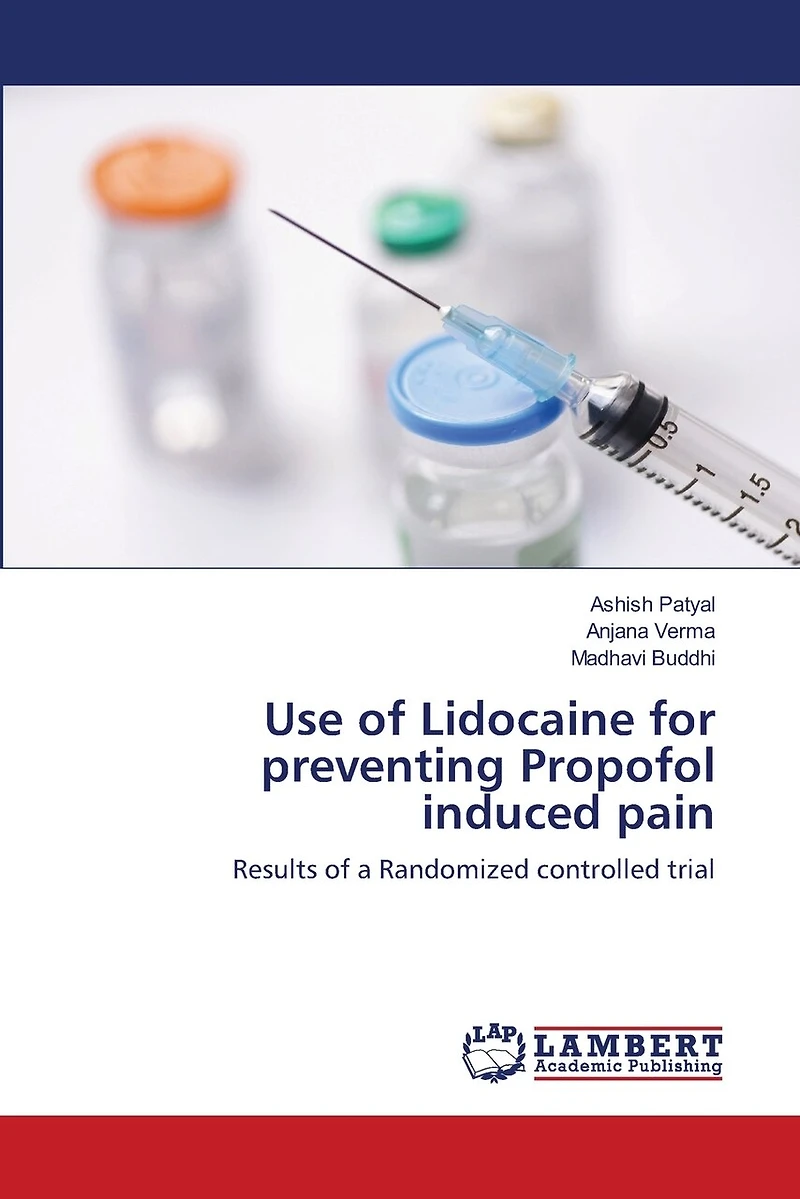
Use of Lidocaine for preventing Propofol induced pain
By None
Current price: $77.50
Coles
Use of Lidocaine for preventing Propofol induced pain
By None
Current price: $77.50
Loading Inventory...
Size: Paperback
*Product information and pricing may vary - to confirm current pricing, availability, shipping, and return information please contact Coles. In the event of a pricing discrepancy, the retailer's price will apply.
Propofol (2, 6-di-isopropylphenol) is a popular intra venous (IV) anaesthetic induction drug associated with smooth induction and rapid recovery. It is the most widely used IV induction agent for a large variety of purposes like induction of general anaesthesia, total intravenous anaesthesia, sedation, anticonvulsant and as an anti- emetic.However, pain on injection, is a clinical disadvantage of the drug, which, according to quantitative systematic reviews, has been reported in up to 70% of patients. Some patients recall the pain on injection as the most uncomfortable experience during surgery .Many interventions have been been developed and studied example, injection sites, infusion rate, temperature, microfiltration, venous occlusion and bacteriostatic saline. Objective of the current research was to assess and compare the efficacy of intravenous lidocaine with different concentrations in reducing the incidence and severity of propofol injection pain.
Propofol (2, 6-di-isopropylphenol) is a popular intra venous (IV) anaesthetic induction drug associated with smooth induction and rapid recovery. It is the most widely used IV induction agent for a large variety of purposes like induction of general anaesthesia, total intravenous anaesthesia, sedation, anticonvulsant and as an anti- emetic.However, pain on injection, is a clinical disadvantage of the drug, which, according to quantitative systematic reviews, has been reported in up to 70% of patients. Some patients recall the pain on injection as the most uncomfortable experience during surgery .Many interventions have been been developed and studied example, injection sites, infusion rate, temperature, microfiltration, venous occlusion and bacteriostatic saline. Objective of the current research was to assess and compare the efficacy of intravenous lidocaine with different concentrations in reducing the incidence and severity of propofol injection pain.
You May Also Like
















More About Coles at Prairie Mall
11801 100 St #104, Grande Prairie, AB T8V 3Y2, Canada
Find Coles at Prairie Mall in Grande Prairie, AB
Visit Coles at Prairie Mall in Grande Prairie, AB