


Gifting Made Simple
Give the Gift of ChoiceClick below to purchase a Prairie Mall eGift Card that can be used at participating retailers at Prairie Mall.Buy Gift CardHome
Ursprung und Wesen der Landgemeinde nach rheinischen Quellen
Coles
Loading Inventory...
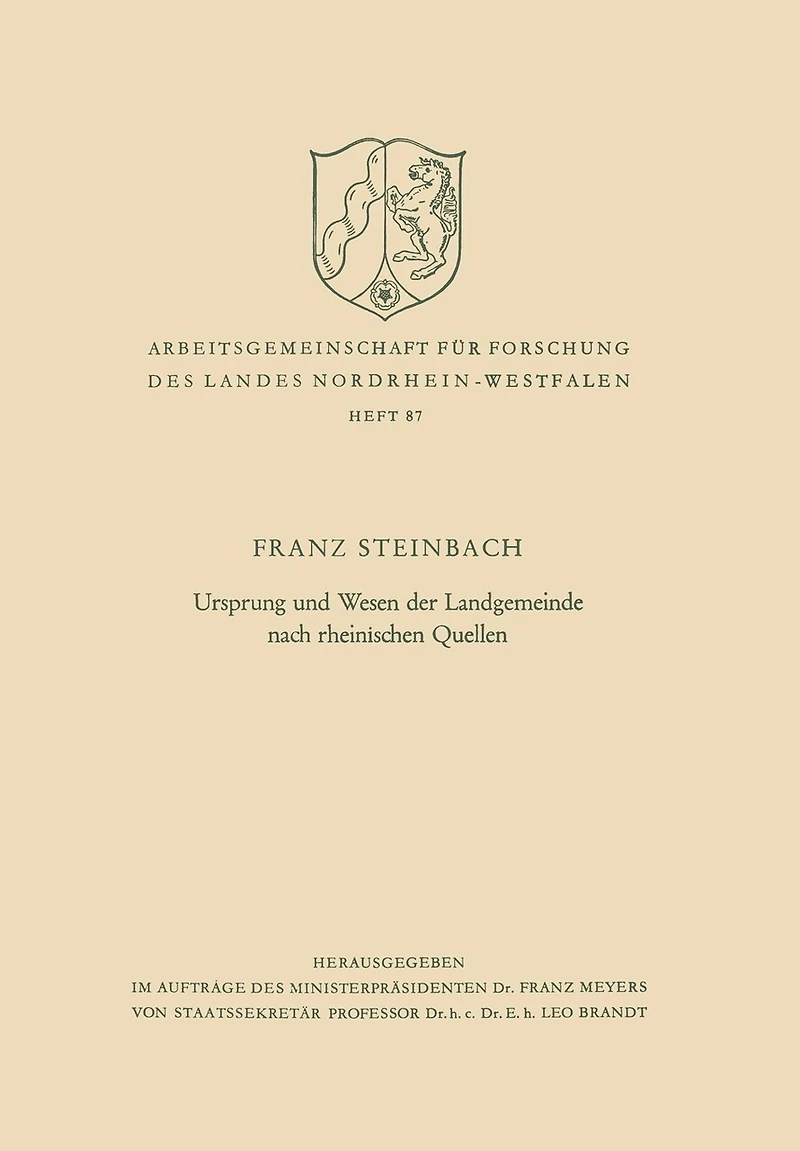
Ursprung und Wesen der Landgemeinde nach rheinischen Quellen in Grande Prairie, AB
Current price: $77.95
Coles
Ursprung und Wesen der Landgemeinde nach rheinischen Quellen in Grande Prairie, AB
Current price: $77.95
Loading Inventory...
Size: Paperback
*Product information and pricing may vary - to confirm current pricing, availability, shipping, and return information please contact Coles. In the event of a pricing discrepancy, the retailer's price will apply.
1. Historical ethnology, prehistoric archaeology, constitutional history, settlement history and settlement geography have unanimously arrived at the conclusion that an autonomous village community with communal ownership within determined limits (the 'Markgenossenschaft') can no longer be regarded as the archetype of the "Gemeinde" or rural community and source of its rights of property. Tbus we are inevitably faced with the question of the origin and essence of the Gemeinde. 2. Tbe political "Landgemeinde" (village community) with local self- government under state supervision is a result of the course of mediaeval constitutional history. From the year one thousand A. D. onwards, we find documentary records of co-operative district corporations, with laws and prohibitions for the management of their own public affairs and for the execution of legal orders and commissions. Tbe rural "communitas villae", having community property within the area of cottages, farm acres and common land, is authenticated in documentary form from the thirteenth century onwards. From the beginning, the particular responsibilities of the Gemeinde included, in addition to economic affairs, the maintenance of law and order in the Gemeinde district. Current business was conducted by a director, as a rule elected by the Gemeinde, who had powers of coercion and punishment in respect of all not expressly exempted residents in the Ge- meinde district. As the body competent to pass resolutions, the assembly of the Gemeinde was responsible for decisions on important matters. TbeGemeinde stood under the supervision of the state authorities.
1. Historical ethnology, prehistoric archaeology, constitutional history, settlement history and settlement geography have unanimously arrived at the conclusion that an autonomous village community with communal ownership within determined limits (the 'Markgenossenschaft') can no longer be regarded as the archetype of the "Gemeinde" or rural community and source of its rights of property. Tbus we are inevitably faced with the question of the origin and essence of the Gemeinde. 2. Tbe political "Landgemeinde" (village community) with local self- government under state supervision is a result of the course of mediaeval constitutional history. From the year one thousand A. D. onwards, we find documentary records of co-operative district corporations, with laws and prohibitions for the management of their own public affairs and for the execution of legal orders and commissions. Tbe rural "communitas villae", having community property within the area of cottages, farm acres and common land, is authenticated in documentary form from the thirteenth century onwards. From the beginning, the particular responsibilities of the Gemeinde included, in addition to economic affairs, the maintenance of law and order in the Gemeinde district. Current business was conducted by a director, as a rule elected by the Gemeinde, who had powers of coercion and punishment in respect of all not expressly exempted residents in the Ge- meinde district. As the body competent to pass resolutions, the assembly of the Gemeinde was responsible for decisions on important matters. TbeGemeinde stood under the supervision of the state authorities.
You May Also Like











Find at Prairie Mall in Grande Prairie, AB
Visit at Prairie Mall in Grande Prairie, AB