


Gifting Made Simple
Give the Gift of ChoiceClick below to purchase a Prairie Mall eGift Card that can be used at participating retailers at Prairie Mall.Buy Gift CardHome
Transformation Optics-based Antennas
Coles
Loading Inventory...
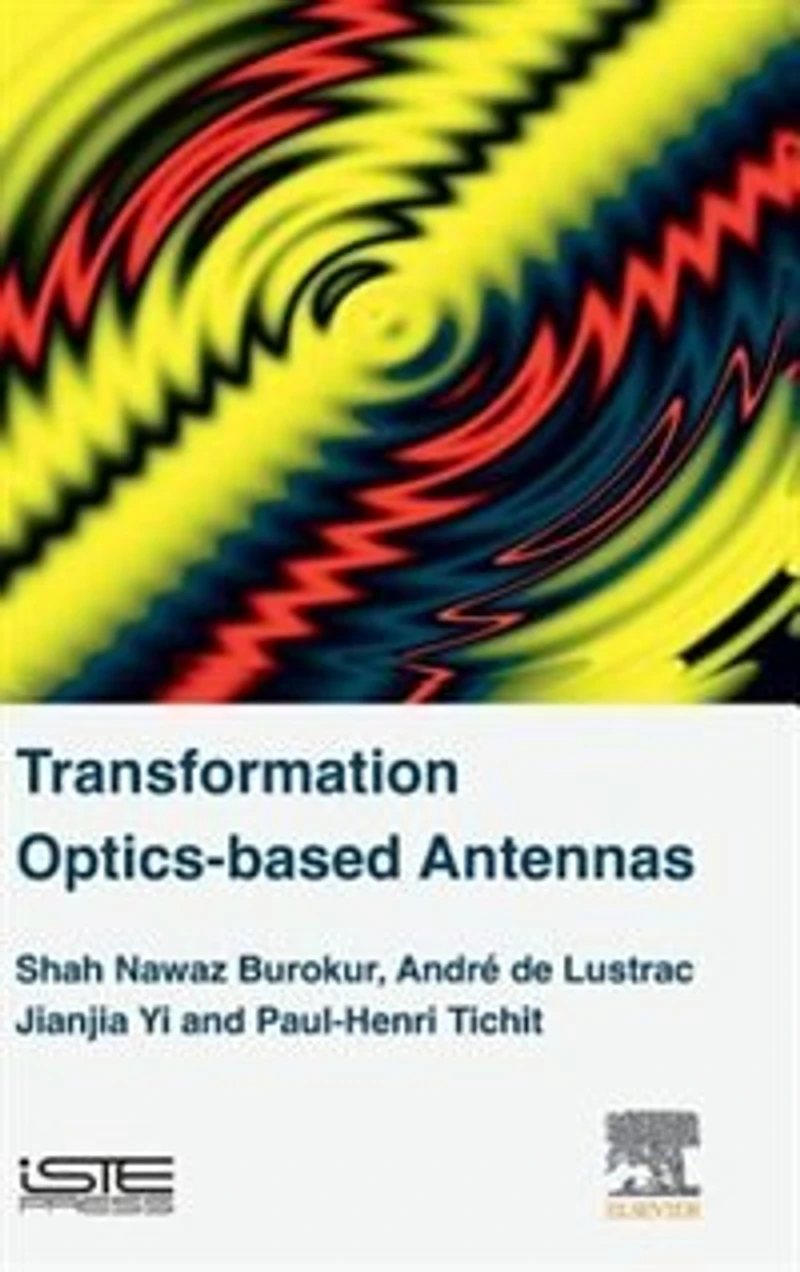
Transformation Optics-based Antennas in Grande Prairie, AB
Current price: $133.50
Coles
Transformation Optics-based Antennas in Grande Prairie, AB
Current price: $133.50
Loading Inventory...
Size: Hardcover
*Product information and pricing may vary - to confirm current pricing, availability, shipping, and return information please contact Coles. In the event of a pricing discrepancy, the retailer's price will apply.
Transformation Optics-based Antennas is organized into two chapters that follow an introduction that presents the basic principles of the transformation optics concept. Two types of transformation are presented, coordinate transformation and space transformation. Implementations using metamaterials are also discussed. Chapter One focuses on coordinate transformation in the design of devices capable of modifying the electromagnetic appearance of a radiating source. Transformation of a directive radiation pattern into an isotropic one (and vice-versa) through space stretching and compression, respectively, and the possibility of creating multiple beams are also studied. Chapter Two deals with devices designed using space transformation concepts. Quasi-conformal transformation optics (QCTO) are applied for the design of lenses, either to compensate for the phase shift created by the conformation of an array of sources or to steer a beam to an off-normal direction.
Focuses firstly on the theoretical tools that define transformation optics
Address the origin of these concepts by analyzing Fermat's principle
Details the basic approaches and methods needed to design practical applications of transformation optics concepts
Transformation Optics-based Antennas is organized into two chapters that follow an introduction that presents the basic principles of the transformation optics concept. Two types of transformation are presented, coordinate transformation and space transformation. Implementations using metamaterials are also discussed. Chapter One focuses on coordinate transformation in the design of devices capable of modifying the electromagnetic appearance of a radiating source. Transformation of a directive radiation pattern into an isotropic one (and vice-versa) through space stretching and compression, respectively, and the possibility of creating multiple beams are also studied. Chapter Two deals with devices designed using space transformation concepts. Quasi-conformal transformation optics (QCTO) are applied for the design of lenses, either to compensate for the phase shift created by the conformation of an array of sources or to steer a beam to an off-normal direction.
Focuses firstly on the theoretical tools that define transformation optics
Address the origin of these concepts by analyzing Fermat's principle
Details the basic approaches and methods needed to design practical applications of transformation optics concepts
You May Also Like












Find at Prairie Mall in Grande Prairie, AB
Visit at Prairie Mall in Grande Prairie, AB