


Gifting Made Simple
Give the Gift of ChoiceClick below to purchase a Prairie Mall eGift Card that can be used at participating retailers at Prairie Mall.Buy Gift CardHome
Toward a Better Understanding of the Role Value Markets and Marketing
Coles
Loading Inventory...
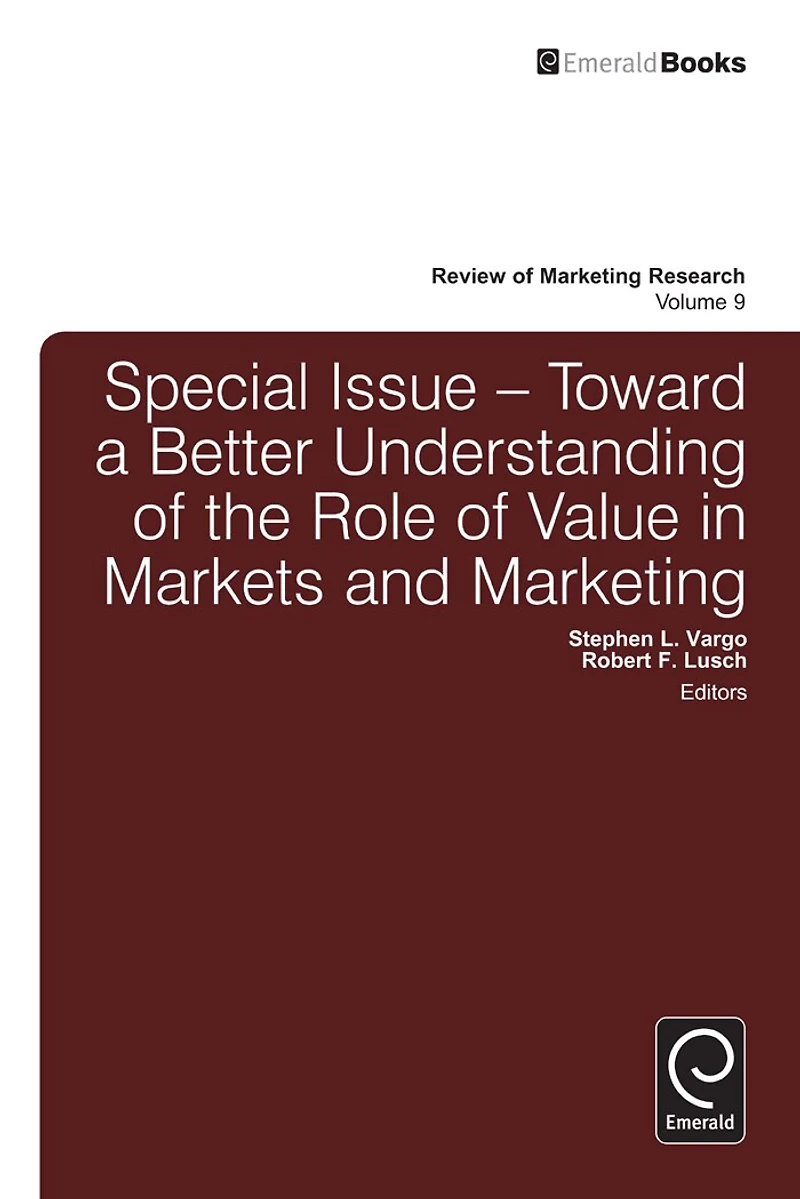
Toward a Better Understanding of the Role Value Markets and Marketing in Grande Prairie, AB
Current price: $233.99
Coles
Toward a Better Understanding of the Role Value Markets and Marketing in Grande Prairie, AB
Current price: $233.99
Loading Inventory...
Size: Hardcover
*Product information and pricing may vary - to confirm current pricing, availability, shipping, and return information please contact Coles. In the event of a pricing discrepancy, the retailer's price will apply.
In their 2004 article "Evolving to a new dominant logic for marketing," Vargo and Lusch established the related principles that value is always co-created and, thus, firms cannot deliver value, but only develop compelling value propositions. This perspective is now known as "service-dominant (S-D) logic." Subsequent S-D logic work has suggested that value is not only always co-created; it also requires the integration of resources from multiple sources and thus is contextually contingent, since each instance of value creation involves the availability, integration, and use of a different combination of resources. This repositioning of value, from a static concept of something embedded in the output of a "producer" to be "consumed," to a dynamic concept of a co-created outcome in ever-changing, networked systems, can be seen throughout the manuscripts in this volume.
In their 2004 article "Evolving to a new dominant logic for marketing," Vargo and Lusch established the related principles that value is always co-created and, thus, firms cannot deliver value, but only develop compelling value propositions. This perspective is now known as "service-dominant (S-D) logic." Subsequent S-D logic work has suggested that value is not only always co-created; it also requires the integration of resources from multiple sources and thus is contextually contingent, since each instance of value creation involves the availability, integration, and use of a different combination of resources. This repositioning of value, from a static concept of something embedded in the output of a "producer" to be "consumed," to a dynamic concept of a co-created outcome in ever-changing, networked systems, can be seen throughout the manuscripts in this volume.
You May Also Like













Find at Prairie Mall in Grande Prairie, AB
Visit at Prairie Mall in Grande Prairie, AB