


Gifting Made Simple
Give the Gift of ChoiceClick below to purchase a Prairie Mall eGift Card that can be used at participating retailers at Prairie Mall.Buy Gift CardHome
To Strive, to Seek, to Find, and Not Yield - How Chiefs of Staff of the Army Lead Changes
Coles
Loading Inventory...
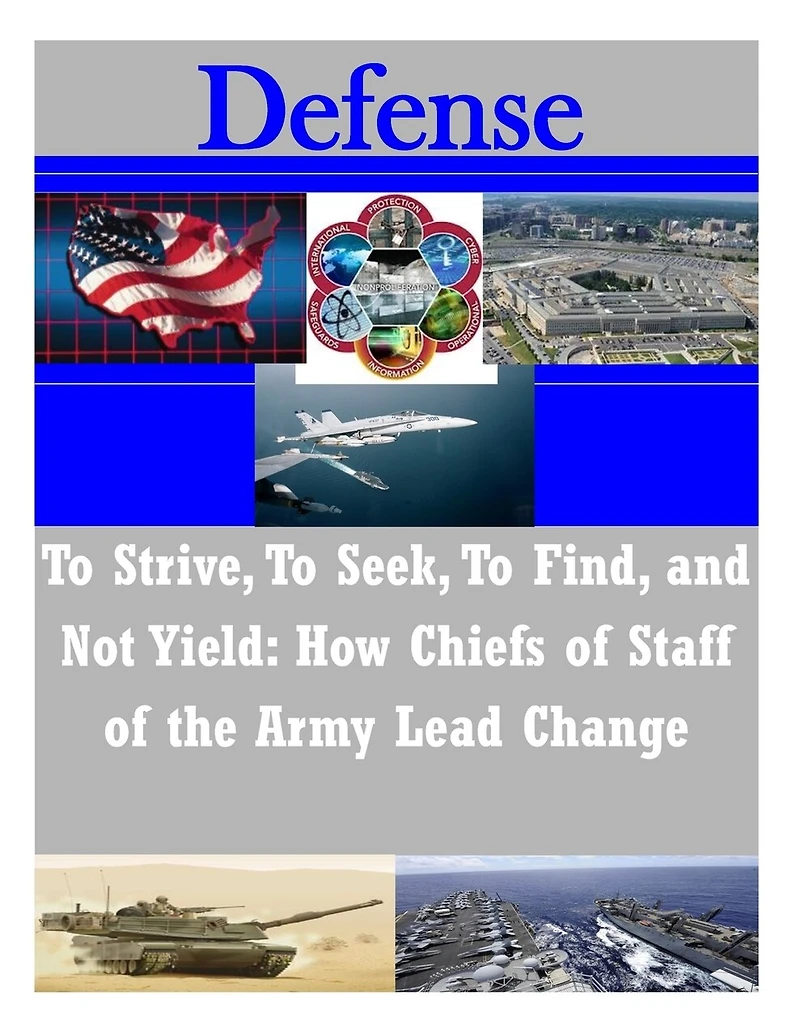
To Strive, to Seek, to Find, and Not Yield - How Chiefs of Staff of the Army Lead Changes in Grande Prairie, AB
Current price: $12.95
Coles
To Strive, to Seek, to Find, and Not Yield - How Chiefs of Staff of the Army Lead Changes in Grande Prairie, AB
Current price: $12.95
Loading Inventory...
Size: Paperback
*Product information and pricing may vary - to confirm current pricing, availability, shipping, and return information please contact Coles. In the event of a pricing discrepancy, the retailer's price will apply.
How does the Chief of Staff of the Army lead strategic change for the Army during post-war transitions? The Army is currently conducting a post-war transition after 10 years of continuous conflict and requires a methodology for leading change. What is more, the Army has conducted significant change during many post-war transitions with varying degrees of effectiveness. Failure to address the problem of how to lead change during post-war transitions will result in an Army that is too costly to the nation and less effective for the next war. Given this, there must be a model for the Chiefs of Staff to use in leading change during post-war transitions. In defining a model for the Chiefs of Staff to use during transition this research examines how to lead organizational change develops a model to guide change, and it then applies the model to previous Chiefs of Staff to assess how they led change. The model uses a combination of Stephen M. Covey's The Speed of Trust, Gordon R. Sullivan's "Leading Strategic Change in America's Army: The Way Forward." The research then applies the model to Generals Eisenhower, Ridgway, and Abrams as they led Army change during their post-war transitions. Finally, the research provides recommendations for future Chiefs of Staff to lead change during future post-war transitions.
How does the Chief of Staff of the Army lead strategic change for the Army during post-war transitions? The Army is currently conducting a post-war transition after 10 years of continuous conflict and requires a methodology for leading change. What is more, the Army has conducted significant change during many post-war transitions with varying degrees of effectiveness. Failure to address the problem of how to lead change during post-war transitions will result in an Army that is too costly to the nation and less effective for the next war. Given this, there must be a model for the Chiefs of Staff to use in leading change during post-war transitions. In defining a model for the Chiefs of Staff to use during transition this research examines how to lead organizational change develops a model to guide change, and it then applies the model to previous Chiefs of Staff to assess how they led change. The model uses a combination of Stephen M. Covey's The Speed of Trust, Gordon R. Sullivan's "Leading Strategic Change in America's Army: The Way Forward." The research then applies the model to Generals Eisenhower, Ridgway, and Abrams as they led Army change during their post-war transitions. Finally, the research provides recommendations for future Chiefs of Staff to lead change during future post-war transitions.
You May Also Like














Find at Prairie Mall in Grande Prairie, AB
Visit at Prairie Mall in Grande Prairie, AB