


Gifting Made Simple
Give the Gift of ChoiceClick below to purchase a Prairie Mall eGift Card that can be used at participating retailers at Prairie Mall.Buy Gift CardHome
The Role of Federal Military Forces in Domestic Disorders, 1945-1992
Coles
Loading Inventory...
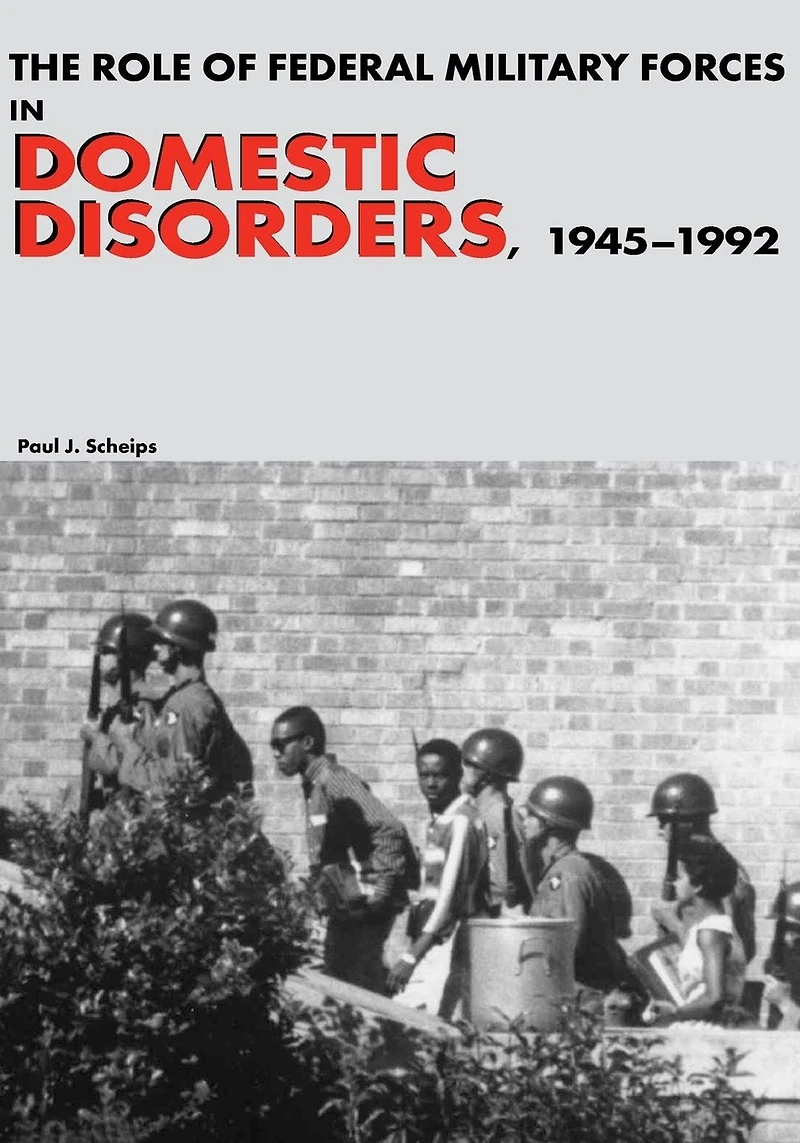
The Role of Federal Military Forces in Domestic Disorders, 1945-1992 in Grande Prairie, AB
Current price: $28.95
Coles
The Role of Federal Military Forces in Domestic Disorders, 1945-1992 in Grande Prairie, AB
Current price: $28.95
Loading Inventory...
Size: Paperback
*Product information and pricing may vary - to confirm current pricing, availability, shipping, and return information please contact Coles. In the event of a pricing discrepancy, the retailer's price will apply.
The Role of Federal Military Forces in Domestic Disorders, 1945-1992, the third of three volumes on the history of Army domestic support operations, continues the story of institutional and other changes that took place in the Army during the post-World War II years. Paul J. Scheips adeptly relies on official records and other contextual supporting materials to chronicle the U.S. Army's response to major social events in contemporary American society-the civil rights movement, including the integration of Central High School in Little Rock, Arkansas, and the University of Mississippi; the racial disturbances of the 1960s, especially the civil unrest in Chicago, Baltimore, and Washington, D.C., following Martin Luther King's assassination; the protest marches during the Vietnam conflict; and the controversies surrounding the Army's role at Wounded Knee and the race riot in Los Angeles in 1992. Despite occasional lapses, the Army has carried out its civil disturbance duties with moderation and restraint-a testament to the common sense, flexibility, and initiative of highly disciplined soldiers at all levels of command. These hallmarks of a trained and ready force are invaluable not only during domestic civil support but also during the full range of military operations so prevalent in today's uncertain times.
The Role of Federal Military Forces in Domestic Disorders, 1945-1992, the third of three volumes on the history of Army domestic support operations, continues the story of institutional and other changes that took place in the Army during the post-World War II years. Paul J. Scheips adeptly relies on official records and other contextual supporting materials to chronicle the U.S. Army's response to major social events in contemporary American society-the civil rights movement, including the integration of Central High School in Little Rock, Arkansas, and the University of Mississippi; the racial disturbances of the 1960s, especially the civil unrest in Chicago, Baltimore, and Washington, D.C., following Martin Luther King's assassination; the protest marches during the Vietnam conflict; and the controversies surrounding the Army's role at Wounded Knee and the race riot in Los Angeles in 1992. Despite occasional lapses, the Army has carried out its civil disturbance duties with moderation and restraint-a testament to the common sense, flexibility, and initiative of highly disciplined soldiers at all levels of command. These hallmarks of a trained and ready force are invaluable not only during domestic civil support but also during the full range of military operations so prevalent in today's uncertain times.
You May Also Like












Find at Prairie Mall in Grande Prairie, AB
Visit at Prairie Mall in Grande Prairie, AB