


Gifting Made Simple
Give the Gift of ChoiceClick below to purchase a Prairie Mall eGift Card that can be used at participating retailers at Prairie Mall.Buy Gift CardHome
The Rise and Fall of Business Firms: A Stochastic Framework on Innovation
Coles
Loading Inventory...
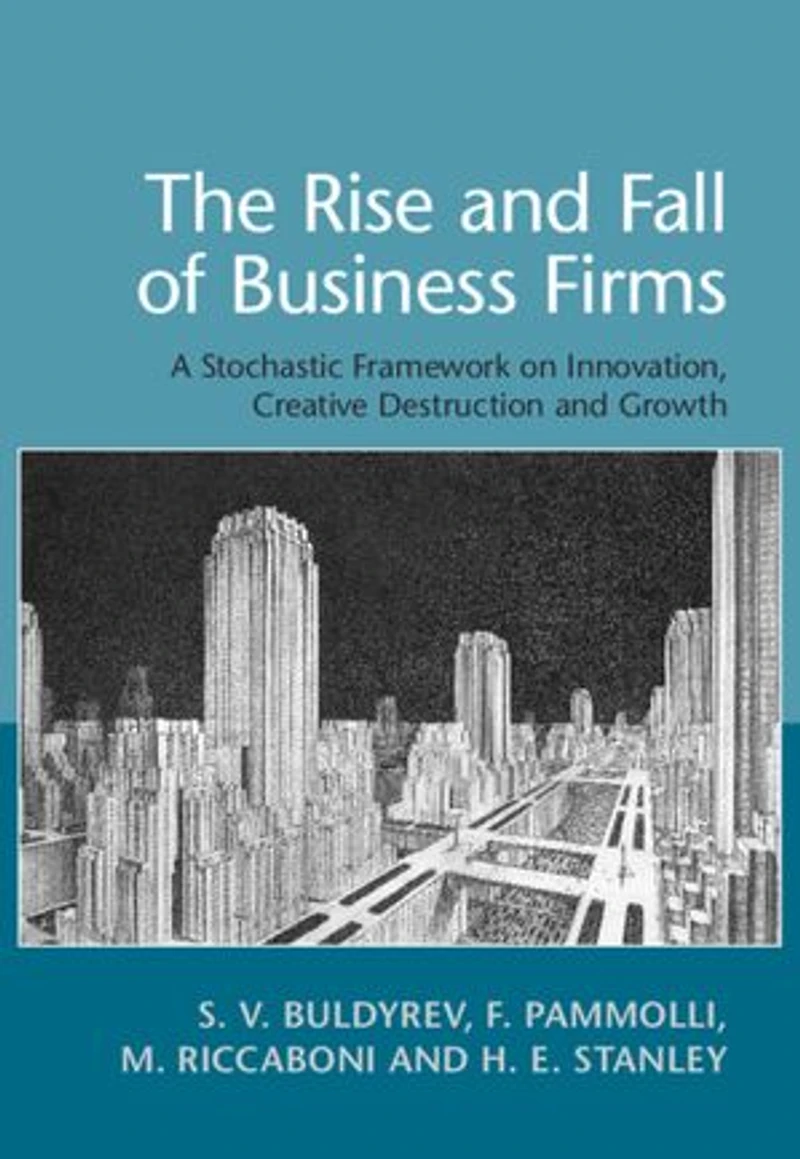
The Rise and Fall of Business Firms: A Stochastic Framework on Innovation
By None
Current price: $56.79
Original price: $70.95
Coles
The Rise and Fall of Business Firms: A Stochastic Framework on Innovation
By None
Current price: $56.79
Original price: $70.95
Loading Inventory...
Size: Kobo eBook
*Product information and pricing may vary - to confirm current pricing, availability, shipping, and return information please contact Coles. In the event of a pricing discrepancy, the retailer's price will apply.
At the intersection between statistical physics and rigorous econometric analysis, this powerful new framework sheds light on how innovation and competition shape the growth and decline of companies and industries. Analyzing various sources of data including a unique micro level database which collects historic data on the sales of more than 3,000 firms and 50,000 products in 20 countries, the authors introduce and test a model of innovation and proportional growth, which relies on minimal assumptions and accounts for the empirically observed regularities. Through a combination of extensive stochastic simulations and statistical tests, the authors investigate to what extent their simple assumptions are falsified by empirically observable facts. Physicists looking for application of their mathematical and modelling skills to relevant economic problems as well as economists interested in the explorative analysis of extensive data sets and in a physics-orientated way of thinking will find this book a key reference.
At the intersection between statistical physics and rigorous econometric analysis, this powerful new framework sheds light on how innovation and competition shape the growth and decline of companies and industries. Analyzing various sources of data including a unique micro level database which collects historic data on the sales of more than 3,000 firms and 50,000 products in 20 countries, the authors introduce and test a model of innovation and proportional growth, which relies on minimal assumptions and accounts for the empirically observed regularities. Through a combination of extensive stochastic simulations and statistical tests, the authors investigate to what extent their simple assumptions are falsified by empirically observable facts. Physicists looking for application of their mathematical and modelling skills to relevant economic problems as well as economists interested in the explorative analysis of extensive data sets and in a physics-orientated way of thinking will find this book a key reference.
You May Also Like

















More About Coles at Prairie Mall
11801 100 St #104, Grande Prairie, AB T8V 3Y2, Canada
Find Coles at Prairie Mall in Grande Prairie, AB
Visit Coles at Prairie Mall in Grande Prairie, AB