


Gifting Made Simple
Give the Gift of ChoiceClick below to purchase a Prairie Mall eGift Card that can be used at participating retailers at Prairie Mall.Buy Gift CardHome
the Philosophy of Right and Left: Incongruent Counterparts Nature Space
Coles
Loading Inventory...
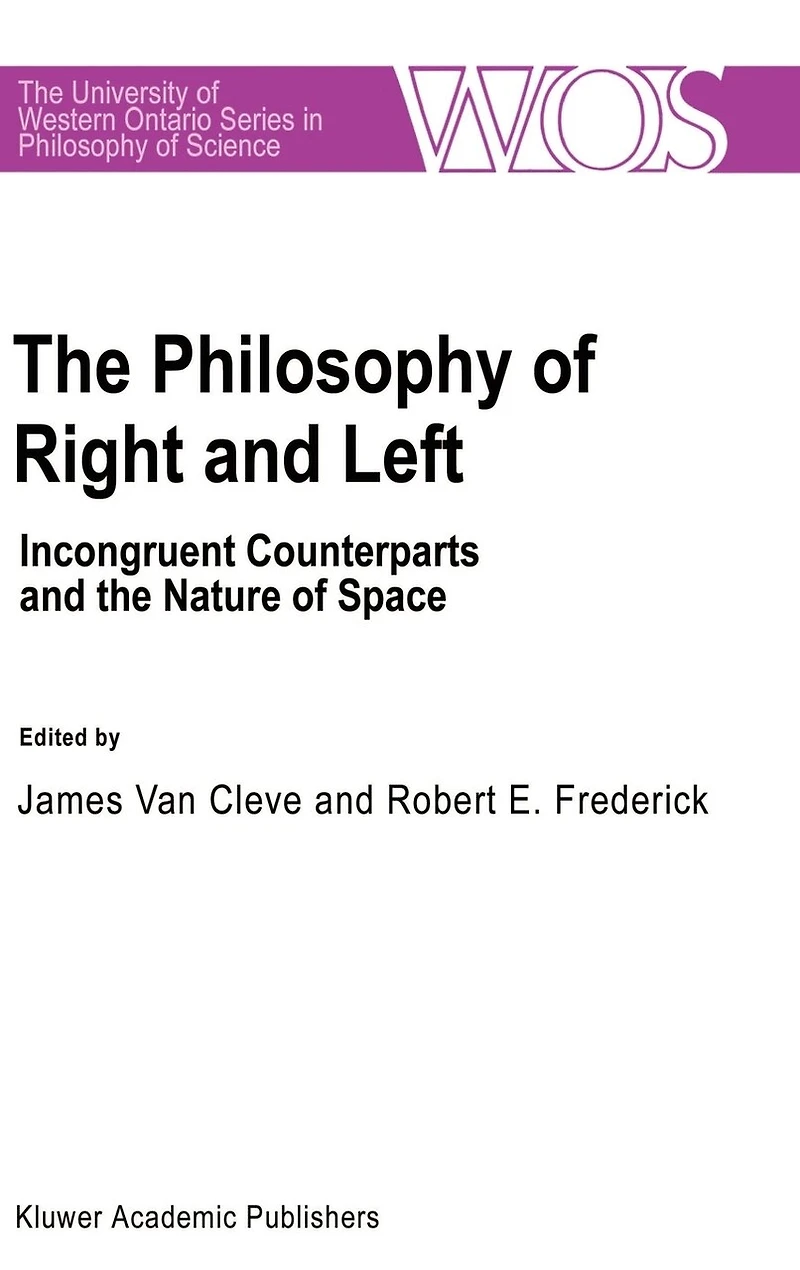
the Philosophy of Right and Left: Incongruent Counterparts Nature Space in Grande Prairie, AB
Current price: $285.95
Coles
the Philosophy of Right and Left: Incongruent Counterparts Nature Space in Grande Prairie, AB
Current price: $285.95
Loading Inventory...
Size: Hardcover
*Product information and pricing may vary - to confirm current pricing, availability, shipping, and return information please contact Coles. In the event of a pricing discrepancy, the retailer's price will apply.
Incongruent counterparts are objects that are perfectly similar except for being mirror images of each other, such as left and right human hands. Immanuel Kant was the first great thinker to point out the philosophical significance of such objects. He called them "counter parts" because they are similar in nearly every way, "incongruent" because, despite their similarity, one could never be put in the place of the other. Three important discussions of incongruent counterparts occur in Kant's writings. The first is an article published in 1768, 'On the First Ground of the Distinction of Regions in Space', in which Kant con tended that incongruent counterparts furnish a refutation of Leibniz's relational theory of space and a proof of Newton's rival theory of absolute space. The second is a section of his Inaugural Dissertation, published two years later in 1770, in which he cited incongruent counterparts as showing that our knowledge of space must rest on intuitions. The third is a section of the Prolegomena to Any Future Metaphysics of 1783, in which he cited incongruent counterparts as a paradox resolvable only by his own theory of space as mind-dependent. A fourth mention in the Metaphysical Foundations of Natural Science of 1786 briefly repeats the Prolegomena point. Curiously, there is no mention of incongruent counterparts in either of the editions (1781 and 1787) of Kant's magnum opus, the Critique of Pure Reason.
Incongruent counterparts are objects that are perfectly similar except for being mirror images of each other, such as left and right human hands. Immanuel Kant was the first great thinker to point out the philosophical significance of such objects. He called them "counter parts" because they are similar in nearly every way, "incongruent" because, despite their similarity, one could never be put in the place of the other. Three important discussions of incongruent counterparts occur in Kant's writings. The first is an article published in 1768, 'On the First Ground of the Distinction of Regions in Space', in which Kant con tended that incongruent counterparts furnish a refutation of Leibniz's relational theory of space and a proof of Newton's rival theory of absolute space. The second is a section of his Inaugural Dissertation, published two years later in 1770, in which he cited incongruent counterparts as showing that our knowledge of space must rest on intuitions. The third is a section of the Prolegomena to Any Future Metaphysics of 1783, in which he cited incongruent counterparts as a paradox resolvable only by his own theory of space as mind-dependent. A fourth mention in the Metaphysical Foundations of Natural Science of 1786 briefly repeats the Prolegomena point. Curiously, there is no mention of incongruent counterparts in either of the editions (1781 and 1787) of Kant's magnum opus, the Critique of Pure Reason.
















Find at Prairie Mall in Grande Prairie, AB
Visit at Prairie Mall in Grande Prairie, AB