


Gifting Made Simple
Give the Gift of ChoiceClick below to purchase a Prairie Mall eGift Card that can be used at participating retailers at Prairie Mall.Buy Gift CardHome
The Performative Dimensions Of Rhetorical Questions In The Hebrew Bible: Do You Not Know? Do You Not Hear?
Coles
Loading Inventory...
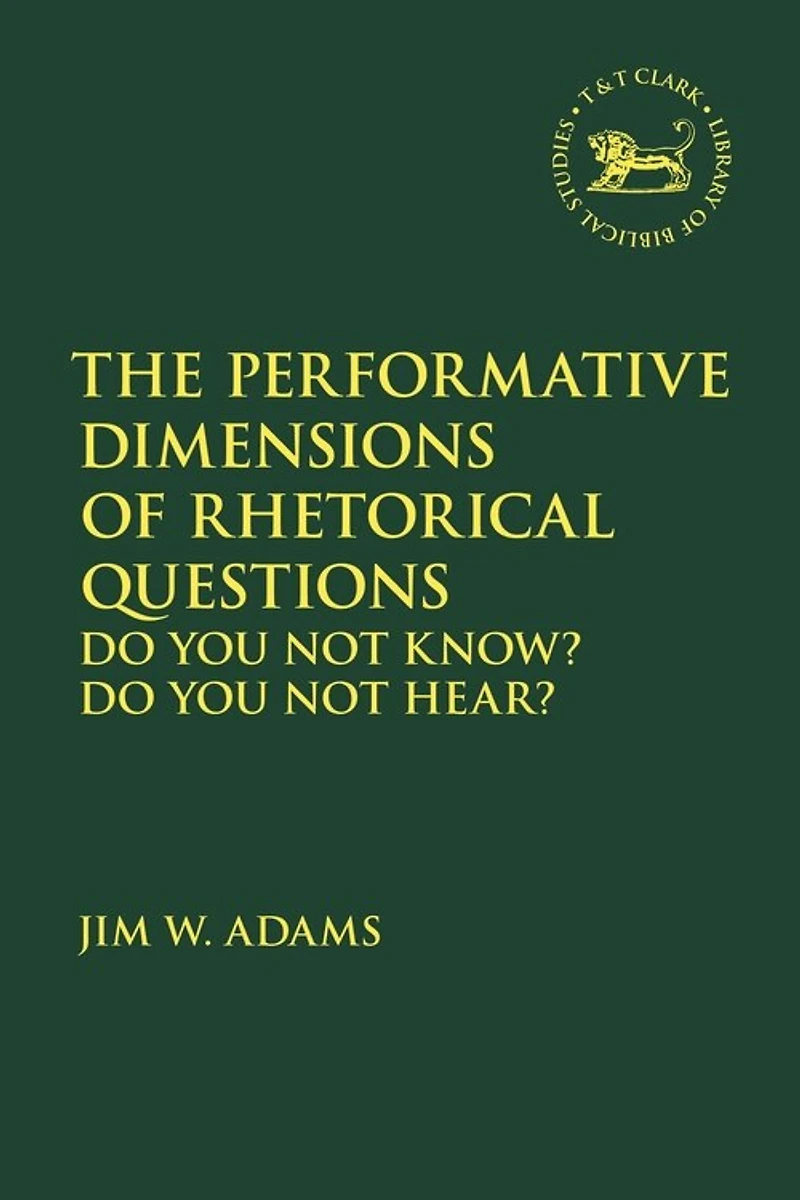
The Performative Dimensions Of Rhetorical Questions In The Hebrew Bible: Do You Not Know? Do You Not Hear?
By None
Current price: $233.95
Coles
The Performative Dimensions Of Rhetorical Questions In The Hebrew Bible: Do You Not Know? Do You Not Hear?
By None
Current price: $233.95
Loading Inventory...
Size: Hardcover
*Product information and pricing may vary - to confirm current pricing, availability, shipping, and return information please contact Coles. In the event of a pricing discrepancy, the retailer's price will apply.
This book sets out to describe the multi-dimensional nature and function of rhetorical questions in the Old Testament. Biblical scholars have previously analyzed the use of rhetorical questions in both Testaments, but consistently describe their function in persuasive terms. While this understanding is appropriate in a number of instances, many rhetorical questions do not operate this way, and Jim W. Adams focuses in particular on rhetoric expressing the self-involvement of both the speaker and hearer. Among linguistic philosophers, speech act theory has illuminated the fact that uttering a sentence does not merely convey information; it may also involve the performing of an action. The concept of communicative action provides additional tools to the exegetical process as it points the interpreter beyond the assumption that the use of language is merely for descriptive purposes. Language can also have performative and self-involving dimensions. In relation to speech act theory, linguistic specialists continue to research the nature of rhetorical questions.
This book sets out to describe the multi-dimensional nature and function of rhetorical questions in the Old Testament. Biblical scholars have previously analyzed the use of rhetorical questions in both Testaments, but consistently describe their function in persuasive terms. While this understanding is appropriate in a number of instances, many rhetorical questions do not operate this way, and Jim W. Adams focuses in particular on rhetoric expressing the self-involvement of both the speaker and hearer. Among linguistic philosophers, speech act theory has illuminated the fact that uttering a sentence does not merely convey information; it may also involve the performing of an action. The concept of communicative action provides additional tools to the exegetical process as it points the interpreter beyond the assumption that the use of language is merely for descriptive purposes. Language can also have performative and self-involving dimensions. In relation to speech act theory, linguistic specialists continue to research the nature of rhetorical questions.
You May Also Like
















More About Coles at Prairie Mall
11801 100 St #104, Grande Prairie, AB T8V 3Y2, Canada
Find Coles at Prairie Mall in Grande Prairie, AB
Visit Coles at Prairie Mall in Grande Prairie, AB