


Gifting Made Simple
Give the Gift of ChoiceClick below to purchase a Prairie Mall eGift Card that can be used at participating retailers at Prairie Mall.Buy Gift CardHome
The Instinct of Workmanship; And the State of Industrial Arts
Coles
Loading Inventory...
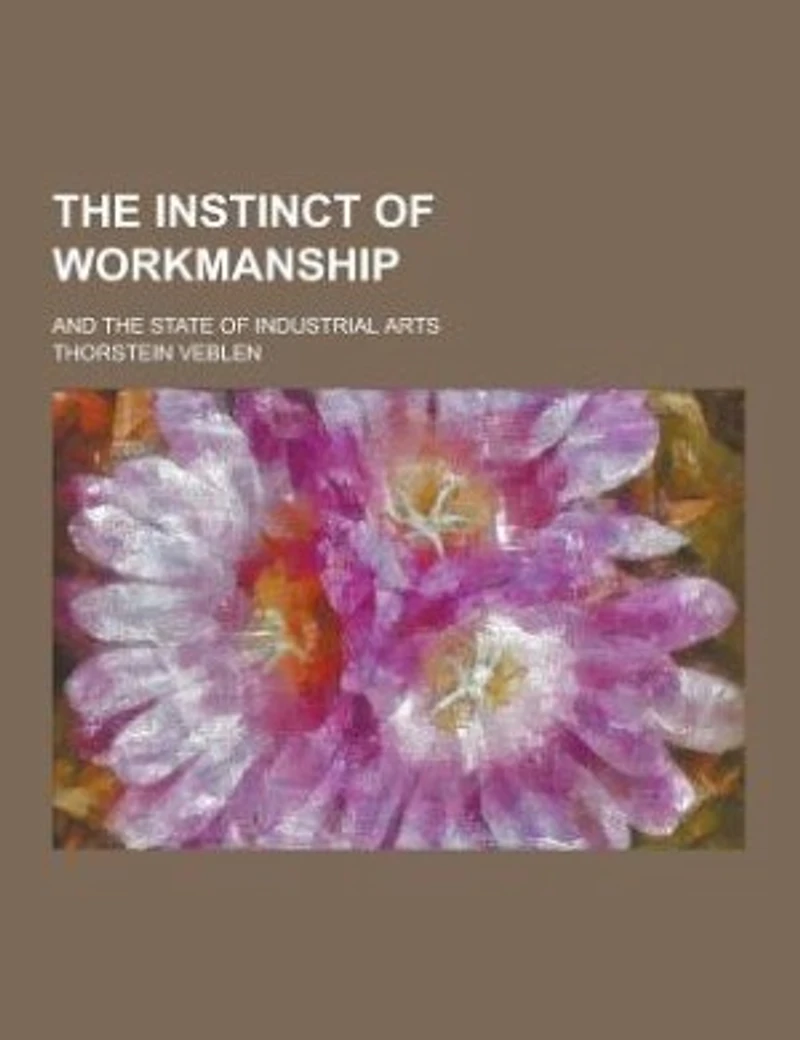
The Instinct of Workmanship; And the State of Industrial Arts in Grande Prairie, AB
Current price: $9.43
Coles
The Instinct of Workmanship; And the State of Industrial Arts in Grande Prairie, AB
Current price: $9.43
Loading Inventory...
Size: Paperback
*Product information and pricing may vary - to confirm current pricing, availability, shipping, and return information please contact Coles. In the event of a pricing discrepancy, the retailer's price will apply.
This historic book may have numerous typos and missing text. Purchasers can usually download a free scanned copy of the original book (without typos) from the publisher. Not indexed. Not illustrated. 1914 edition. Excerpt: ... CHAPTER VII The Machine Industry The era of the machine industry has been designated variously, to answer to the varying point of view from which it has been considered by divers writers. As an historical era it shows divers traits, more or less characteristic, and it has been designated by one or another of these traits according to the particular line of interest that may have directed the attention of those who have had occasion to name it. It is spoken of as the era of the factory system, of large-scale industry, as the age of Capitalism or of free competition, or again as an era of the credit economy. But as seen from the point of view of technology, and more specifically from that of workmanship as it underlies the technological system, it is best characterised as the era of the machine industry, or of the machine process. As a technological period it is commonly conceived to take its rise in the British industrial community about the third quarter of the eighteenth century, the conventional date of the Industrial Revolution,--those who have a taste for precise dates assigning it more specifically to the sixties of that century, to coincide with the earliest practical use of certain large mechanical inventions of that age.1 Such a precise date is scarcely serviceable for any other 1 Cf., e. g., C. Beard, The Industrial Revolution, ch. ii; Spencer Walpole, History of England from 1815, vol. i; C. W. Taylor, The Modern Factory System, ch. i, ii. than a mnemonic purpose. If the matter is taken in historical perspective the era of the machine process will be seen to have been coming on in England through the earlier years of the century, and even from before that time; whereas notable mechanical inventions, and engineering exploits of...
This historic book may have numerous typos and missing text. Purchasers can usually download a free scanned copy of the original book (without typos) from the publisher. Not indexed. Not illustrated. 1914 edition. Excerpt: ... CHAPTER VII The Machine Industry The era of the machine industry has been designated variously, to answer to the varying point of view from which it has been considered by divers writers. As an historical era it shows divers traits, more or less characteristic, and it has been designated by one or another of these traits according to the particular line of interest that may have directed the attention of those who have had occasion to name it. It is spoken of as the era of the factory system, of large-scale industry, as the age of Capitalism or of free competition, or again as an era of the credit economy. But as seen from the point of view of technology, and more specifically from that of workmanship as it underlies the technological system, it is best characterised as the era of the machine industry, or of the machine process. As a technological period it is commonly conceived to take its rise in the British industrial community about the third quarter of the eighteenth century, the conventional date of the Industrial Revolution,--those who have a taste for precise dates assigning it more specifically to the sixties of that century, to coincide with the earliest practical use of certain large mechanical inventions of that age.1 Such a precise date is scarcely serviceable for any other 1 Cf., e. g., C. Beard, The Industrial Revolution, ch. ii; Spencer Walpole, History of England from 1815, vol. i; C. W. Taylor, The Modern Factory System, ch. i, ii. than a mnemonic purpose. If the matter is taken in historical perspective the era of the machine process will be seen to have been coming on in England through the earlier years of the century, and even from before that time; whereas notable mechanical inventions, and engineering exploits of...
You May Also Like














Find at Prairie Mall in Grande Prairie, AB
Visit at Prairie Mall in Grande Prairie, AB