


Gifting Made Simple
Give the Gift of ChoiceClick below to purchase a Prairie Mall eGift Card that can be used at participating retailers at Prairie Mall.Buy Gift CardHome
The Idea of Property by Laura Underkuffler, Hardcover | Indigo Chapters
Coles
Loading Inventory...
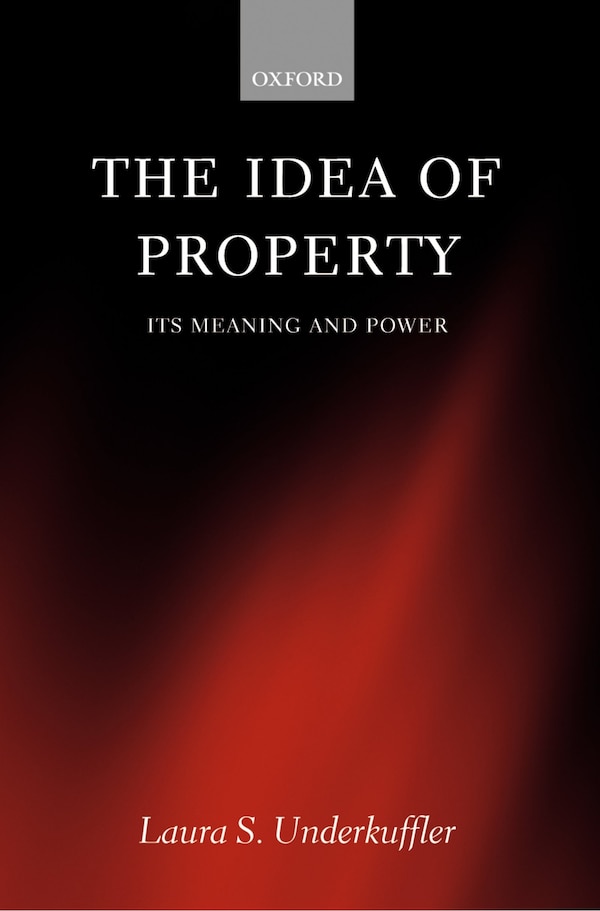
The Idea of Property by Laura Underkuffler, Hardcover | Indigo Chapters
By Laura Underkuffler
Current price: $234.00
Coles
The Idea of Property by Laura Underkuffler, Hardcover | Indigo Chapters
By Laura Underkuffler
Current price: $234.00
Loading Inventory...
Size: 1.7 x 23.4 x 440
*Product information may vary - to confirm product availability, pricing, shipping and return information please contact Coles
Legal scholars and philosophers have long been engaged in what has been called 'the pursuit of the holy grail of property' - the secret of the internal structure of property in law. Attempts to capture the idea of property have encountered two fundamental problems. First, it has beennotoriously difficult to advance beyond the observation that property involves 'ownership' of 'things', with the incidents of ownership and the list of things owned an essentially descriptive task. Second, it is difficult to explain the wildly inconsistent power that property rights - even whenidentified - seem to enjoy. In this book, Professor Underkuffler advances our understanding of what property is, as an idea, and the power that claimed property rights should have against competing public interests. There is, she argues, a deeper analytical structure of the idea of property that we can uncover, and - as aresult of that discovery - deeper reasons that we can find for property's variable power. It is not a random or unprincipled event that property generally protects in cases involving land titles or patent claims, and fails to protect in cases involving environmental regulation or redistributivetaxation. She argues that these results are driven - indeed, predetermined - by the nature of property, as an idea, and the conflicts of that idea with competing public interests. The implications of this book are far-reaching. It explains and justifies - on new grounds - why some property claims are traditionally powerful in law, and others not. It suggests how property rights in controversial or emerging areas should be treated, such as those involving the body asproperty, personal information as property, cultural property, and state redistributive claims. Finally, it establishes why the protection of property is, in fact, necessarily different from freedom of speech, freedom of religion, due process of law, and other rights - necessitating its differenttreatment, and lesser protection, as a constitutional right. | The Idea of Property by Laura Underkuffler, Hardcover | Indigo Chapters
Legal scholars and philosophers have long been engaged in what has been called 'the pursuit of the holy grail of property' - the secret of the internal structure of property in law. Attempts to capture the idea of property have encountered two fundamental problems. First, it has beennotoriously difficult to advance beyond the observation that property involves 'ownership' of 'things', with the incidents of ownership and the list of things owned an essentially descriptive task. Second, it is difficult to explain the wildly inconsistent power that property rights - even whenidentified - seem to enjoy. In this book, Professor Underkuffler advances our understanding of what property is, as an idea, and the power that claimed property rights should have against competing public interests. There is, she argues, a deeper analytical structure of the idea of property that we can uncover, and - as aresult of that discovery - deeper reasons that we can find for property's variable power. It is not a random or unprincipled event that property generally protects in cases involving land titles or patent claims, and fails to protect in cases involving environmental regulation or redistributivetaxation. She argues that these results are driven - indeed, predetermined - by the nature of property, as an idea, and the conflicts of that idea with competing public interests. The implications of this book are far-reaching. It explains and justifies - on new grounds - why some property claims are traditionally powerful in law, and others not. It suggests how property rights in controversial or emerging areas should be treated, such as those involving the body asproperty, personal information as property, cultural property, and state redistributive claims. Finally, it establishes why the protection of property is, in fact, necessarily different from freedom of speech, freedom of religion, due process of law, and other rights - necessitating its differenttreatment, and lesser protection, as a constitutional right. | The Idea of Property by Laura Underkuffler, Hardcover | Indigo Chapters
You May Also Like










More About Coles at Prairie Mall
11801 100 St #104, Grande Prairie, AB T8V 3Y2, Canada
Find Coles at Prairie Mall in Grande Prairie, AB
Visit Coles at Prairie Mall in Grande Prairie, AB