


Gifting Made Simple
Give the Gift of ChoiceClick below to purchase a Prairie Mall eGift Card that can be used at participating retailers at Prairie Mall.Buy Gift CardHome
The Evolution of Modern Medicine: A Series of Lectures Delivered at Yale University on the Silliman Foundation, in April, 1913 (Class
Coles
Loading Inventory...
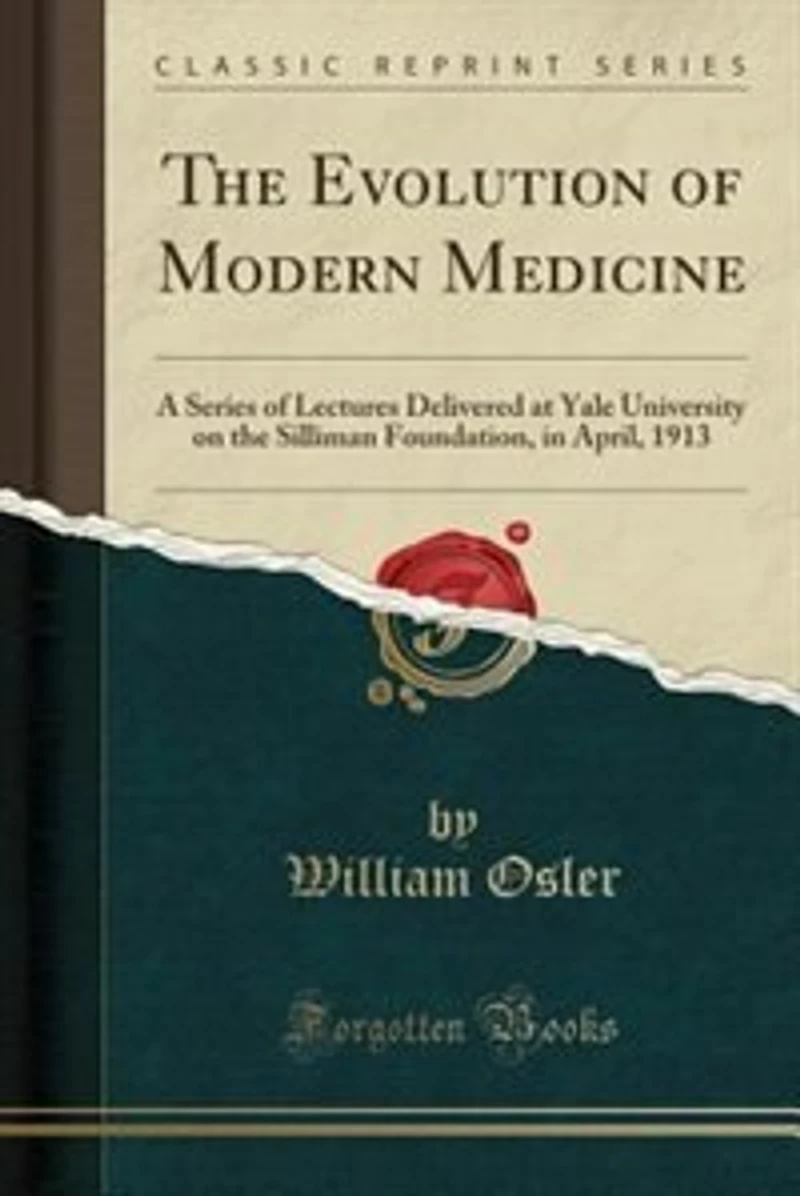
The Evolution of Modern Medicine: A Series of Lectures Delivered at Yale University on the Silliman Foundation, in April, 1913 (Class in Grande Prairie, AB
Current price: $11.97
Coles
The Evolution of Modern Medicine: A Series of Lectures Delivered at Yale University on the Silliman Foundation, in April, 1913 (Class in Grande Prairie, AB
Current price: $11.97
Loading Inventory...
Size: Paperback
*Product information and pricing may vary - to confirm current pricing, availability, shipping, and return information please contact Coles. In the event of a pricing discrepancy, the retailer's price will apply.
Excerpt from The Evolution of Modern Medicine: A Series of Lectures Delivered at Yale University on the Silliman Foundation, in April, 1913 To primitive man life seemed full of sacred presences (walter Pater) connected with Obj ects in nature, or with incidents and epoch in life, which he began early to deify, so that, until a quite recent period, his story is largely associated with a pantheon Of greater and lesser gods, which he has manufactured wholesale. Xenophanes was the earliest philosopher to recognize man's practice Of making gods in his own image and endowing them with human faculties and attri butes; the Thracians, he said, made their gods blue-eyed and red haired, the Ethiopians, snub-nosed and black, while, if oxen and lions and horses had hands and could draw, they would represent their gods as oxen and lions and horses. In relation to nature and to disease, all through early history we find a pantheon full to repletion, bearing testimony no less to the fertility Of man's imagination than to the hopes and fears which led him, in his exodus from barbarism, to regard his gods as pillars Of fire by night, and pillars Of cloud by day. About the Publisher Forgotten Books publishes hundreds of thousands of rare and classic books. Find more at www.forgottenbooks.com This book is a reproduction of an important historical work. Forgotten Books uses state-of-the-art technology to digitally reconstruct the work, preserving the original format whilst repairing imperfections present in the aged copy. In rare cases, an imperfection in the original, such as a blemish or missing page, may be replicated in our edition. We do, however, repair the vast majority of imperfections successfully; any imperfections that remain are intentionally left to preserve the state of such historical works.
Excerpt from The Evolution of Modern Medicine: A Series of Lectures Delivered at Yale University on the Silliman Foundation, in April, 1913 To primitive man life seemed full of sacred presences (walter Pater) connected with Obj ects in nature, or with incidents and epoch in life, which he began early to deify, so that, until a quite recent period, his story is largely associated with a pantheon Of greater and lesser gods, which he has manufactured wholesale. Xenophanes was the earliest philosopher to recognize man's practice Of making gods in his own image and endowing them with human faculties and attri butes; the Thracians, he said, made their gods blue-eyed and red haired, the Ethiopians, snub-nosed and black, while, if oxen and lions and horses had hands and could draw, they would represent their gods as oxen and lions and horses. In relation to nature and to disease, all through early history we find a pantheon full to repletion, bearing testimony no less to the fertility Of man's imagination than to the hopes and fears which led him, in his exodus from barbarism, to regard his gods as pillars Of fire by night, and pillars Of cloud by day. About the Publisher Forgotten Books publishes hundreds of thousands of rare and classic books. Find more at www.forgottenbooks.com This book is a reproduction of an important historical work. Forgotten Books uses state-of-the-art technology to digitally reconstruct the work, preserving the original format whilst repairing imperfections present in the aged copy. In rare cases, an imperfection in the original, such as a blemish or missing page, may be replicated in our edition. We do, however, repair the vast majority of imperfections successfully; any imperfections that remain are intentionally left to preserve the state of such historical works.
You May Also Like














Find at Prairie Mall in Grande Prairie, AB
Visit at Prairie Mall in Grande Prairie, AB