


Gifting Made Simple
Give the Gift of ChoiceClick below to purchase a Prairie Mall eGift Card that can be used at participating retailers at Prairie Mall.Buy Gift CardHome
The Empty Room: Fragmented Thoughts On Space
Coles
Loading Inventory...
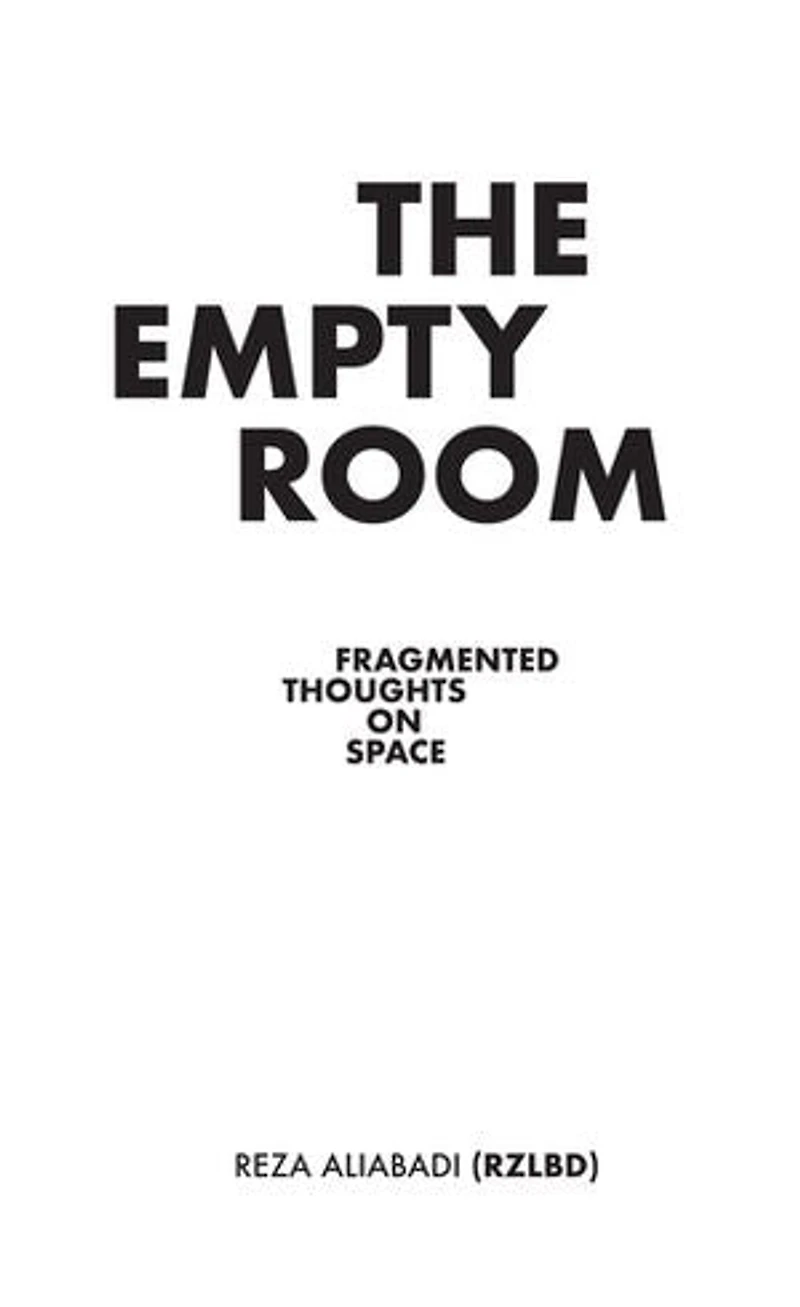
The Empty Room: Fragmented Thoughts On Space in Grande Prairie, AB
Current price: $12.79
Original price: $15.99
Coles
The Empty Room: Fragmented Thoughts On Space in Grande Prairie, AB
Current price: $12.79
Original price: $15.99
Loading Inventory...
Size: Kobo eBook
*Product information and pricing may vary - to confirm current pricing, availability, shipping, and return information please contact Coles. In the event of a pricing discrepancy, the retailer's price will apply.
Part aphorism and part manifesto, this book by Canadian architect Reza Aliabadi (RZLBD) references his ideas and thoughts about space.
He suggests ‘the empty room’ as the very essence of architecture, and ‘the spatial experience’ as its highest mandate. Reza revisits architecture – not as the walls that enclose the space – rather the space in-between the walls. What he calls an “anti-architecture” of invisible voids.
Today architecture has fallen short as a discipline and has instead converted into an industry, part of commercial establishment. Accordingly it has given up its capacity to offer contributions and has been reduced to being a service. It has become all about a form-making exercise and dressing it up with a fashionable skin.
Now, it is necessary or rather urgent to pause, take a moment, go inward, search for the essentials, and hope to rediscover a principle which is at once basic and timeless.
Part aphorism and part manifesto, this book by Canadian architect Reza Aliabadi (RZLBD) references his ideas and thoughts about space.
He suggests ‘the empty room’ as the very essence of architecture, and ‘the spatial experience’ as its highest mandate. Reza revisits architecture – not as the walls that enclose the space – rather the space in-between the walls. What he calls an “anti-architecture” of invisible voids.
Today architecture has fallen short as a discipline and has instead converted into an industry, part of commercial establishment. Accordingly it has given up its capacity to offer contributions and has been reduced to being a service. It has become all about a form-making exercise and dressing it up with a fashionable skin.
Now, it is necessary or rather urgent to pause, take a moment, go inward, search for the essentials, and hope to rediscover a principle which is at once basic and timeless.
You May Also Like












Find at Prairie Mall in Grande Prairie, AB
Visit at Prairie Mall in Grande Prairie, AB