


Gifting Made Simple
Give the Gift of ChoiceClick below to purchase a Prairie Mall eGift Card that can be used at participating retailers at Prairie Mall.Buy Gift CardHome
The Economics of Singularities Science Elucidated with Buddhist Thoughts
Coles
Loading Inventory...
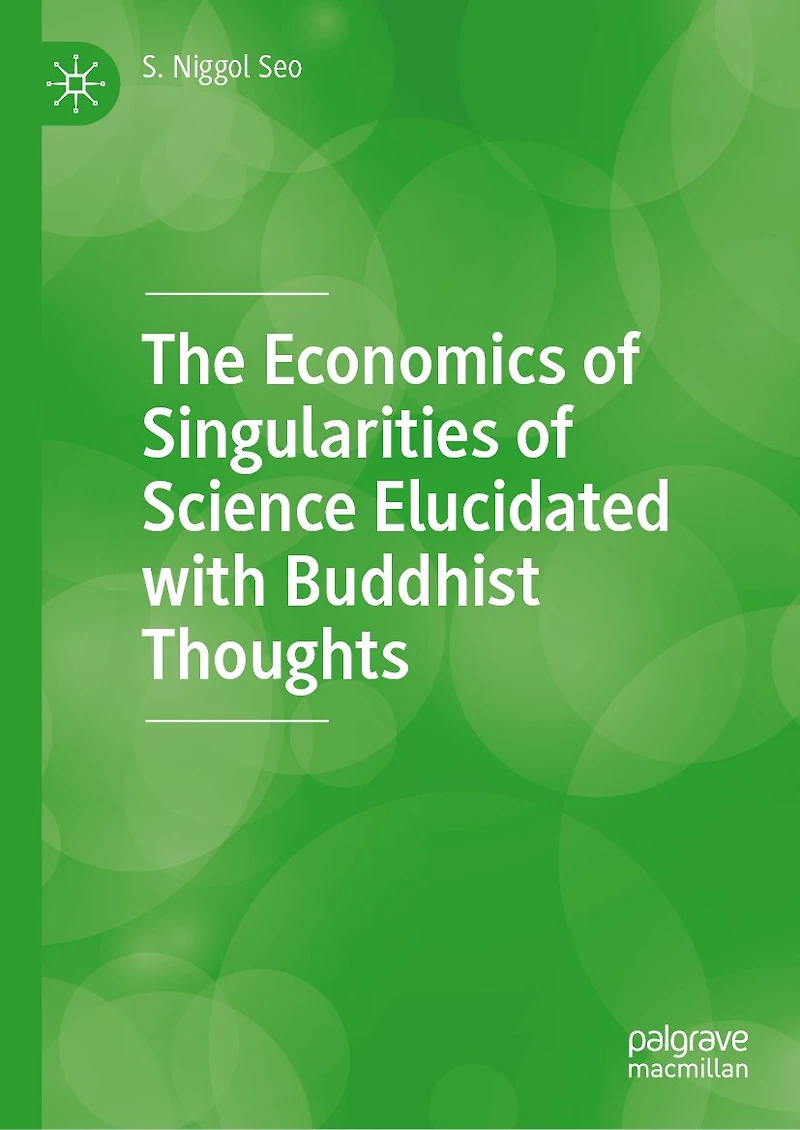
The Economics of Singularities Science Elucidated with Buddhist Thoughts in Grande Prairie, AB
Current price: $204.50
Coles
The Economics of Singularities Science Elucidated with Buddhist Thoughts in Grande Prairie, AB
Current price: $204.50
Loading Inventory...
Size: Hardcover
*Product information and pricing may vary - to confirm current pricing, availability, shipping, and return information please contact Coles. In the event of a pricing discrepancy, the retailer's price will apply.
This book analyses the unprecedented economic and social challenges to human civilization from the perspective of Buddhist philosophy. It reviews singularities in a broad range of scientific experiments, including the theory of relativity, quantum physics, artificial intelligence, mRNA virology, stem cell biology, and neuroscience to evaluate catastrophic risks posed to the present global economic and environmental order. Through placing these discussions within the context of Buddhist philosophy, an alternative to traditional economic and science ideas is presented. The power of technological progress and associate risks is highlighted as a way of looking into and creating a more sustainable future. This book provides a fresh interpretation of fat-tail economics that draws ideas from the basic sciences. The book will be of much value to students and researchers who are keen to environmental economics, planetwide catastrophes, and Buddhist philosophy.
This book analyses the unprecedented economic and social challenges to human civilization from the perspective of Buddhist philosophy. It reviews singularities in a broad range of scientific experiments, including the theory of relativity, quantum physics, artificial intelligence, mRNA virology, stem cell biology, and neuroscience to evaluate catastrophic risks posed to the present global economic and environmental order. Through placing these discussions within the context of Buddhist philosophy, an alternative to traditional economic and science ideas is presented. The power of technological progress and associate risks is highlighted as a way of looking into and creating a more sustainable future. This book provides a fresh interpretation of fat-tail economics that draws ideas from the basic sciences. The book will be of much value to students and researchers who are keen to environmental economics, planetwide catastrophes, and Buddhist philosophy.
You May Also Like










Find at Prairie Mall in Grande Prairie, AB
Visit at Prairie Mall in Grande Prairie, AB