


Gifting Made Simple
Give the Gift of ChoiceClick below to purchase a Prairie Mall eGift Card that can be used at participating retailers at Prairie Mall.Buy Gift CardHome
States, Secessionists and De Facto Control after Separatist Wars: Strategies for Controlling Territories Populations Conflict
Coles
Loading Inventory...
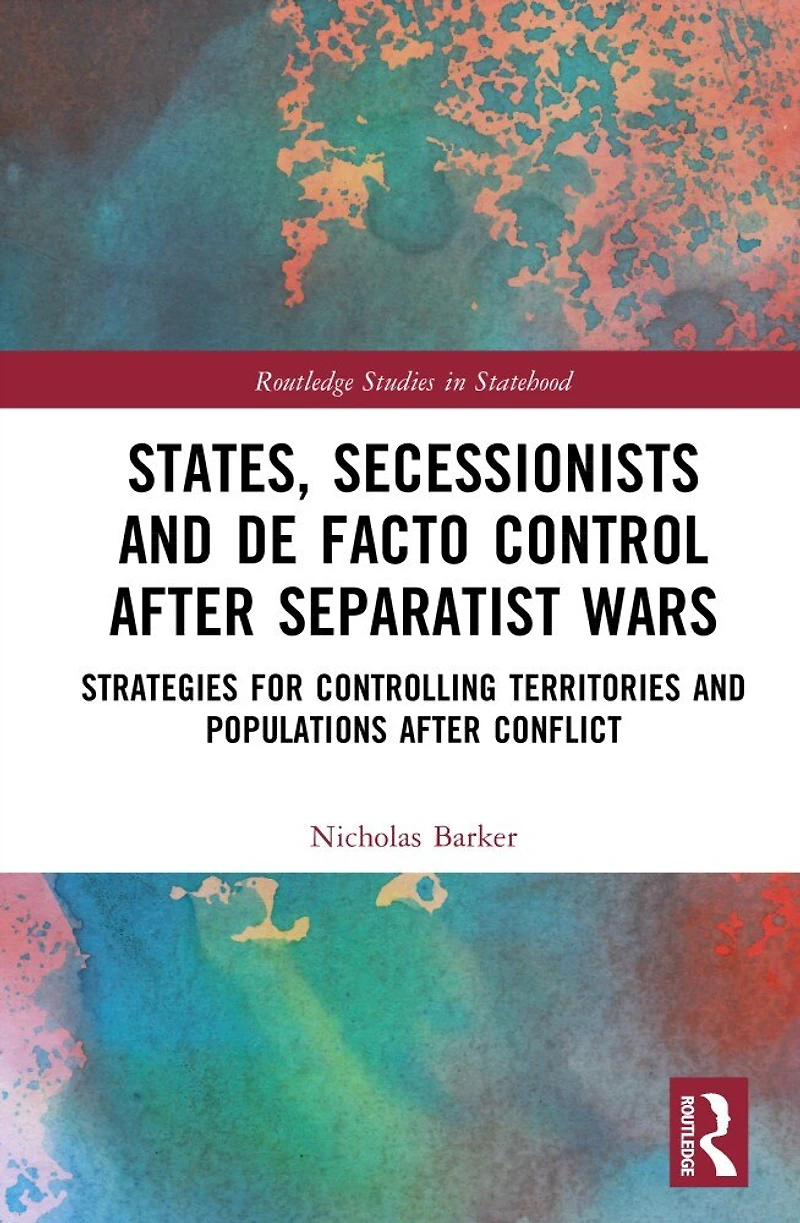
States, Secessionists and De Facto Control after Separatist Wars: Strategies for Controlling Territories Populations Conflict
By None
Current price: $296.50
Coles
States, Secessionists and De Facto Control after Separatist Wars: Strategies for Controlling Territories Populations Conflict
By None
Current price: $296.50
Loading Inventory...
Size: Hardcover
*Product information and pricing may vary - to confirm current pricing, availability, shipping, and return information please contact Coles. In the event of a pricing discrepancy, the retailer's price will apply.
This book investigates how states and secessionists seek to resolve questions of de facto control in the aftermath of secessionist wars. This work presents a study of the termination and aftermath of separatist wars, using two in-depth case studies - the Georgia-Abkhazia conflict (1994-2006) and the Serbia-Kosovo conflict (1999-2008) - to develop an empirically grounded theoretical framework to explain state and secessionist strategies for controlling territory and populations in post-war environments. It draws on fieldwork and archival research carried out in Georgia, Abkhazia, Serbia, Kosovo, and the UN archives and presents further evidence to develop and extend the framework using 'shadow cases' of the separatist wars in the Caucasus and the Balkans. By focusing on actors' objectives and their strategies for controlling territory and populations within the constraints and opportunities of a post-war context, this study helps explain what states and secessionists do and why in the critical period after a war ends and helps inform understanding of the formation and trajectories of post-war orders. This study has relevance for international policymakers, with reflections on how the theoretical framework may facilitate conflict analysis and inform policy responses towards protracted armed conflict. This book will be of interest to students of statehood, intra-state conflict and civil wars, international security, and International Relations in general.
This book investigates how states and secessionists seek to resolve questions of de facto control in the aftermath of secessionist wars. This work presents a study of the termination and aftermath of separatist wars, using two in-depth case studies - the Georgia-Abkhazia conflict (1994-2006) and the Serbia-Kosovo conflict (1999-2008) - to develop an empirically grounded theoretical framework to explain state and secessionist strategies for controlling territory and populations in post-war environments. It draws on fieldwork and archival research carried out in Georgia, Abkhazia, Serbia, Kosovo, and the UN archives and presents further evidence to develop and extend the framework using 'shadow cases' of the separatist wars in the Caucasus and the Balkans. By focusing on actors' objectives and their strategies for controlling territory and populations within the constraints and opportunities of a post-war context, this study helps explain what states and secessionists do and why in the critical period after a war ends and helps inform understanding of the formation and trajectories of post-war orders. This study has relevance for international policymakers, with reflections on how the theoretical framework may facilitate conflict analysis and inform policy responses towards protracted armed conflict. This book will be of interest to students of statehood, intra-state conflict and civil wars, international security, and International Relations in general.
You May Also Like









More About Coles at Prairie Mall
11801 100 St #104, Grande Prairie, AB T8V 3Y2, Canada
Find Coles at Prairie Mall in Grande Prairie, AB
Visit Coles at Prairie Mall in Grande Prairie, AB