


Gifting Made Simple
Give the Gift of ChoiceClick below to purchase a Prairie Mall eGift Card that can be used at participating retailers at Prairie Mall.Buy Gift CardHome
Spectral Mixture for Remote Sensing: Linear Model and Applications
Coles
Loading Inventory...
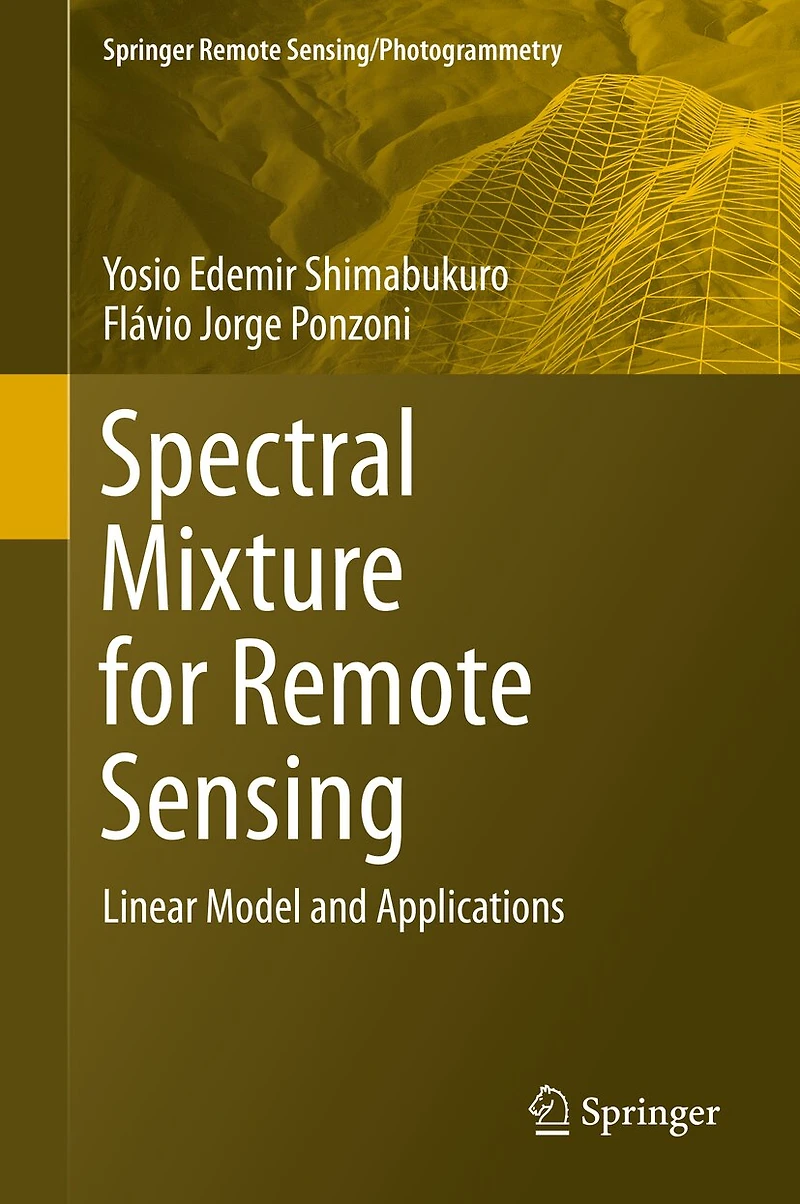
Spectral Mixture for Remote Sensing: Linear Model and Applications in Grande Prairie, AB
Current price: $233.95
Coles
Spectral Mixture for Remote Sensing: Linear Model and Applications in Grande Prairie, AB
Current price: $233.95
Loading Inventory...
Size: Hardcover
*Product information and pricing may vary - to confirm current pricing, availability, shipping, and return information please contact Coles. In the event of a pricing discrepancy, the retailer's price will apply.
This book explains in a didactic way the basic concepts of spectral mixing, digital numbers and orbital sensors, and then presents the linear modelling technique of spectral mixing and the generation of fractional images. In addition to presenting a theoretical basis for spectral mixing, the book provides examples of practical applications such as projects for estimating and monitoring deforested areas in the Amazon. In its seven chapters, the book offers remote sensing techniques to understand the main concepts, methods, and limitations of spectral mixing for digital image processing.
Chapter 1 addresses the basic concepts of spectral mixing, while chapters 2 and 3 discuss digital numbers and orbital sensors such as MODIS and Landsat MSS. Chapter 4 details the linear spectral mixing model, and chapter 5 talks about how to use this technique to create fraction images. Chapter 6 offers remote sensing applications of fraction images in deforestation monitoring, burned-area mapping, selective logging detection, and land-use/land-cover mapping. Chapter 7 gives some concluding thoughts on spectral mixing, and considers future uses in environmental remote sensing. This book will be of interest to students, teachers, and researchers using remote sensing for Earth observation and environmental modelling.
This book explains in a didactic way the basic concepts of spectral mixing, digital numbers and orbital sensors, and then presents the linear modelling technique of spectral mixing and the generation of fractional images. In addition to presenting a theoretical basis for spectral mixing, the book provides examples of practical applications such as projects for estimating and monitoring deforested areas in the Amazon. In its seven chapters, the book offers remote sensing techniques to understand the main concepts, methods, and limitations of spectral mixing for digital image processing.
Chapter 1 addresses the basic concepts of spectral mixing, while chapters 2 and 3 discuss digital numbers and orbital sensors such as MODIS and Landsat MSS. Chapter 4 details the linear spectral mixing model, and chapter 5 talks about how to use this technique to create fraction images. Chapter 6 offers remote sensing applications of fraction images in deforestation monitoring, burned-area mapping, selective logging detection, and land-use/land-cover mapping. Chapter 7 gives some concluding thoughts on spectral mixing, and considers future uses in environmental remote sensing. This book will be of interest to students, teachers, and researchers using remote sensing for Earth observation and environmental modelling.
You May Also Like








Find at Prairie Mall in Grande Prairie, AB
Visit at Prairie Mall in Grande Prairie, AB