


Gifting Made Simple
Give the Gift of ChoiceClick below to purchase a Prairie Mall eGift Card that can be used at participating retailers at Prairie Mall.Buy Gift CardHome
Somatic Cell Genetics of Woody Plants: Proceedings the IUFRO Working Party S2. 04-07 Genetics, held Grosshansdorf, Federal Republic Germany, August 10-13, 1987
Coles
Loading Inventory...

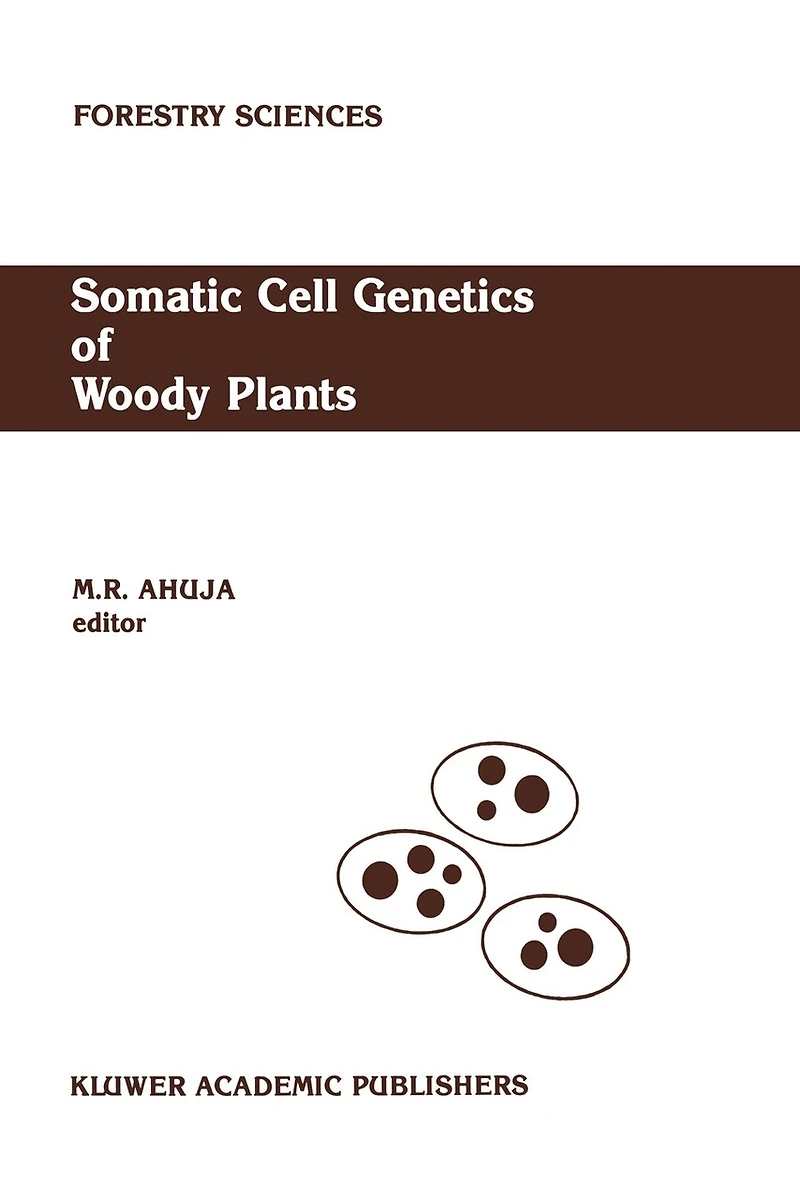
Somatic Cell Genetics of Woody Plants: Proceedings the IUFRO Working Party S2. 04-07 Genetics, held Grosshansdorf, Federal Republic Germany, August 10-13, 1987
By None
Current price: $142.95
Coles
Somatic Cell Genetics of Woody Plants: Proceedings the IUFRO Working Party S2. 04-07 Genetics, held Grosshansdorf, Federal Republic Germany, August 10-13, 1987
By None
Current price: $142.95
Loading Inventory...
Size: Hardcover
*Product information and pricing may vary - to confirm current pricing, availability, shipping, and return information please contact Coles. In the event of a pricing discrepancy, the retailer's price will apply.
Most forest tree species were considered recalcitrant a decade ago, but now with the improved in vitro techniques some progress has been made towards culture-of tree species. Micro propagation has been achieved from the juvenile tissues of a number of forest tree species. On the other hand, tissues from most mature trees are still very difficult to grow and differen tiate in vitro. Nevertheless, there has been slow but steady progress in the application of tissue culture technology for culture of tissues, organs, cells and protoplasts of tree species. As compared to most agricultural crops, and herbaceous plant species, trees are a different lot. They have long gene ration cycles. They are highly heterozygous and have a large reservoir of genetic variability. Because of this genetic variability, their response in vitro is also variable. On a single medium, the response of tissues from different trees (genotypes) of a single species may be quite different: some responding by induction of growth and differentiation, while others showing minimal or no growth at all. That makes the somatic cell genetics of woody plants somewhat difficult, but at the same time interesting.
Most forest tree species were considered recalcitrant a decade ago, but now with the improved in vitro techniques some progress has been made towards culture-of tree species. Micro propagation has been achieved from the juvenile tissues of a number of forest tree species. On the other hand, tissues from most mature trees are still very difficult to grow and differen tiate in vitro. Nevertheless, there has been slow but steady progress in the application of tissue culture technology for culture of tissues, organs, cells and protoplasts of tree species. As compared to most agricultural crops, and herbaceous plant species, trees are a different lot. They have long gene ration cycles. They are highly heterozygous and have a large reservoir of genetic variability. Because of this genetic variability, their response in vitro is also variable. On a single medium, the response of tissues from different trees (genotypes) of a single species may be quite different: some responding by induction of growth and differentiation, while others showing minimal or no growth at all. That makes the somatic cell genetics of woody plants somewhat difficult, but at the same time interesting.
You May Also Like
![American Normal Schools [microform]: Their Theory, Workings, and Results, as Embodied the Proceedings of First Annual Convention School Association, Held at Trenton, New Jersey, August 19 20, 1859](https://cdn.mall.adeptmind.ai/https%253A%252F%252Fcdn.shopify.com%252Fs%252Ffiles%252F1%252F0655%252F8980%252F5233%252Ffiles%252F1_2a4d0ac5-7898-464c-9fcc-8d8cffb52158.jpg_medium.webp)


















More About Coles at Prairie Mall
11801 100 St #104, Grande Prairie, AB T8V 3Y2, Canada
Find Coles at Prairie Mall in Grande Prairie, AB
Visit Coles at Prairie Mall in Grande Prairie, AB