


Gifting Made Simple
Give the Gift of ChoiceClick below to purchase a Prairie Mall eGift Card that can be used at participating retailers at Prairie Mall.Buy Gift CardHome
Social Capital and Subjective Well-Being: Insights from Cross-Cultural Studies
Coles
Loading Inventory...
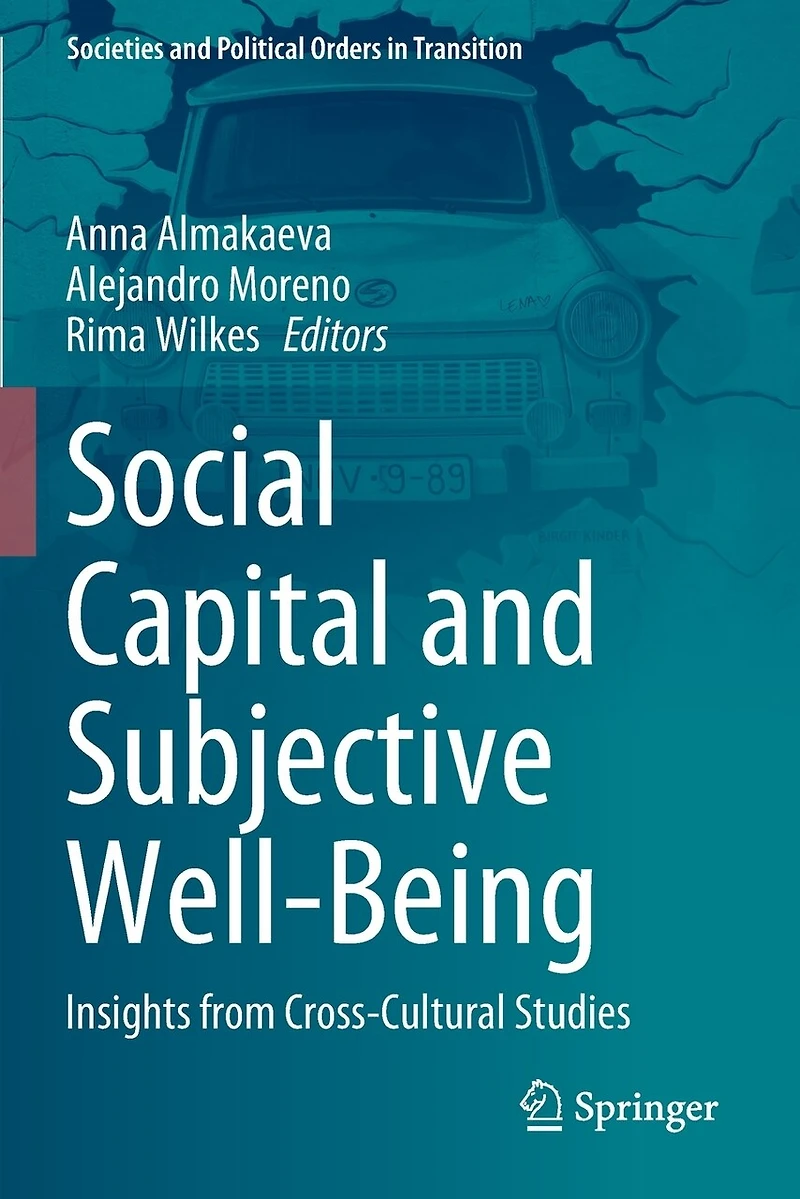
Social Capital and Subjective Well-Being: Insights from Cross-Cultural Studies in Grande Prairie, AB
Current price: $160.95
Coles
Social Capital and Subjective Well-Being: Insights from Cross-Cultural Studies in Grande Prairie, AB
Current price: $160.95
Loading Inventory...
Size: Paperback
*Product information and pricing may vary - to confirm current pricing, availability, shipping, and return information please contact Coles. In the event of a pricing discrepancy, the retailer's price will apply.
This book presents a cross-cultural investigation into the interplay between social capital and subjective well-being. Based on a quantitative analysis of the latest large-N cross-cultural data sets, including the World Value Survey and the European Social Survey, and covering various countries, it offers a comparative perspective on and new insights into the determinants of social capital and well-being. By identifying both universal and culture-specific patterns, the authors shed new light on the spatial and temporal differentiation of social capital and subjective well-being. The book is divided into two main parts: The first discusses mutual trust, religious and cultural tolerance, and pro-social and human values as essential dimensions of social capital. In turn, the second part studies social capital as a source of subjective well-being and life satisfaction. Given its scope, the book will appeal to scholars of sociology, social psychology, political scienceand economics seeking a deeper understanding of the multi-faceted nature of social capital and well-being.
This book presents a cross-cultural investigation into the interplay between social capital and subjective well-being. Based on a quantitative analysis of the latest large-N cross-cultural data sets, including the World Value Survey and the European Social Survey, and covering various countries, it offers a comparative perspective on and new insights into the determinants of social capital and well-being. By identifying both universal and culture-specific patterns, the authors shed new light on the spatial and temporal differentiation of social capital and subjective well-being. The book is divided into two main parts: The first discusses mutual trust, religious and cultural tolerance, and pro-social and human values as essential dimensions of social capital. In turn, the second part studies social capital as a source of subjective well-being and life satisfaction. Given its scope, the book will appeal to scholars of sociology, social psychology, political scienceand economics seeking a deeper understanding of the multi-faceted nature of social capital and well-being.
You May Also Like


















Find at Prairie Mall in Grande Prairie, AB
Visit at Prairie Mall in Grande Prairie, AB