


Gifting Made Simple
Give the Gift of ChoiceClick below to purchase a Prairie Mall eGift Card that can be used at participating retailers at Prairie Mall.Buy Gift CardHome
Role of Potassium Plants
Coles
Loading Inventory...
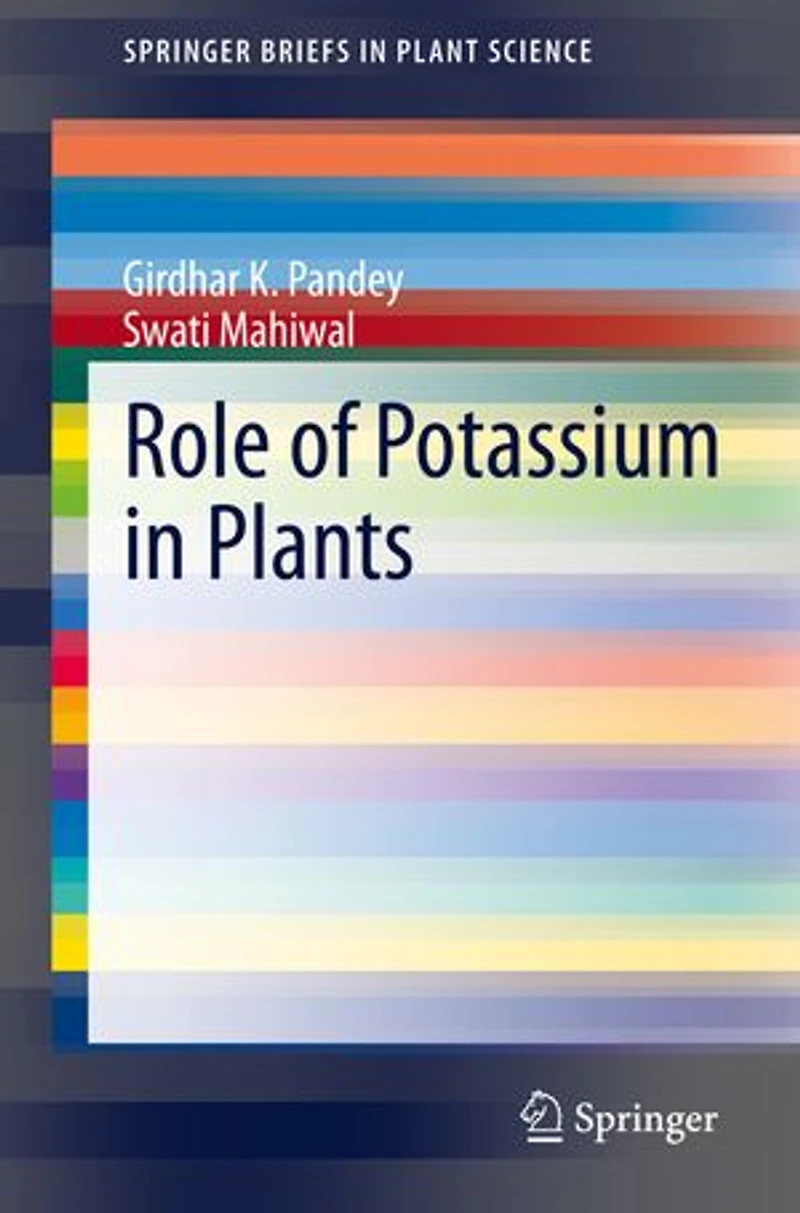
Role of Potassium Plants in Grande Prairie, AB
Current price: $64.49
Original price: $80.62
Coles
Role of Potassium Plants in Grande Prairie, AB
Current price: $64.49
Original price: $80.62
Loading Inventory...
Size: Kobo eBook
*Product information and pricing may vary - to confirm current pricing, availability, shipping, and return information please contact Coles. In the event of a pricing discrepancy, the retailer's price will apply.
Potassium (K + ) is an essential mineral macronutrient abundantly present in the cytosol which, unlike other macronutrients, is not metabolized and does not integrate into macromolecules. Compared to animal cells, K + is more abundantly present in plant cells. Overall performance of the plant, and operation of metabolic machinery depends upon intracellular K + homeostasis (K + uptake and efflux) via K + channels and transporters acting as mediators of cellular responses during plant development. Unlike animals, plants lack sodium/K + exchangers; plant cells have developed unique transport systems for K + accumulation and release. In Arabidopsis thaliana, 71 K + channels and transporters have been identified and categorized into six families. Plant adaptive responses to several abiotic and biotic stresses are mediated by regulation of intracellular K + homeostasis. In this report, we highlight the role of K + in abiotic and biotic stresses, features of channels and transporters responsible for its homeostasis along with its evolutionary relationship, perception and sensing mechanisms, and K + deficiency triggering different signaling cascades. Overall, this book covers the role of K + in plants would be significantly helpful to research, academic community as well as students to understand the one of the major attributes of plant biology.
Potassium (K + ) is an essential mineral macronutrient abundantly present in the cytosol which, unlike other macronutrients, is not metabolized and does not integrate into macromolecules. Compared to animal cells, K + is more abundantly present in plant cells. Overall performance of the plant, and operation of metabolic machinery depends upon intracellular K + homeostasis (K + uptake and efflux) via K + channels and transporters acting as mediators of cellular responses during plant development. Unlike animals, plants lack sodium/K + exchangers; plant cells have developed unique transport systems for K + accumulation and release. In Arabidopsis thaliana, 71 K + channels and transporters have been identified and categorized into six families. Plant adaptive responses to several abiotic and biotic stresses are mediated by regulation of intracellular K + homeostasis. In this report, we highlight the role of K + in abiotic and biotic stresses, features of channels and transporters responsible for its homeostasis along with its evolutionary relationship, perception and sensing mechanisms, and K + deficiency triggering different signaling cascades. Overall, this book covers the role of K + in plants would be significantly helpful to research, academic community as well as students to understand the one of the major attributes of plant biology.
You May Also Like












Find at Prairie Mall in Grande Prairie, AB
Visit at Prairie Mall in Grande Prairie, AB