


Gifting Made Simple
Give the Gift of ChoiceClick below to purchase a Prairie Mall eGift Card that can be used at participating retailers at Prairie Mall.Buy Gift CardHome
Role of Latin in Science and Education: A Historical Overview (Volume 1)
Coles
Loading Inventory...
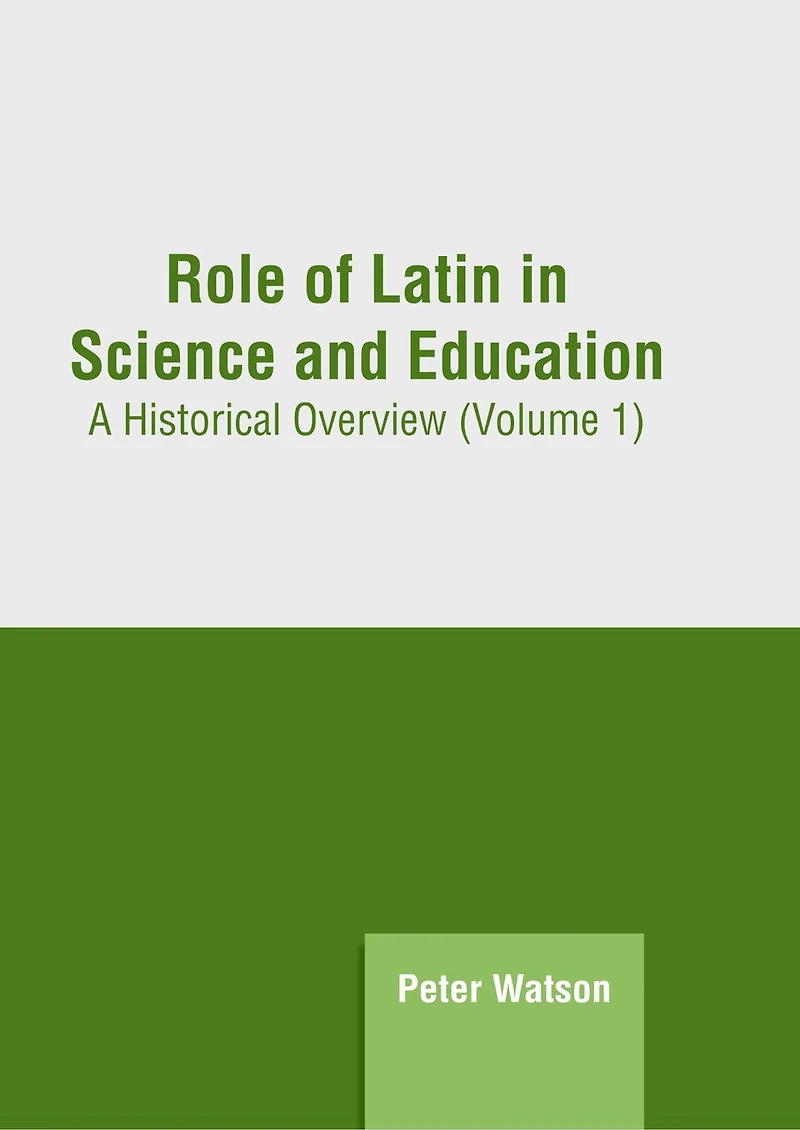
Role of Latin in Science and Education: A Historical Overview (Volume 1) in Grande Prairie, AB
Current price: $205.29
Coles
Role of Latin in Science and Education: A Historical Overview (Volume 1) in Grande Prairie, AB
Current price: $205.29
Loading Inventory...
Size: Hardcover
*Product information and pricing may vary - to confirm current pricing, availability, shipping, and return information please contact Coles. In the event of a pricing discrepancy, the retailer's price will apply.
Latin is a classical language, which belongs to the family of Indo-European languages. Initially, it was spoken in Latium, but with time it dominated the Italian region and eventually spread across the whole Roman Empire. This language was exported across the globe through the combined efforts of the Christian Church and Roman Empire. Later, it emerged as the language of romance in the form of Spanish, French, Romanian, Portuguese, and Italian. From this time until the eighteenth century, classical Latin started to emerge as the language of learning primarily due to its use by philosophers, humanists, and theologians. Latin terminology was also developed systematically for botanical descriptions, such as biological taxonomy. Furthermore, the language has been prominently used in the fields of medicine, zoology, anthropology, and chemistry. It is considered to be the universal language for scientific description and taxonomy, making it a language of learning and science. This book outlines a historical overview of the Latin language as well as its role in science and learning. It will provide comprehensive knowledge to the readers.
Latin is a classical language, which belongs to the family of Indo-European languages. Initially, it was spoken in Latium, but with time it dominated the Italian region and eventually spread across the whole Roman Empire. This language was exported across the globe through the combined efforts of the Christian Church and Roman Empire. Later, it emerged as the language of romance in the form of Spanish, French, Romanian, Portuguese, and Italian. From this time until the eighteenth century, classical Latin started to emerge as the language of learning primarily due to its use by philosophers, humanists, and theologians. Latin terminology was also developed systematically for botanical descriptions, such as biological taxonomy. Furthermore, the language has been prominently used in the fields of medicine, zoology, anthropology, and chemistry. It is considered to be the universal language for scientific description and taxonomy, making it a language of learning and science. This book outlines a historical overview of the Latin language as well as its role in science and learning. It will provide comprehensive knowledge to the readers.
You May Also Like
















Find at Prairie Mall in Grande Prairie, AB
Visit at Prairie Mall in Grande Prairie, AB