


Gifting Made Simple
Give the Gift of ChoiceClick below to purchase a Prairie Mall eGift Card that can be used at participating retailers at Prairie Mall.Buy Gift CardHome
Reforms Long-Term Care Policies Europe: Investigating Institutional Change and Social Impacts
Coles
Loading Inventory...


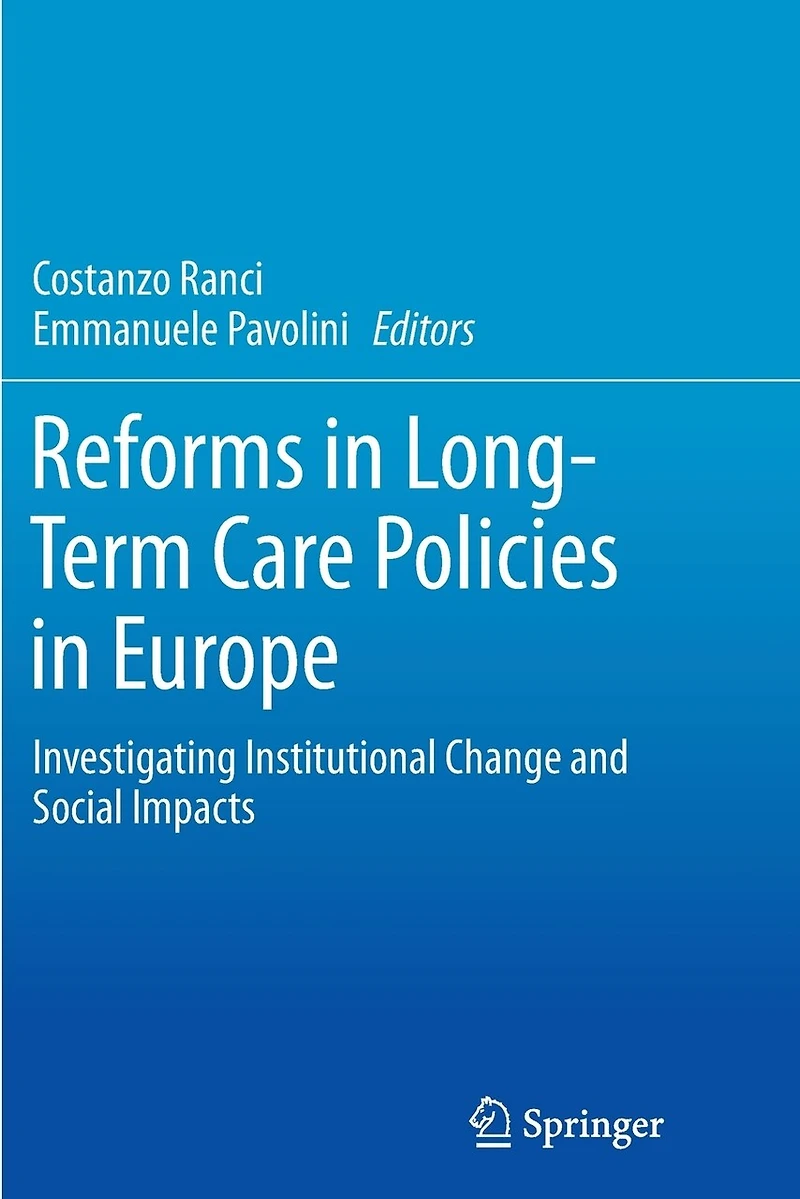
Reforms Long-Term Care Policies Europe: Investigating Institutional Change and Social Impacts in Grande Prairie, AB
Current price: $160.95
Coles
Reforms Long-Term Care Policies Europe: Investigating Institutional Change and Social Impacts in Grande Prairie, AB
Current price: $160.95
Loading Inventory...
Size: Hardcover
*Product information and pricing may vary - to confirm current pricing, availability, shipping, and return information please contact Coles. In the event of a pricing discrepancy, the retailer's price will apply.
Over the last two decades, many changes have happened to the social welfare policies of various industrial countries. Citizens have seen their pensions, unemployment benefits, and general healthcare policies shrink as "belt tightening" measures are enforced. But in contrast, long-term care has seen a general growth in public financing, an expansion of beneficiaries, and, more generally, an attempt to define larger social responsibilities and related social rights. The aim of this book is to describe and interpret the changes introduced in long-term care policies in Western Europe. The volume argues that recent reforms have brought about an increasing convergence in LTC policies. Most of the new programs have developed a new general approach to long-term care, based on a better integration of social care and health care. The book explores increasing public support given to family care work (in the past, the family would take care of the elderly or infirm) and increasing growth and recognition of a extended social care market (by which care has shifted from a moral obligation based on family reciprocity to a paid, professional activity). A new social care arrangement has therefore been developing in Western countries, based on a new mix of family obligations, market provision, and public support. In order to understand such changes, this analysis will take into account the social and economical impact of these reforms.
Over the last two decades, many changes have happened to the social welfare policies of various industrial countries. Citizens have seen their pensions, unemployment benefits, and general healthcare policies shrink as "belt tightening" measures are enforced. But in contrast, long-term care has seen a general growth in public financing, an expansion of beneficiaries, and, more generally, an attempt to define larger social responsibilities and related social rights. The aim of this book is to describe and interpret the changes introduced in long-term care policies in Western Europe. The volume argues that recent reforms have brought about an increasing convergence in LTC policies. Most of the new programs have developed a new general approach to long-term care, based on a better integration of social care and health care. The book explores increasing public support given to family care work (in the past, the family would take care of the elderly or infirm) and increasing growth and recognition of a extended social care market (by which care has shifted from a moral obligation based on family reciprocity to a paid, professional activity). A new social care arrangement has therefore been developing in Western countries, based on a new mix of family obligations, market provision, and public support. In order to understand such changes, this analysis will take into account the social and economical impact of these reforms.
You May Also Like


















Find at Prairie Mall in Grande Prairie, AB
Visit at Prairie Mall in Grande Prairie, AB