


Gifting Made Simple
Give the Gift of ChoiceClick below to purchase a Prairie Mall eGift Card that can be used at participating retailers at Prairie Mall.Buy Gift CardHome
Reformation & Scholasticism: Philosophy of Nature and Philosophical Anthropology
Coles
Loading Inventory...
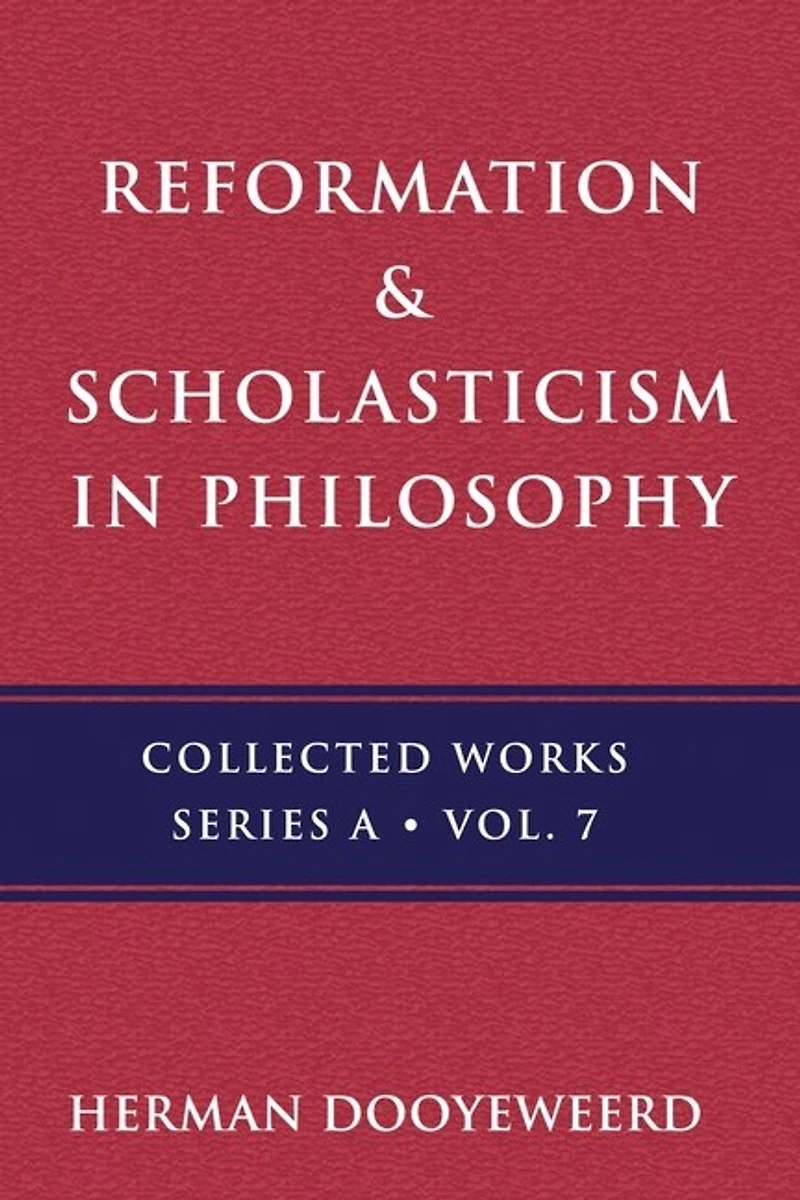
Reformation & Scholasticism: Philosophy of Nature and Philosophical Anthropology in Grande Prairie, AB
Current price: $20.99
Coles
Reformation & Scholasticism: Philosophy of Nature and Philosophical Anthropology in Grande Prairie, AB
Current price: $20.99
Loading Inventory...
Size: Paperback
*Product information and pricing may vary - to confirm current pricing, availability, shipping, and return information please contact Coles. In the event of a pricing discrepancy, the retailer's price will apply.
The present volume of Reformation & Scholasticism completes the second trilogy of Dooyeweerd's writings with a specific focus upon his philosophy of nature. Unique to this work is the development of his new theory which he called enkaptic interlacements. This theory was an attempt to show how various types of entities exhibit inter-relational connections when combined into new forms that express an enkaptic unity without eclipsing the internal sovereignty of the several entities. The relationship between atom and molecule and that between the non-living components of the cell body and their enkaptic binding in the living organism serve as an introduction to Dooyeweerd's anthropology, in which he distinguishes between four enkaptically bounded sub-structures, namely the physico-chemical substructure, the biotic sub-structure, the sensory sub-structure and the qualifying, though in itself unqualified, act-structure. The problem of creation and the genesis of humankind surfaced briefly before the final, - alas unfinished - chapter analyzes the place of humankind in the cosmos, characterized as a central anthropological problem. Although Dooyeweerd's involvement in finalizing his Encyclopedia of the Science of Law prevented him from completing his work, it remains a valuable contribution to a much needed reformation of anthropology.
The present volume of Reformation & Scholasticism completes the second trilogy of Dooyeweerd's writings with a specific focus upon his philosophy of nature. Unique to this work is the development of his new theory which he called enkaptic interlacements. This theory was an attempt to show how various types of entities exhibit inter-relational connections when combined into new forms that express an enkaptic unity without eclipsing the internal sovereignty of the several entities. The relationship between atom and molecule and that between the non-living components of the cell body and their enkaptic binding in the living organism serve as an introduction to Dooyeweerd's anthropology, in which he distinguishes between four enkaptically bounded sub-structures, namely the physico-chemical substructure, the biotic sub-structure, the sensory sub-structure and the qualifying, though in itself unqualified, act-structure. The problem of creation and the genesis of humankind surfaced briefly before the final, - alas unfinished - chapter analyzes the place of humankind in the cosmos, characterized as a central anthropological problem. Although Dooyeweerd's involvement in finalizing his Encyclopedia of the Science of Law prevented him from completing his work, it remains a valuable contribution to a much needed reformation of anthropology.










Find at Prairie Mall in Grande Prairie, AB
Visit at Prairie Mall in Grande Prairie, AB