


Gifting Made Simple
Give the Gift of ChoiceClick below to purchase a Prairie Mall eGift Card that can be used at participating retailers at Prairie Mall.Buy Gift CardHome
Raza Schools: The Fight for Latino Educational Autonomy a West Texas Borderlands Town
Coles
Loading Inventory...
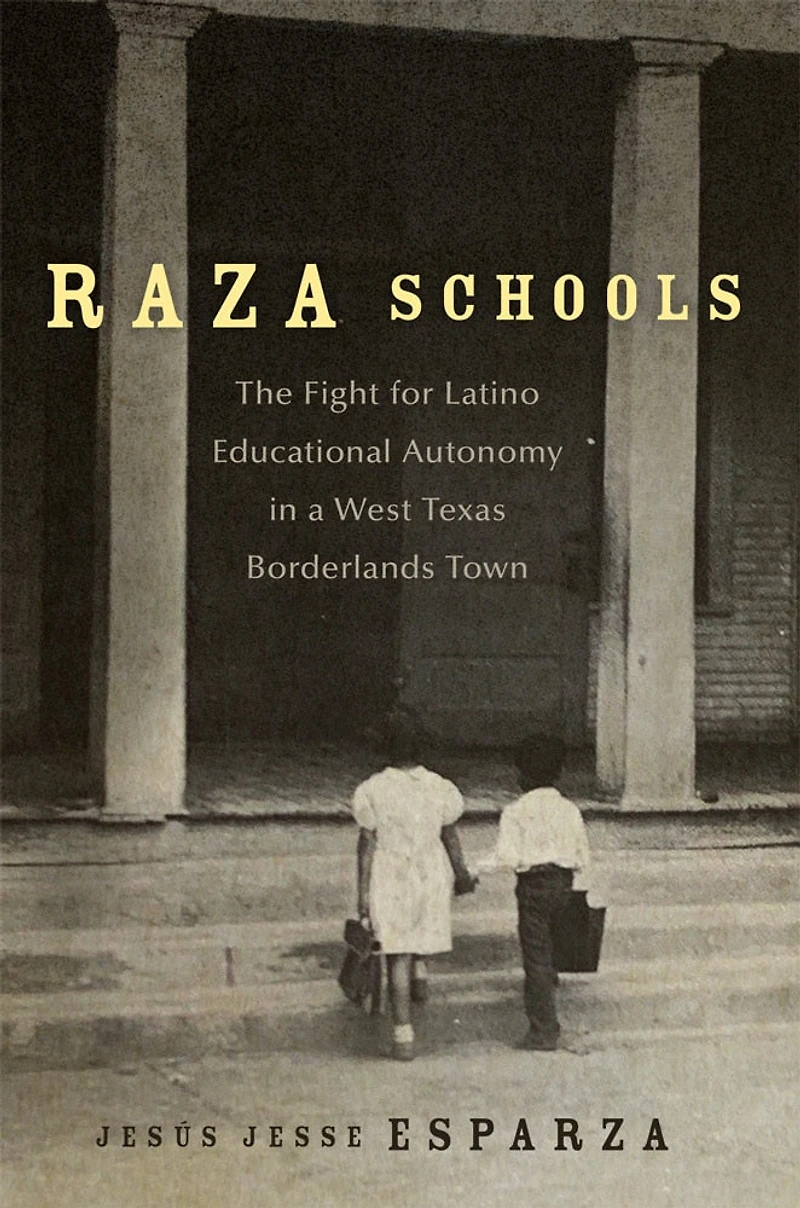
Raza Schools: The Fight for Latino Educational Autonomy a West Texas Borderlands Town
By None
Current price: $128.95
Coles
Raza Schools: The Fight for Latino Educational Autonomy a West Texas Borderlands Town
By None
Current price: $128.95
Loading Inventory...
Size: Hardcover
*Product information and pricing may vary - to confirm current pricing, availability, shipping, and return information please contact Coles. In the event of a pricing discrepancy, the retailer's price will apply.
In 1929, a Latino community in the borderlands city of Del Rio, Texas, established the first and perhaps only autonomous Mexican American school district in Texas history. How it did so-against a background of institutional racism, poverty, and segregation-is the story Jess Jesse Esparza tells in Raza Schools, a history of the rise and fall of the San Felipe Independent School District from the end of World War I through the post-civil rights era. The residents of San Felipe, whose roots Esparza traces back to the nineteenth century, faced a Jim Crow society in which deep-seated discrimination extended to education, making biased curriculum, inferior facilities, and prejudiced teachers the norm. Raza Schools highlights how the people of San Felipe harnessed the mechanisms and structures of this discriminatory system to create their own educational institutions, using the courts whenever necessary to protect their autonomy. For forty-two years, the Latino community funded, maintained, and managed its own school system-until 1971, when in an attempt to address school segregation, the federal government forced the San Felipe Independent School District to consolidate with a larger neighboring, mostly white school district. Esparza describes the ensuing clashes-over curriculum, school governance, teachers' positions, and funding-that challenged Latino autonomy. While focusing on the relationships between Latinos and whites who shared a segregated city, his work also explores the experience of African Americans who lived in Del Rio and attended schools in both districts as a segregated population. Telling the complex story of how territorial pride, race and racism, politics, economic pressures, local control, and the federal government collided in Del Rio, Raza Schools recovers a lost chapter in the history of educational civil rights-and in doing so, offers a more nuanced understanding of race relations, educational politics, and school activism in the US-Mexico borderlands.
In 1929, a Latino community in the borderlands city of Del Rio, Texas, established the first and perhaps only autonomous Mexican American school district in Texas history. How it did so-against a background of institutional racism, poverty, and segregation-is the story Jess Jesse Esparza tells in Raza Schools, a history of the rise and fall of the San Felipe Independent School District from the end of World War I through the post-civil rights era. The residents of San Felipe, whose roots Esparza traces back to the nineteenth century, faced a Jim Crow society in which deep-seated discrimination extended to education, making biased curriculum, inferior facilities, and prejudiced teachers the norm. Raza Schools highlights how the people of San Felipe harnessed the mechanisms and structures of this discriminatory system to create their own educational institutions, using the courts whenever necessary to protect their autonomy. For forty-two years, the Latino community funded, maintained, and managed its own school system-until 1971, when in an attempt to address school segregation, the federal government forced the San Felipe Independent School District to consolidate with a larger neighboring, mostly white school district. Esparza describes the ensuing clashes-over curriculum, school governance, teachers' positions, and funding-that challenged Latino autonomy. While focusing on the relationships between Latinos and whites who shared a segregated city, his work also explores the experience of African Americans who lived in Del Rio and attended schools in both districts as a segregated population. Telling the complex story of how territorial pride, race and racism, politics, economic pressures, local control, and the federal government collided in Del Rio, Raza Schools recovers a lost chapter in the history of educational civil rights-and in doing so, offers a more nuanced understanding of race relations, educational politics, and school activism in the US-Mexico borderlands.
You May Also Like
















More About Coles at Prairie Mall
11801 100 St #104, Grande Prairie, AB T8V 3Y2, Canada
Find Coles at Prairie Mall in Grande Prairie, AB
Visit Coles at Prairie Mall in Grande Prairie, AB