


Gifting Made Simple
Give the Gift of ChoiceClick below to purchase a Prairie Mall eGift Card that can be used at participating retailers at Prairie Mall.Buy Gift CardHome
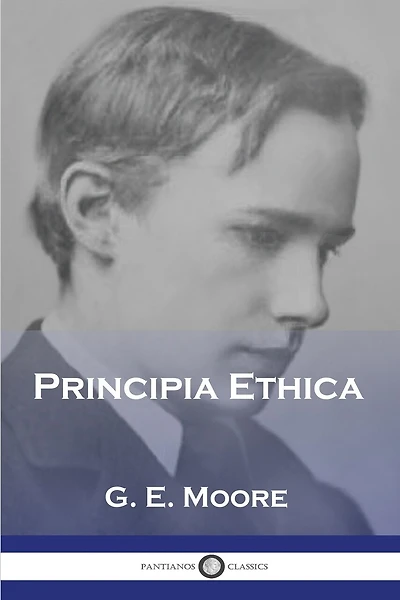
Principia Ethica
Coles
Loading Inventory...

Principia Ethica
By None
Current price: $1.99
Coles
Principia Ethica
By None
Current price: $1.99
Loading Inventory...
Size: Kobo eBook
*Product information and pricing may vary - to confirm current pricing, availability, shipping, and return information please contact Coles. In the event of a pricing discrepancy, the retailer's price will apply.
"Principia Ethica" by G. E. Moore is a foundational text in moral philosophy, where Moore introduces the concept of the "naturalistic fallacy." He argues against the idea that moral properties can be defined in terms of natural properties, emphasizing that ethical terms cannot be reduced to empirical observations. Moore's work is significant for its rigorous analysis of ethical language and its implications for moral theory, influencing subsequent philosophers to explore the complexities of ethical reasoning and the nature of good.***In "Principia Ethica," Moore also presents his famous argument for the indefinability of "good." He posits that good is a simple, non-natural property that cannot be adequately described by any combination of naturalistic terms. This idea challenges the prevailing ethical theories of his time and encourages a deeper examination of moral intuition. Moore's exploration of ethical non-naturalism has had a lasting impact on 20th-century philosophy, prompting debates about the nature of morality, the role of intuition, and the relationship between ethics and metaphysics.
"Principia Ethica" by G. E. Moore is a foundational text in moral philosophy, where Moore introduces the concept of the "naturalistic fallacy." He argues against the idea that moral properties can be defined in terms of natural properties, emphasizing that ethical terms cannot be reduced to empirical observations. Moore's work is significant for its rigorous analysis of ethical language and its implications for moral theory, influencing subsequent philosophers to explore the complexities of ethical reasoning and the nature of good.***In "Principia Ethica," Moore also presents his famous argument for the indefinability of "good." He posits that good is a simple, non-natural property that cannot be adequately described by any combination of naturalistic terms. This idea challenges the prevailing ethical theories of his time and encourages a deeper examination of moral intuition. Moore's exploration of ethical non-naturalism has had a lasting impact on 20th-century philosophy, prompting debates about the nature of morality, the role of intuition, and the relationship between ethics and metaphysics.
You May Also Like









More About Coles at Prairie Mall
11801 100 St #104, Grande Prairie, AB T8V 3Y2, Canada
Find Coles at Prairie Mall in Grande Prairie, AB
Visit Coles at Prairie Mall in Grande Prairie, AB