


Gifting Made Simple
Give the Gift of ChoiceClick below to purchase a Prairie Mall eGift Card that can be used at participating retailers at Prairie Mall.Buy Gift CardHome
Pragmatism and Idealism: Rorty Hegel on Representation Reality
Coles
Loading Inventory...
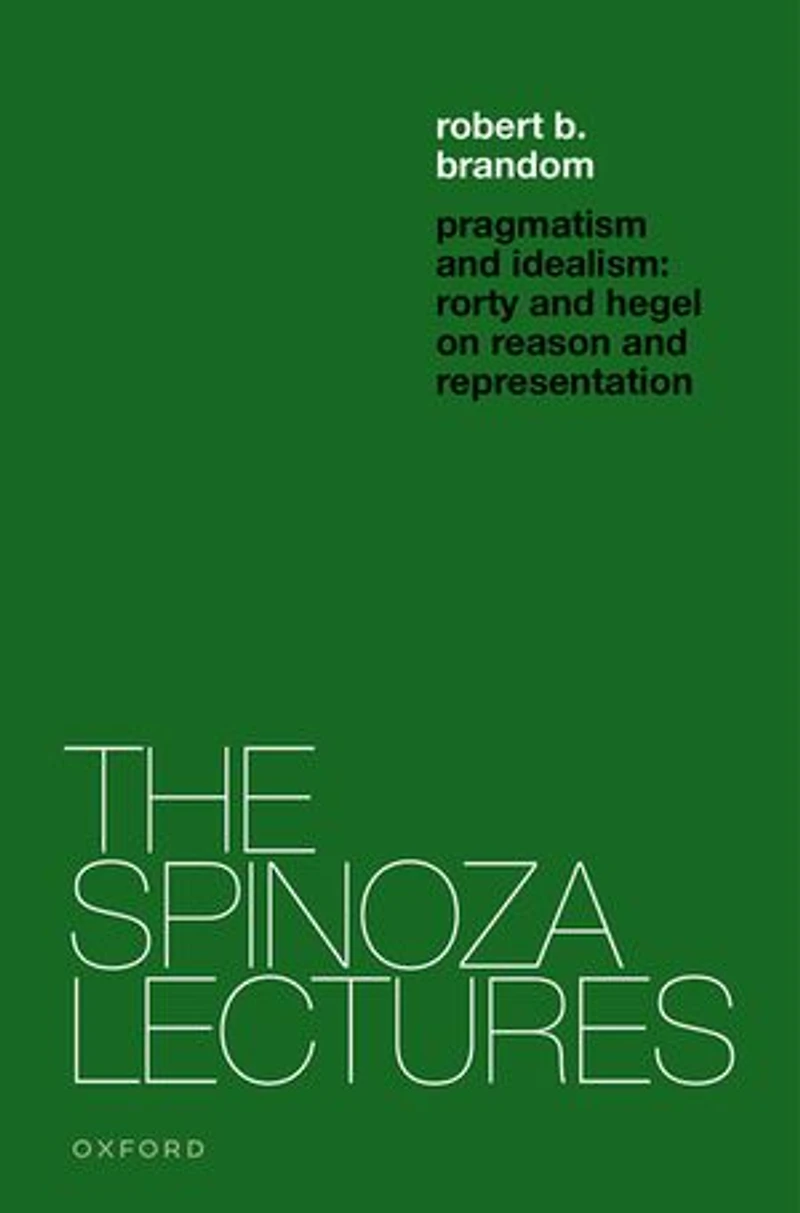
Pragmatism and Idealism: Rorty Hegel on Representation Reality in Grande Prairie, AB
Current price: $9.59
Original price: $11.70
Coles
Pragmatism and Idealism: Rorty Hegel on Representation Reality in Grande Prairie, AB
Current price: $9.59
Original price: $11.70
Loading Inventory...
Size: Kobo eBook
*Product information and pricing may vary - to confirm current pricing, availability, shipping, and return information please contact Coles. In the event of a pricing discrepancy, the retailer's price will apply.
In this short book, based upon his Spinoza Lectures at the University of Amsterdam, Robert B. Brandom offers a pragmatist approach to representation and reality, drawing on Richard Rorty and Hegel.
During the last decade of his life, Rorty emphasized the anti-authoritarian credentials of his pragmatism. He came to see pragmatism as the fighting faith of a second phase of the Enlightenment. The first stage, as Rorty construed it, concerned our emancipation from nonhuman authority in practical matters: issues of what we ought to do and how things ought to be. The envisaged second stage addresses rather our emancipation from nonhuman authority in theoretical matters.
Brandom shows how pragmatism moves beyond the traditional model of reality as authoritative over our cognitive representations of it in language and thought, to a new conception of how discursive practices help us cope with the vicissitudes of life. Hegel anticipates the challenge to the very idea of objective reality as providing norms for thought which Rorty believed required us to enact a second phase of the Enlightenment. Unlike Rorty, Hegel presents a detailed, constructive, anti-authoritarian, non-fetishistic, social pragmatist account of the representational dimension of conceptual content. At its heart is an account of the social dimension of discursive normativity in terms of reciprocal recognition, and an account of the historical dimension of discursive normativity in terms of a distinctive new conception of reason: the recollective rationality that turns a past into a tradition. His idealism thereby offers a concrete pragmatist alternative to Rorty's global semantic and epistemological anti-representationalism.
In this short book, based upon his Spinoza Lectures at the University of Amsterdam, Robert B. Brandom offers a pragmatist approach to representation and reality, drawing on Richard Rorty and Hegel.
During the last decade of his life, Rorty emphasized the anti-authoritarian credentials of his pragmatism. He came to see pragmatism as the fighting faith of a second phase of the Enlightenment. The first stage, as Rorty construed it, concerned our emancipation from nonhuman authority in practical matters: issues of what we ought to do and how things ought to be. The envisaged second stage addresses rather our emancipation from nonhuman authority in theoretical matters.
Brandom shows how pragmatism moves beyond the traditional model of reality as authoritative over our cognitive representations of it in language and thought, to a new conception of how discursive practices help us cope with the vicissitudes of life. Hegel anticipates the challenge to the very idea of objective reality as providing norms for thought which Rorty believed required us to enact a second phase of the Enlightenment. Unlike Rorty, Hegel presents a detailed, constructive, anti-authoritarian, non-fetishistic, social pragmatist account of the representational dimension of conceptual content. At its heart is an account of the social dimension of discursive normativity in terms of reciprocal recognition, and an account of the historical dimension of discursive normativity in terms of a distinctive new conception of reason: the recollective rationality that turns a past into a tradition. His idealism thereby offers a concrete pragmatist alternative to Rorty's global semantic and epistemological anti-representationalism.
You May Also Like









Find at Prairie Mall in Grande Prairie, AB
Visit at Prairie Mall in Grande Prairie, AB