


Gifting Made Simple
Give the Gift of ChoiceClick below to purchase a Prairie Mall eGift Card that can be used at participating retailers at Prairie Mall.Buy Gift CardHome
Phase Behavior of Two-Dimensional Water Confined Graphene Nanocapillaries
Coles
Loading Inventory...
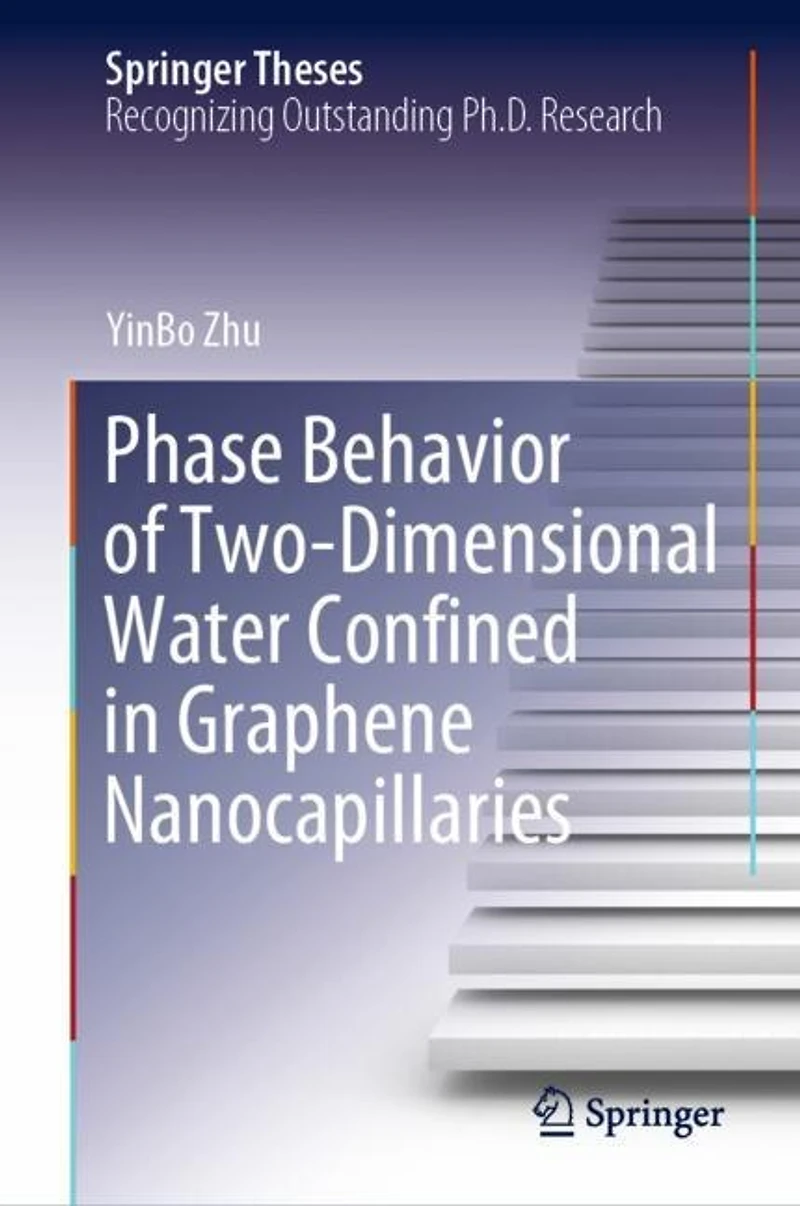
Phase Behavior of Two-Dimensional Water Confined Graphene Nanocapillaries in Grande Prairie, AB
Current price: $248.50
Coles
Phase Behavior of Two-Dimensional Water Confined Graphene Nanocapillaries in Grande Prairie, AB
Current price: $248.50
Loading Inventory...
Size: Hardcover
*Product information and pricing may vary - to confirm current pricing, availability, shipping, and return information please contact Coles. In the event of a pricing discrepancy, the retailer's price will apply.
In this book, the authors use molecular dynamics simulations to conduct a comprehensive study of the compression/superheating limit and phase transition of 2D (monolayer, bilayer, and trilayer) water/ice constrained in graphene nanocapillaries. When subjected to nanoscale confinement and under ultrahigh pressure, water and ice behave quite differently than their bulk counterparts, partly because the van der Waals pressure can spark a water-to-ice transformation, known as the metastability limit of two-dimensional (2D) liquids. From a mechanical standpoint, this liquid-to-solid transformation characterizes the compression limit (or metastability limit) of 2D water. The findings presented here could help us to better understand the phase behavior of 2D confined water/ice.
In this book, the authors use molecular dynamics simulations to conduct a comprehensive study of the compression/superheating limit and phase transition of 2D (monolayer, bilayer, and trilayer) water/ice constrained in graphene nanocapillaries. When subjected to nanoscale confinement and under ultrahigh pressure, water and ice behave quite differently than their bulk counterparts, partly because the van der Waals pressure can spark a water-to-ice transformation, known as the metastability limit of two-dimensional (2D) liquids. From a mechanical standpoint, this liquid-to-solid transformation characterizes the compression limit (or metastability limit) of 2D water. The findings presented here could help us to better understand the phase behavior of 2D confined water/ice.
You May Also Like

















Find at Prairie Mall in Grande Prairie, AB
Visit at Prairie Mall in Grande Prairie, AB