


Gifting Made Simple
Give the Gift of ChoiceClick below to purchase a Prairie Mall eGift Card that can be used at participating retailers at Prairie Mall.Buy Gift CardHome
Perfect Matchings: A Theory of Matching Covered Graphs
Coles
Loading Inventory...
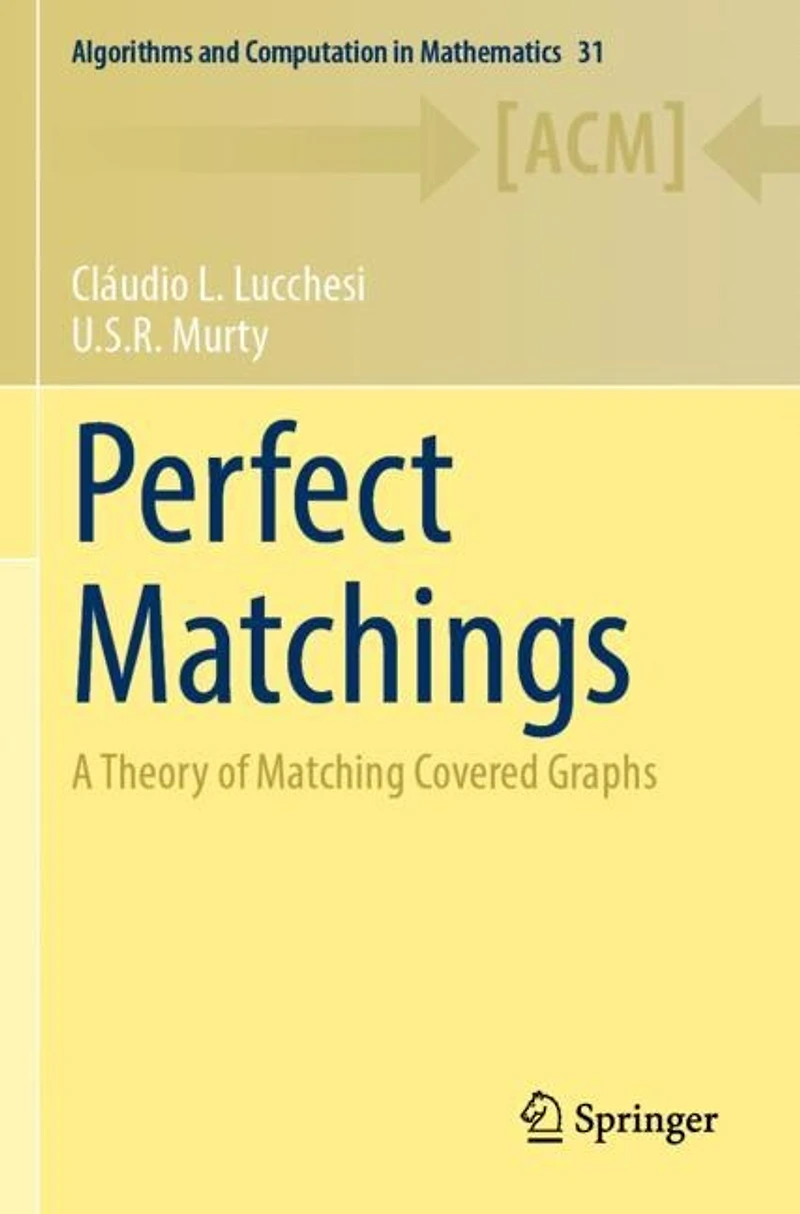
Perfect Matchings: A Theory of Matching Covered Graphs
By None
Current price: $188.50
Coles
Perfect Matchings: A Theory of Matching Covered Graphs
By None
Current price: $188.50
Loading Inventory...
Size: Paperback
*Product information and pricing may vary - to confirm current pricing, availability, shipping, and return information please contact Coles. In the event of a pricing discrepancy, the retailer's price will apply.
Beginning with its origins in the pioneering work of W.T. Tutte in 1947, this monograph systematically traces through some of the impressive developments in matching theory.
A graph is matchable if it has a perfect matching. A matching covered graph is a connected graph on at least two vertices in which each edge is covered by some perfect matching. The theory of matching covered graphs, though of relatively recent vintage, has an array of interesting results with elegant proofs, several surprising applications and challenging unsolved problems.
The aim of this book is to present the material in a well-organized manner with plenty of examples and illustrations so as to make it accessible to undergraduates, and also to unify the existing theory and point out new avenues to explore so as to make it attractive to graduate students.
Beginning with its origins in the pioneering work of W.T. Tutte in 1947, this monograph systematically traces through some of the impressive developments in matching theory.
A graph is matchable if it has a perfect matching. A matching covered graph is a connected graph on at least two vertices in which each edge is covered by some perfect matching. The theory of matching covered graphs, though of relatively recent vintage, has an array of interesting results with elegant proofs, several surprising applications and challenging unsolved problems.
The aim of this book is to present the material in a well-organized manner with plenty of examples and illustrations so as to make it accessible to undergraduates, and also to unify the existing theory and point out new avenues to explore so as to make it attractive to graduate students.
You May Also Like

















More About Coles at Prairie Mall
11801 100 St #104, Grande Prairie, AB T8V 3Y2, Canada
Find Coles at Prairie Mall in Grande Prairie, AB
Visit Coles at Prairie Mall in Grande Prairie, AB