


Gifting Made Simple
Give the Gift of ChoiceClick below to purchase a Prairie Mall eGift Card that can be used at participating retailers at Prairie Mall.Buy Gift CardHome
Peace Motion: John Dewey and the Aesthetics of Well-Being
Coles
Loading Inventory...
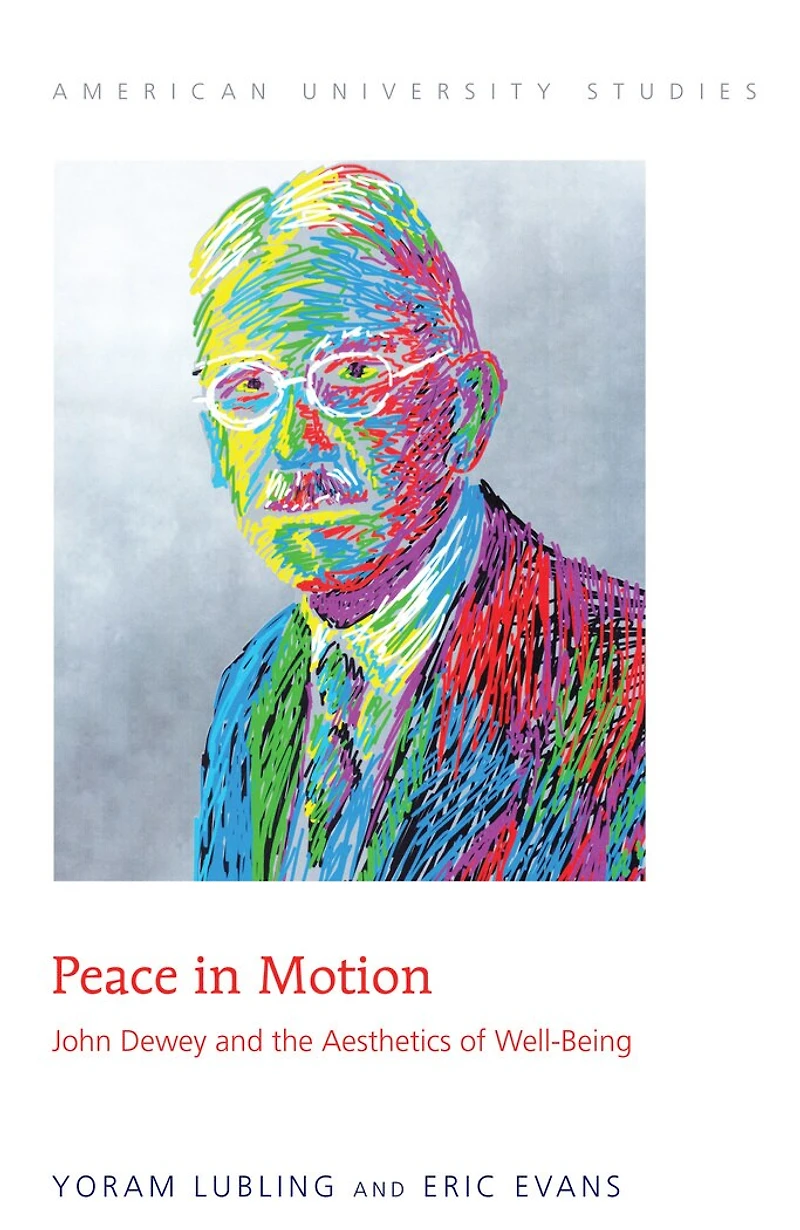
Peace Motion: John Dewey and the Aesthetics of Well-Being in Grande Prairie, AB
Current price: $154.65
Coles
Peace Motion: John Dewey and the Aesthetics of Well-Being in Grande Prairie, AB
Current price: $154.65
Loading Inventory...
Size: Hardcover
*Product information and pricing may vary - to confirm current pricing, availability, shipping, and return information please contact Coles. In the event of a pricing discrepancy, the retailer's price will apply.
In this book Yoram Lubling and Eric Evans offer a Deweyan reconstruction of our philosophical understanding of well-being. They begin with Dewey’s critique of the philosophical fallacy to examine the legitimacy and value of theories of well-being offered by traditional philosophy. However, such theories fail to provide an authentic account of well-being due to a false understanding of experience as either epistemic or cognitive. Next, using Dewey’s theory of experience, they reconstruct happiness as the target for evaluation of well-being. This leads them to reject the traditional view of a private encapsulated self, and to offer in its place a transactionally situated self which is an embodied, enculturated agent. Through their emphasis on the importance of the qualitative aspects of Dewey’s understanding of a situation, the pervasive quality of the situation emerges as the most plausible criterion for the evaluation of well-being. The authors use Dewey’s theories of inquiry, ethics, value and art to establish the naturalistic conditions under which such pervasive quality enters into a situation as either settled or unsettled, in other words, as peace in motion. Consequently, a problematic situation becomes the primary condition under which all inquiry initiates whether it is in the context of science, ethics, values, art or ordinary living. Lubling and Evans conclude that a Deweyan account of well-being involves embodied knowing instead of the traditional view of cognitive knowledge. By using such an account, it is possible to explain the conditions and mechanisms under which well-being contributes to the enlargement and enrichment of individual and collective human experience.
In this book Yoram Lubling and Eric Evans offer a Deweyan reconstruction of our philosophical understanding of well-being. They begin with Dewey’s critique of the philosophical fallacy to examine the legitimacy and value of theories of well-being offered by traditional philosophy. However, such theories fail to provide an authentic account of well-being due to a false understanding of experience as either epistemic or cognitive. Next, using Dewey’s theory of experience, they reconstruct happiness as the target for evaluation of well-being. This leads them to reject the traditional view of a private encapsulated self, and to offer in its place a transactionally situated self which is an embodied, enculturated agent. Through their emphasis on the importance of the qualitative aspects of Dewey’s understanding of a situation, the pervasive quality of the situation emerges as the most plausible criterion for the evaluation of well-being. The authors use Dewey’s theories of inquiry, ethics, value and art to establish the naturalistic conditions under which such pervasive quality enters into a situation as either settled or unsettled, in other words, as peace in motion. Consequently, a problematic situation becomes the primary condition under which all inquiry initiates whether it is in the context of science, ethics, values, art or ordinary living. Lubling and Evans conclude that a Deweyan account of well-being involves embodied knowing instead of the traditional view of cognitive knowledge. By using such an account, it is possible to explain the conditions and mechanisms under which well-being contributes to the enlargement and enrichment of individual and collective human experience.
You May Also Like












Find at Prairie Mall in Grande Prairie, AB
Visit at Prairie Mall in Grande Prairie, AB