


Gifting Made Simple
Give the Gift of ChoiceClick below to purchase a Prairie Mall eGift Card that can be used at participating retailers at Prairie Mall.Buy Gift CardHome
Paul Kane's Travels Indigenous North America: Writings and Art, Life Times
Coles
Loading Inventory...
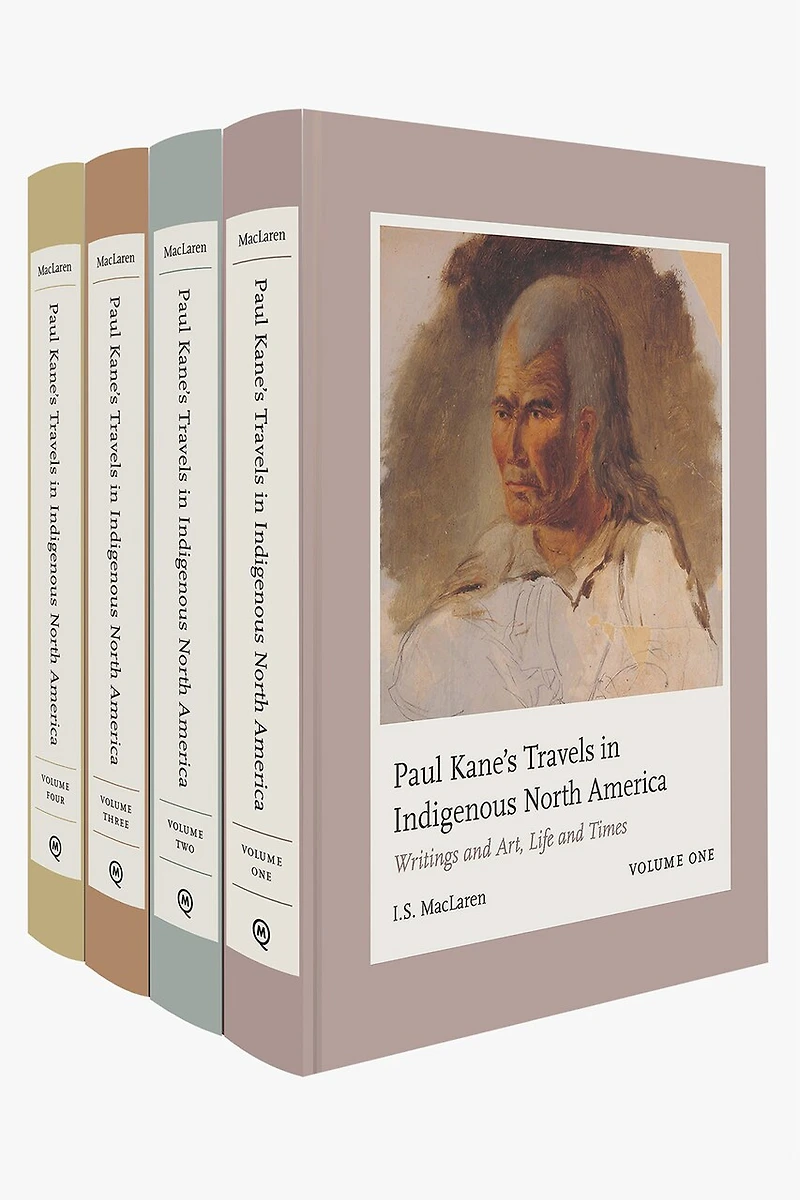
Paul Kane's Travels Indigenous North America: Writings and Art, Life Times in Grande Prairie, AB
Current price: $500.00
Coles
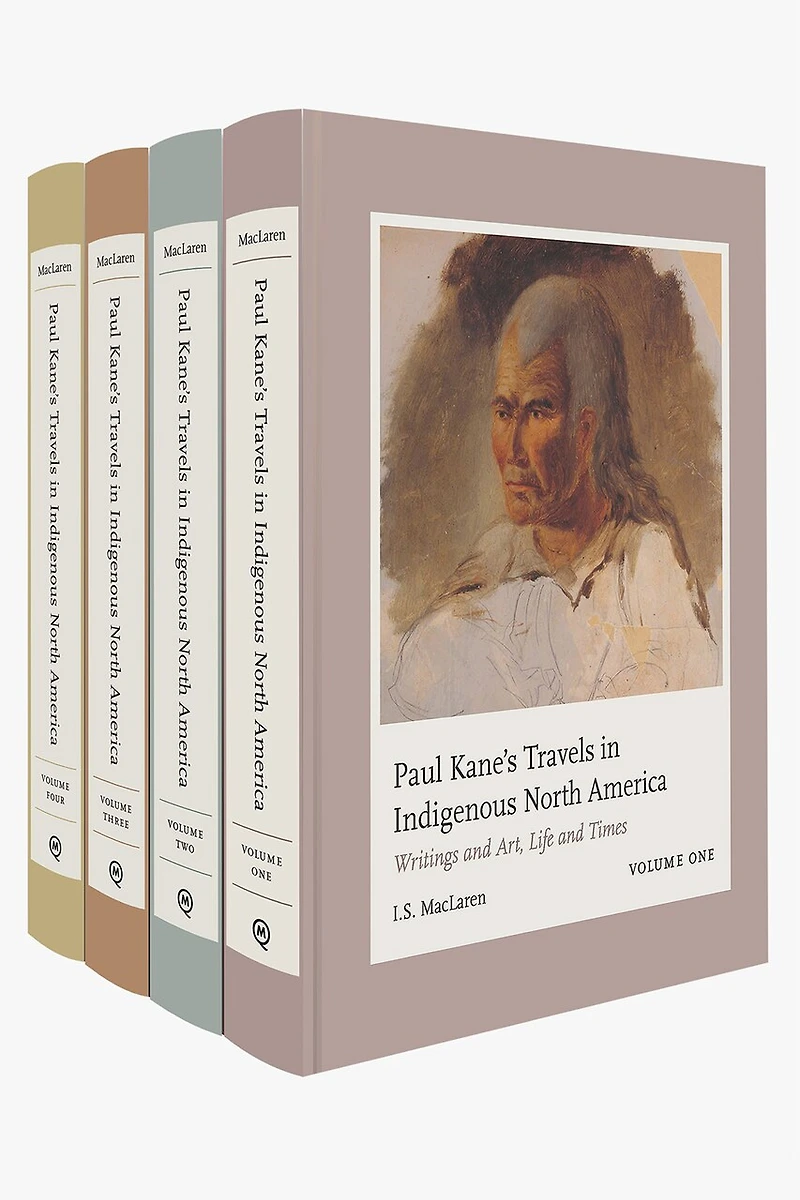
Paul Kane's Travels Indigenous North America: Writings and Art, Life Times in Grande Prairie, AB
Current price: $500.00
Loading Inventory...
Size: Hardcover (2024 A)
*Product information and pricing may vary - to confirm current pricing, availability, shipping, and return information please contact Coles. In the event of a pricing discrepancy, the retailer's price will apply.
This is a shrink-wrapped four-volume set. Paul Kane has been called the founding father of Canadian art, and Wanderings of an Artist among the Indians of North America a classic of Canadian literature. Yet his studio canvases are stereotypically generic, and his book is infamous: in word and in image, it depicts vain, vengeful, vicious, violent, and vanishing Indigenous people, disregarding its subjects’ lived experiences and providing little of ethnohistorical significance. Paul Kane’s Travels in Indigenous North America rediscovers the primary fieldwork underlying Kane’s studio art and book and the process by which his sketches and field writings evolved into damaging stereotypes with significant authority in the nineteenth century, in both popular and learned circles. In 1845 Kane travelled from Toronto to Lake Huron and Wisconsin; he continued from 1846 to 1848 to the upper Great Lakes, to the Prairies, across the Rockies, down the Columbia River, and through Oregon Territory to Puget Sound and Vancouver Island. The sketches he made constitute the first visual record of Indigenous life all the way from the Great Lakes to the Pacific Ocean. Paul Kane’s Travels in Indigenous North America , which reproduces nearly all his sketches as well as transcriptions of all his field writings, reveals him as a curious traveller fascinated by Indigenous lifeways. Together with a transcription of a draft manuscript for the book, which is not in his handwriting, the text of the first edition of Wanderings of an Artist , and a revised catalogue raisonn, these materials contextualize his travels in fur-trade history, book history, art history, and ethnohistory, offering scholarly understandings of the lives and histories of the real people Kane described and depicted while providing an authoritative biographical portrait of the artist. I.S. MacLaren reconstructs the colonial processes that turned Kane’s unique encounters with Indigenous peoples into benighted stereotypes, teaching us valuable lessons about what we thought we knew about Kane, how he let himself be turned into an Indian hater, and how historical society endowed him with authority. A painstaking, panoramic exploration, Paul Kane’s Travels in Indigenous North America also studies the artist’s oeuvre in terms of his contemporaries, his technique, and the complicated history of the provenance of the works. The whole lays the groundwork for future discussions of the pertinence of Paul Kane’s documentary record to Indigenous studies in North America.
This is a shrink-wrapped four-volume set. Paul Kane has been called the founding father of Canadian art, and Wanderings of an Artist among the Indians of North America a classic of Canadian literature. Yet his studio canvases are stereotypically generic, and his book is infamous: in word and in image, it depicts vain, vengeful, vicious, violent, and vanishing Indigenous people, disregarding its subjects’ lived experiences and providing little of ethnohistorical significance. Paul Kane’s Travels in Indigenous North America rediscovers the primary fieldwork underlying Kane’s studio art and book and the process by which his sketches and field writings evolved into damaging stereotypes with significant authority in the nineteenth century, in both popular and learned circles. In 1845 Kane travelled from Toronto to Lake Huron and Wisconsin; he continued from 1846 to 1848 to the upper Great Lakes, to the Prairies, across the Rockies, down the Columbia River, and through Oregon Territory to Puget Sound and Vancouver Island. The sketches he made constitute the first visual record of Indigenous life all the way from the Great Lakes to the Pacific Ocean. Paul Kane’s Travels in Indigenous North America , which reproduces nearly all his sketches as well as transcriptions of all his field writings, reveals him as a curious traveller fascinated by Indigenous lifeways. Together with a transcription of a draft manuscript for the book, which is not in his handwriting, the text of the first edition of Wanderings of an Artist , and a revised catalogue raisonn, these materials contextualize his travels in fur-trade history, book history, art history, and ethnohistory, offering scholarly understandings of the lives and histories of the real people Kane described and depicted while providing an authoritative biographical portrait of the artist. I.S. MacLaren reconstructs the colonial processes that turned Kane’s unique encounters with Indigenous peoples into benighted stereotypes, teaching us valuable lessons about what we thought we knew about Kane, how he let himself be turned into an Indian hater, and how historical society endowed him with authority. A painstaking, panoramic exploration, Paul Kane’s Travels in Indigenous North America also studies the artist’s oeuvre in terms of his contemporaries, his technique, and the complicated history of the provenance of the works. The whole lays the groundwork for future discussions of the pertinence of Paul Kane’s documentary record to Indigenous studies in North America.
You May Also Like








Find at Prairie Mall in Grande Prairie, AB
Visit at Prairie Mall in Grande Prairie, AB