


Gifting Made Simple
Give the Gift of ChoiceClick below to purchase a Prairie Mall eGift Card that can be used at participating retailers at Prairie Mall.Buy Gift CardHome
NMR Crystallography: Faraday Discussion 255
Coles
Loading Inventory...
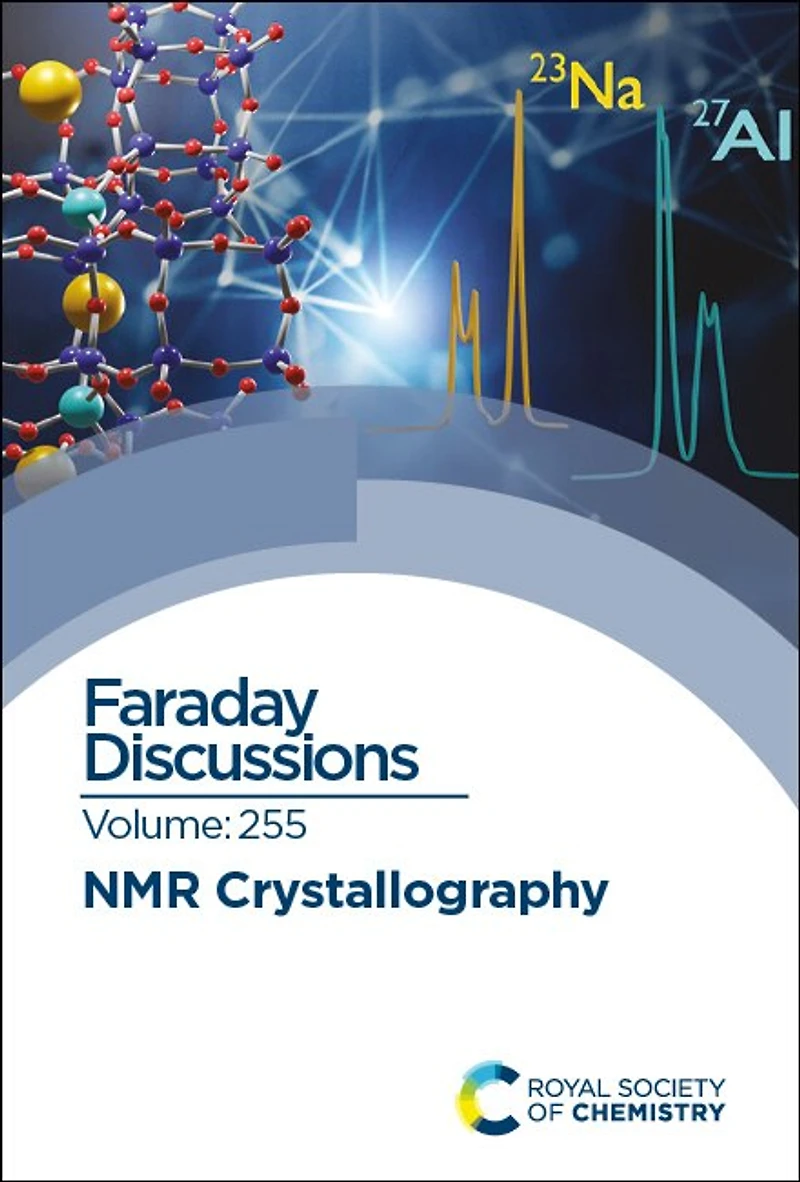
NMR Crystallography: Faraday Discussion 255 in Grande Prairie, AB
Current price: $323.00
Coles
NMR Crystallography: Faraday Discussion 255 in Grande Prairie, AB
Current price: $323.00
Loading Inventory...
Size: Paperback
*Product information and pricing may vary - to confirm current pricing, availability, shipping, and return information please contact Coles. In the event of a pricing discrepancy, the retailer's price will apply.
A fundamental cornerstone of physical chemistry is knowledge of the structure of the chemical system in question. For the study of solid materials, nuclear magnetic resonance (NMR) spectroscopy and diffraction techniques are two of the most widely used structural probes in the physical chemistry toolkit and continue to see advances in hardware and methodology. Alongside this, first-principles density-functional theory (DFT) calculations can provide a vital link between structural information from diffraction and NMR spectroscopy. The combination of these approaches, termed NMR crystallography, has become widely used to characterise structure, disorder and dynamics of solid materials in many areas of physical chemistry. In recent years, applications of NMR crystallography have increased significantly due to “black boxifying” of the computational tools, allowing this approach to be used by experts and non-specialists alike.
This volume brings together physical chemistry researchers to discuss emerging computational and experimental methods in the field of NMR crystallography, as well as the current limitations and challenges that need to be overcome to broaden applications to increasingly complex materials.
In this volume the topics covered include:
Big Data and Simulations in NMR Crystallography
Challenges and Opportunities for NMR Calculations
Generating Models that Describe Complex Disorder
Understanding Dynamics and Mechanisms
A fundamental cornerstone of physical chemistry is knowledge of the structure of the chemical system in question. For the study of solid materials, nuclear magnetic resonance (NMR) spectroscopy and diffraction techniques are two of the most widely used structural probes in the physical chemistry toolkit and continue to see advances in hardware and methodology. Alongside this, first-principles density-functional theory (DFT) calculations can provide a vital link between structural information from diffraction and NMR spectroscopy. The combination of these approaches, termed NMR crystallography, has become widely used to characterise structure, disorder and dynamics of solid materials in many areas of physical chemistry. In recent years, applications of NMR crystallography have increased significantly due to “black boxifying” of the computational tools, allowing this approach to be used by experts and non-specialists alike.
This volume brings together physical chemistry researchers to discuss emerging computational and experimental methods in the field of NMR crystallography, as well as the current limitations and challenges that need to be overcome to broaden applications to increasingly complex materials.
In this volume the topics covered include:
Big Data and Simulations in NMR Crystallography
Challenges and Opportunities for NMR Calculations
Generating Models that Describe Complex Disorder
Understanding Dynamics and Mechanisms
You May Also Like









Find at Prairie Mall in Grande Prairie, AB
Visit at Prairie Mall in Grande Prairie, AB