


Gifting Made Simple
Give the Gift of ChoiceClick below to purchase a Prairie Mall eGift Card that can be used at participating retailers at Prairie Mall.Buy Gift CardHome
Nets, Terms and Formulas: Three Views of Concurrent Processes their Relationship
Coles
Loading Inventory...
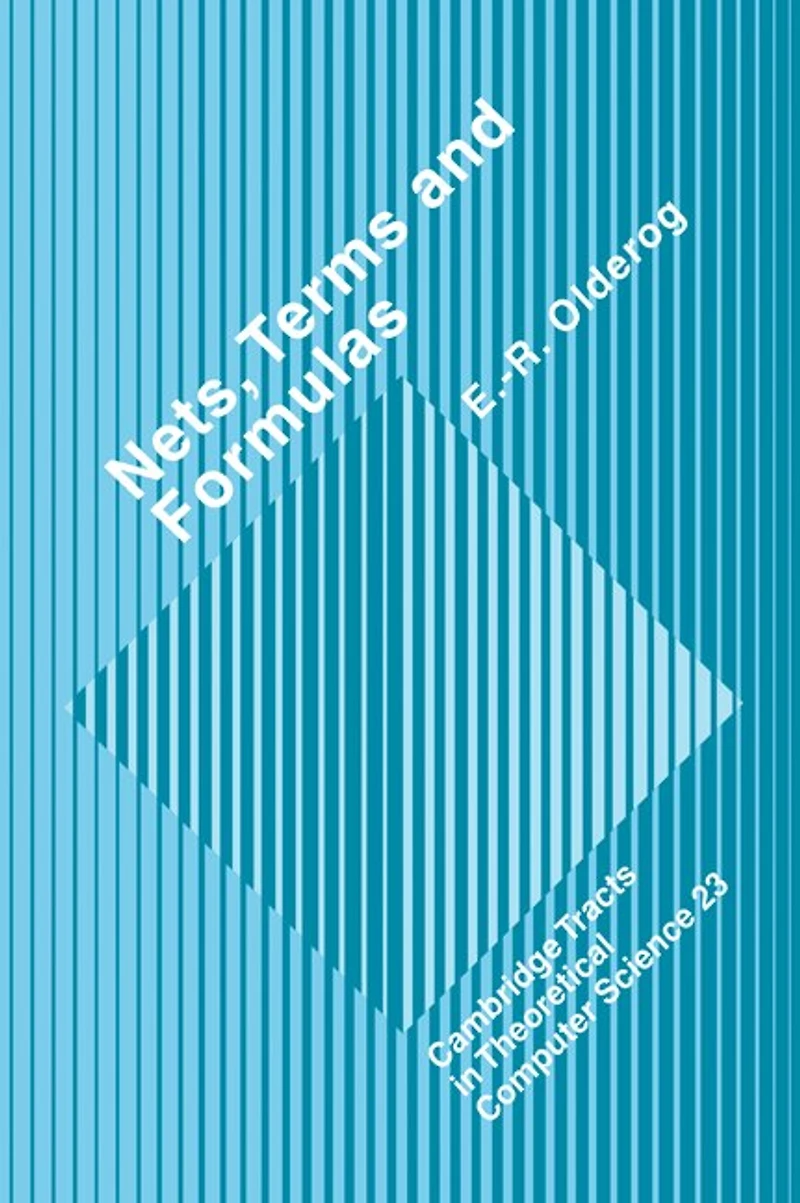
Nets, Terms and Formulas: Three Views of Concurrent Processes their Relationship in Grande Prairie, AB
Current price: $168.95
Coles
Nets, Terms and Formulas: Three Views of Concurrent Processes their Relationship in Grande Prairie, AB
Current price: $168.95
Loading Inventory...
Size: Hardcover
*Product information and pricing may vary - to confirm current pricing, availability, shipping, and return information please contact Coles. In the event of a pricing discrepancy, the retailer's price will apply.
The author presents a theory whereby nets, terms and formulas represent concurrent process at three levels of abstractions: Petri nets are used to describe all details of the operational machine behavior of processes. Algebraic process terms such as Calculus of Communicating Systems (CCS) or Communicating Sequential Processes (CSP) two of the main models for parallel programming, are used to describe the architecture of processes, i.e. how they can be composed from subprocesses. Logical formulas of a first-order trace logic are used to describe the safety and liveness aspects of the communication behavior of processes as required by their users. The main emphasis and technical contribution of this theory are transformations for a top-down design of concurrent processes starting with formulas and proceeding through terms to nets.
The author presents a theory whereby nets, terms and formulas represent concurrent process at three levels of abstractions: Petri nets are used to describe all details of the operational machine behavior of processes. Algebraic process terms such as Calculus of Communicating Systems (CCS) or Communicating Sequential Processes (CSP) two of the main models for parallel programming, are used to describe the architecture of processes, i.e. how they can be composed from subprocesses. Logical formulas of a first-order trace logic are used to describe the safety and liveness aspects of the communication behavior of processes as required by their users. The main emphasis and technical contribution of this theory are transformations for a top-down design of concurrent processes starting with formulas and proceeding through terms to nets.
You May Also Like













Find at Prairie Mall in Grande Prairie, AB
Visit at Prairie Mall in Grande Prairie, AB