


Gifting Made Simple
Give the Gift of ChoiceClick below to purchase a Prairie Mall eGift Card that can be used at participating retailers at Prairie Mall.Buy Gift CardHome
Nano- and Microencapsulation for Foods
Coles
Loading Inventory...
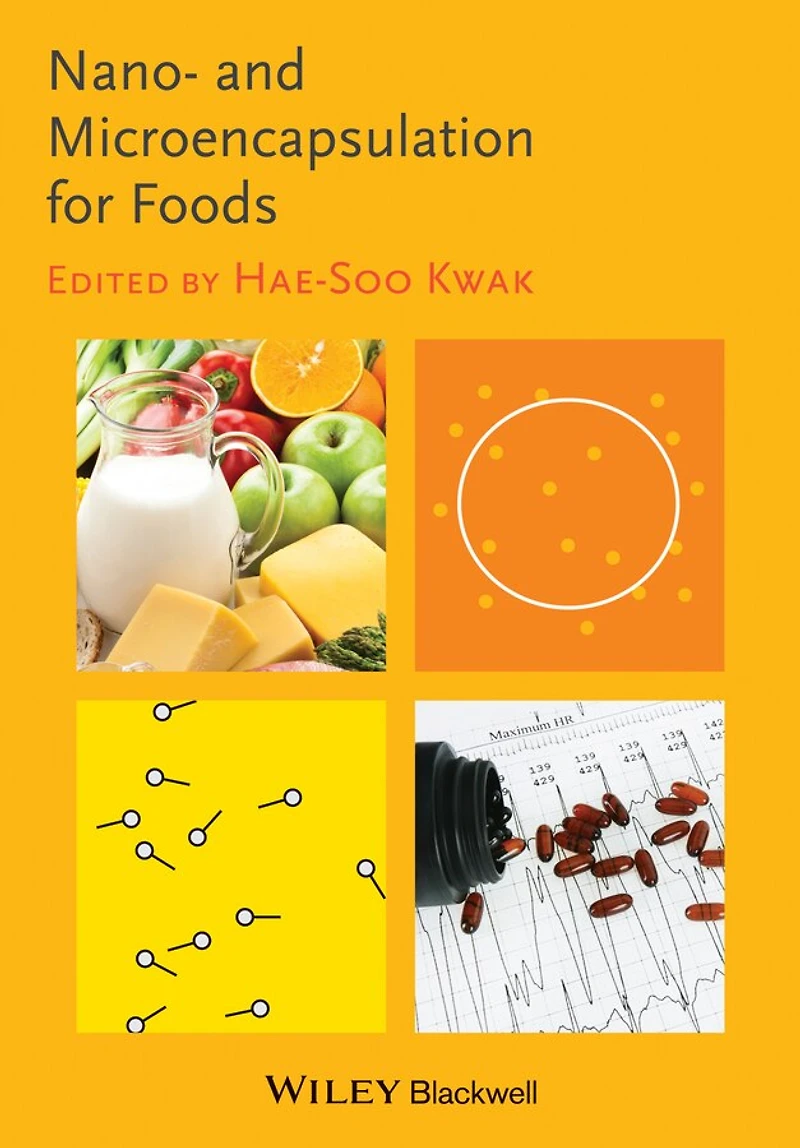

Nano- and Microencapsulation for Foods in Grande Prairie, AB
Current price: $284.95
Coles
Nano- and Microencapsulation for Foods in Grande Prairie, AB
Current price: $284.95
Loading Inventory...
Size: Hardcover
*Product information and pricing may vary - to confirm current pricing, availability, shipping, and return information please contact Coles. In the event of a pricing discrepancy, the retailer's price will apply.
Today, nano- and microencapsulation are increasingly being utilized in the pharmaceutical, textile, agricultural and food industries. Microencapsulation is a process in which tiny particles or droplets of a food are surrounded by a coating to give small capsules. These capsules can be imagined as tiny uniform spheres, in which the particles at the core are protected from outside elements by the protective coating. For example, vitamins can be encapsulated to protect them from the deterioration they would undergo if they were exposed to oxygen. This book highlights the principles, applications, toxicity and regulation of nano- and microencapsulated foods. Section I describes the theories and concepts of nano- and microencapsulation for foods adapted from pharmaceutical areas, rationales and new strategies of encapsulation, and protection and controlled release of food ingredients. Section II looks closely at the nano- and microencapsulation of food ingredients, such as vitamins, minerals, phytochemical, lipid, probiotics and flavors. This section provides a variety of references for functional food ingredients with various technologies of nano particles and microencapsulation. This section will be helpful to food processors and will deal with food ingredients for making newly developed functional food products. Section III covers the application of encapsulated ingredients to various foods, such as milk and dairy products, beverages, bakery and confectionery products, and related food packaging materials. Section IV touches on other related issues in nano- and microencapsulation, such as bioavailability, bioactivity, potential toxicity and regulation.
Today, nano- and microencapsulation are increasingly being utilized in the pharmaceutical, textile, agricultural and food industries. Microencapsulation is a process in which tiny particles or droplets of a food are surrounded by a coating to give small capsules. These capsules can be imagined as tiny uniform spheres, in which the particles at the core are protected from outside elements by the protective coating. For example, vitamins can be encapsulated to protect them from the deterioration they would undergo if they were exposed to oxygen. This book highlights the principles, applications, toxicity and regulation of nano- and microencapsulated foods. Section I describes the theories and concepts of nano- and microencapsulation for foods adapted from pharmaceutical areas, rationales and new strategies of encapsulation, and protection and controlled release of food ingredients. Section II looks closely at the nano- and microencapsulation of food ingredients, such as vitamins, minerals, phytochemical, lipid, probiotics and flavors. This section provides a variety of references for functional food ingredients with various technologies of nano particles and microencapsulation. This section will be helpful to food processors and will deal with food ingredients for making newly developed functional food products. Section III covers the application of encapsulated ingredients to various foods, such as milk and dairy products, beverages, bakery and confectionery products, and related food packaging materials. Section IV touches on other related issues in nano- and microencapsulation, such as bioavailability, bioactivity, potential toxicity and regulation.
You May Also Like










Find at Prairie Mall in Grande Prairie, AB
Visit at Prairie Mall in Grande Prairie, AB