


Gifting Made Simple
Give the Gift of ChoiceClick below to purchase a Prairie Mall eGift Card that can be used at participating retailers at Prairie Mall.Buy Gift CardHome
Multi-Objective Decision Making
Coles
Loading Inventory...
Multi-Objective Decision Making in Grande Prairie, AB
Current price: $55.50
Coles
Multi-Objective Decision Making in Grande Prairie, AB
Current price: $55.50
Loading Inventory...
Size: Paperback
*Product information and pricing may vary - to confirm current pricing, availability, shipping, and return information please contact Coles. In the event of a pricing discrepancy, the retailer's price will apply.
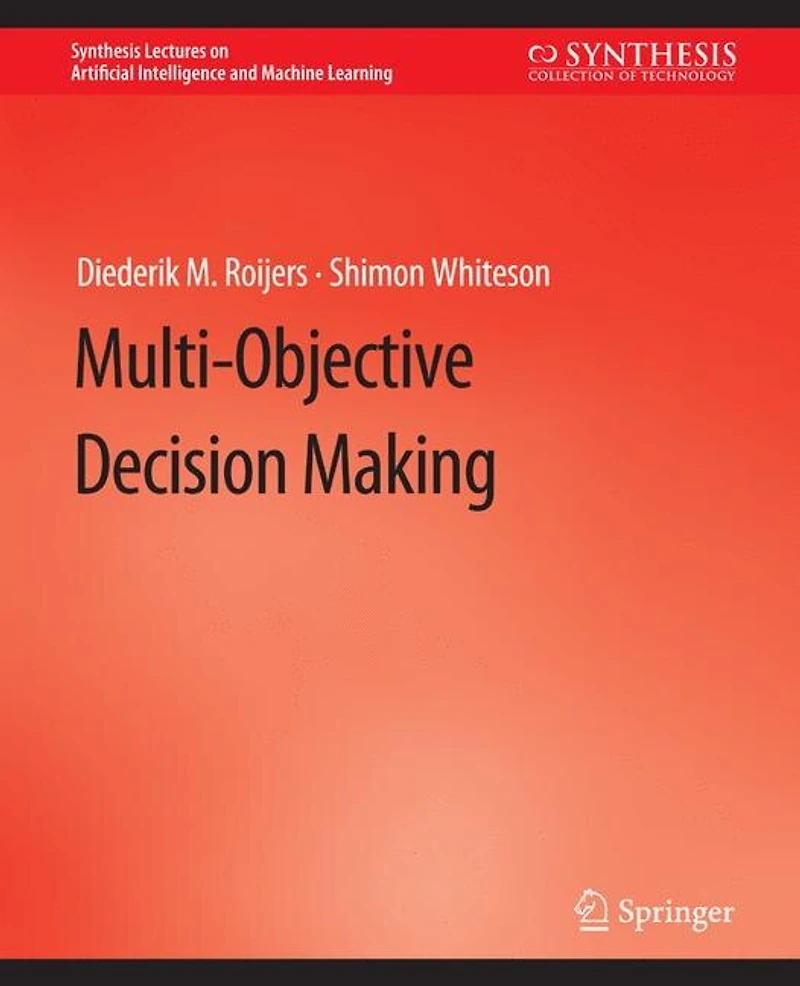
Many real-world decision problems have multiple objectives. For example, when choosing a medical treatment plan, we want to maximize the efficacy of the treatment, but also minimize the side effects. These objectives typically conflict, e.g., we can often increase the efficacy of the treatment, but at the cost of more severe side effects. In this book, we outline how to deal with multiple objectives in decision-theoretic planning and reinforcement learning algorithms. To illustrate this, we employ the popular problem classes of multi-objective Markov decision processes (MOMDPs) and multi-objective coordination graphs (MO-CoGs). First, we discuss different use cases for multi-objective decision making, and why they often necessitate explicitly multi-objective algorithms. We advocate a utility-based approach to multi-objective decision making, i.e., that what constitutes an optimal solution to a multi-objective decision problem should be derived from the availableinformation about user utility. We show how different assumptions about user utility and what types of policies are allowed lead to different solution concepts, which we outline in a taxonomy of multi-objective decision problems. Second, we show how to create new methods for multi-objective decision making using existing single-objective methods as a basis. Focusing on planning, we describe two ways to creating multi-objective algorithms: in the inner loop approach, the inner workings of a single-objective method are adapted to work with multi-objective solution concepts; in the outer loop approach, a wrapper is created around a single-objective method that solves the multi-objective problem as a series of single-objective problems. After discussing the creation of such methods for the planning setting, we discuss how these approaches apply to the learning setting. Next, we discuss three promising application domains for multi-objective decision making algorithms: energy, health, and infrastructure and transportation. Finally, we conclude by outlining important open problems and promising future directions.
Many real-world decision problems have multiple objectives. For example, when choosing a medical treatment plan, we want to maximize the efficacy of the treatment, but also minimize the side effects. These objectives typically conflict, e.g., we can often increase the efficacy of the treatment, but at the cost of more severe side effects. In this book, we outline how to deal with multiple objectives in decision-theoretic planning and reinforcement learning algorithms. To illustrate this, we employ the popular problem classes of multi-objective Markov decision processes (MOMDPs) and multi-objective coordination graphs (MO-CoGs). First, we discuss different use cases for multi-objective decision making, and why they often necessitate explicitly multi-objective algorithms. We advocate a utility-based approach to multi-objective decision making, i.e., that what constitutes an optimal solution to a multi-objective decision problem should be derived from the availableinformation about user utility. We show how different assumptions about user utility and what types of policies are allowed lead to different solution concepts, which we outline in a taxonomy of multi-objective decision problems. Second, we show how to create new methods for multi-objective decision making using existing single-objective methods as a basis. Focusing on planning, we describe two ways to creating multi-objective algorithms: in the inner loop approach, the inner workings of a single-objective method are adapted to work with multi-objective solution concepts; in the outer loop approach, a wrapper is created around a single-objective method that solves the multi-objective problem as a series of single-objective problems. After discussing the creation of such methods for the planning setting, we discuss how these approaches apply to the learning setting. Next, we discuss three promising application domains for multi-objective decision making algorithms: energy, health, and infrastructure and transportation. Finally, we conclude by outlining important open problems and promising future directions.












Find at Prairie Mall in Grande Prairie, AB
Visit at Prairie Mall in Grande Prairie, AB