


Gifting Made Simple
Give the Gift of ChoiceClick below to purchase a Prairie Mall eGift Card that can be used at participating retailers at Prairie Mall.Buy Gift CardHome
Money Illusion And Strategic Complementarity As Causes Of Monetary Non-neutrality
Coles
Loading Inventory...
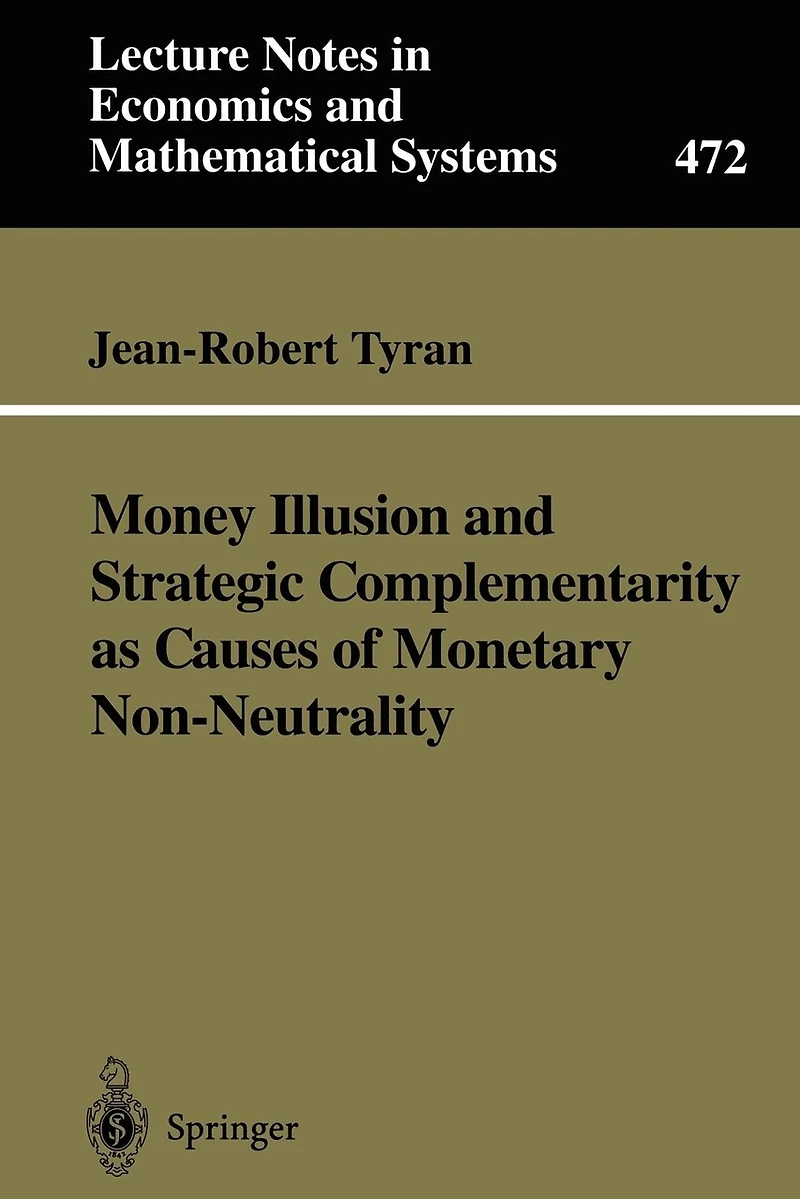
Money Illusion And Strategic Complementarity As Causes Of Monetary Non-neutrality in Grande Prairie, AB
Current price: $71.50
Coles
Money Illusion And Strategic Complementarity As Causes Of Monetary Non-neutrality in Grande Prairie, AB
Current price: $71.50
Loading Inventory...
Size: Paperback
*Product information and pricing may vary - to confirm current pricing, availability, shipping, and return information please contact Coles. In the event of a pricing discrepancy, the retailer's price will apply.
In principle, money illusion could explain the inertial adjustment of prices after changes of monetary policy. Hence, money illusion could provide an explanation of monetary non-neutrality. However, this explanation has been thoroughly discredited in modern economics. As a consequence, economists have ever since the 1970s searched for alternative explanations for nominal rigidity. These explanations are all based on the assumption of fully rational economic agents, holding rational expectations. This book argues that money illusion has been prematurely dismissed as an explanation of monetary non-neutrality. Methods of experimental economics are used to investigate the real aggregate effects of money illusion. It is shown that money illusion in fact causes (short-run) real income effects if strategic complementarity prevails. Strategic complementarity is an important characteristic of naturally occurring macroeconomies and is a recurrent theme in most models explaining nominal rigidity.
In principle, money illusion could explain the inertial adjustment of prices after changes of monetary policy. Hence, money illusion could provide an explanation of monetary non-neutrality. However, this explanation has been thoroughly discredited in modern economics. As a consequence, economists have ever since the 1970s searched for alternative explanations for nominal rigidity. These explanations are all based on the assumption of fully rational economic agents, holding rational expectations. This book argues that money illusion has been prematurely dismissed as an explanation of monetary non-neutrality. Methods of experimental economics are used to investigate the real aggregate effects of money illusion. It is shown that money illusion in fact causes (short-run) real income effects if strategic complementarity prevails. Strategic complementarity is an important characteristic of naturally occurring macroeconomies and is a recurrent theme in most models explaining nominal rigidity.
You May Also Like












Find at Prairie Mall in Grande Prairie, AB
Visit at Prairie Mall in Grande Prairie, AB