


Gifting Made Simple
Give the Gift of ChoiceClick below to purchase a Prairie Mall eGift Card that can be used at participating retailers at Prairie Mall.Buy Gift CardHome
Molybdenum as a Paleoredox Proxy: Past, Present, and Future
Coles
Loading Inventory...
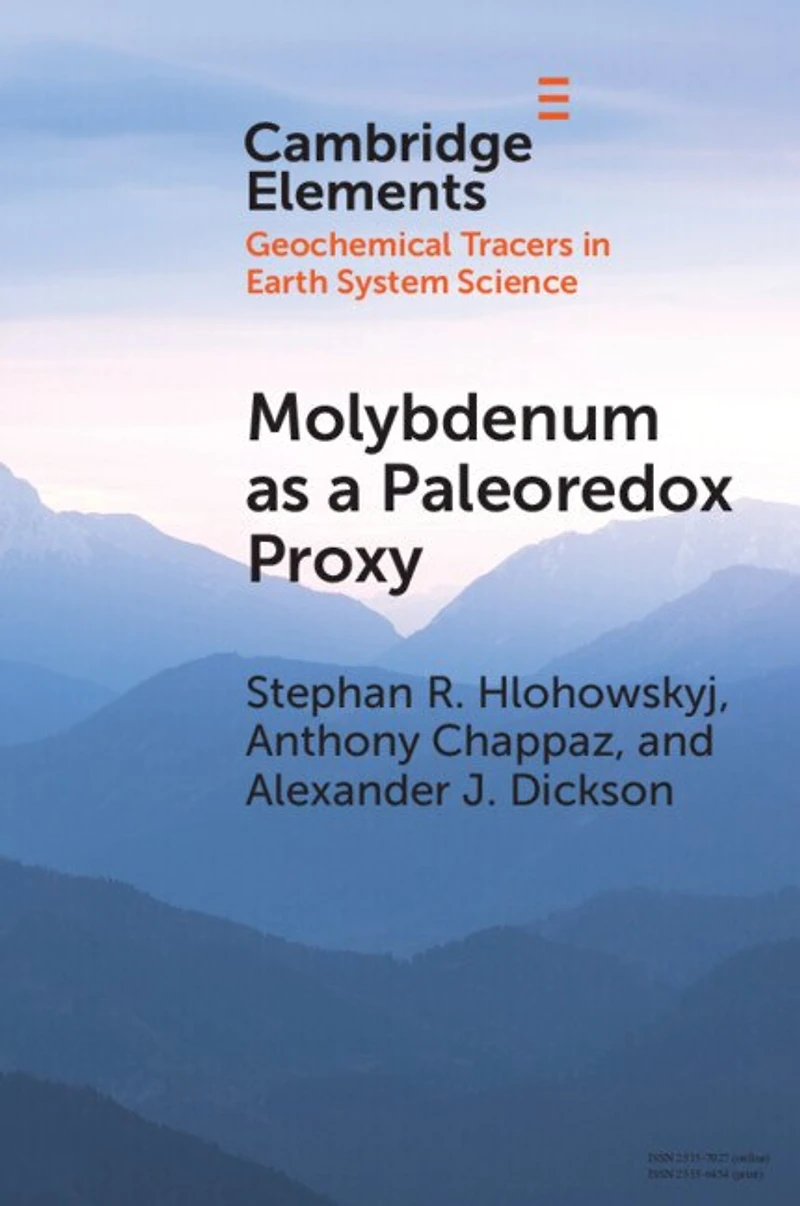
Molybdenum as a Paleoredox Proxy: Past, Present, and Future in Grande Prairie, AB
By None
Current price: $29.54
Coles
Molybdenum as a Paleoredox Proxy: Past, Present, and Future in Grande Prairie, AB
By None
Current price: $29.54
Loading Inventory...
Size: Paperback
*Product information and pricing may vary - to confirm current pricing, availability, shipping, and return information please contact Coles. In the event of a pricing discrepancy, the retailer's price will apply.
Molybdenum (Mo) is a widely used trace metal for investigating redox conditions. However, unanswered questions remain that concentration and bulk isotopic analysis cannot specially answer. Improvements can be made by combining new geochemical techniques to traditional methods of Mo analysis. In this Element, we propose a refinement of Mo geochemistry within aquatic systems, ancient rocks, and modern sediments through molecular geochemistry (systematically combining concentration, isotope ratio, elemental mapping, and speciation analyses). Specifically, to intermediate sulfide concentrations governing Mo behavior below the 'switch-point' and dominant sequestration pathways in low oxygen conditions. The aim of this work is to 1) aid and improve the breadth of Mo paleoproxy interpretations by considering Mo speciation and 2) address outstanding research gaps concerning Mo systematics (cycling, partitioning, sequestration, etc.). The Mo paleoproxy has potential to solve ever complex research questions. By using molecular geochemical recommendations, improved Mo paleoproxy interpretations and reconstruction can be achieved.
Molybdenum (Mo) is a widely used trace metal for investigating redox conditions. However, unanswered questions remain that concentration and bulk isotopic analysis cannot specially answer. Improvements can be made by combining new geochemical techniques to traditional methods of Mo analysis. In this Element, we propose a refinement of Mo geochemistry within aquatic systems, ancient rocks, and modern sediments through molecular geochemistry (systematically combining concentration, isotope ratio, elemental mapping, and speciation analyses). Specifically, to intermediate sulfide concentrations governing Mo behavior below the 'switch-point' and dominant sequestration pathways in low oxygen conditions. The aim of this work is to 1) aid and improve the breadth of Mo paleoproxy interpretations by considering Mo speciation and 2) address outstanding research gaps concerning Mo systematics (cycling, partitioning, sequestration, etc.). The Mo paleoproxy has potential to solve ever complex research questions. By using molecular geochemical recommendations, improved Mo paleoproxy interpretations and reconstruction can be achieved.
You May Also Like
















More About Coles at Prairie Mall
11801 100 St #104, Grande Prairie, AB T8V 3Y2, Canada
Find Coles at Prairie Mall in Grande Prairie, AB
Visit Coles at Prairie Mall in Grande Prairie, AB