


Gifting Made Simple
Give the Gift of ChoiceClick below to purchase a Prairie Mall eGift Card that can be used at participating retailers at Prairie Mall.Buy Gift CardHome
Maya Children by Karen L. Kramer, Hardcover | Indigo Chapters
Coles
Loading Inventory...
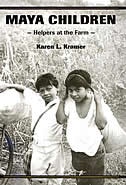
Maya Children by Karen L. Kramer, Hardcover | Indigo Chapters
By Karen L. Kramer
Current price: $80.00
Coles
Maya Children by Karen L. Kramer, Hardcover | Indigo Chapters
By Karen L. Kramer
Current price: $80.00
Loading Inventory...
Size: 1 x 1 x 1.25
*Product information may vary - to confirm product availability, pricing, shipping and return information please contact Coles
Among the Maya of Xculoc, an isolated farming village in the lowland forests of the Yucatán peninsula, children contribute to household production in considerable ways. Thus this village, the subject of anthropologist Karen Kramer's study, affords a remarkable opportunity for understanding the economics of childhood in a pre-modern agricultural setting. Drawing on a range of theoretical perspectives and extensive data gathered over many years, Kramer interprets the form, value, and consequences of children's labor in this maize-based culture. She looks directly at family size and birth spacing as they figure in the economics of families; and she considers the timing of children's economic contributions and their role in underwriting the cost of large families. Kramer's findings-in particular, that the children of Xculoc begin to produce more than they consume long before they marry and leave home-have a number of interesting implications for the study of family reproductive decisions and parent-offspring conflict, and for debates within anthropology over children's contributions in hunter/gatherer versus agricultural societies. With its theoretical breadth, and its detail on crop yields, reproductive histories, diet, work scheduling, and agricultural production, this book sets a new standard for measuring and interpreting child productivity in a subsistence farming community. | Maya Children by Karen L. Kramer, Hardcover | Indigo Chapters
Among the Maya of Xculoc, an isolated farming village in the lowland forests of the Yucatán peninsula, children contribute to household production in considerable ways. Thus this village, the subject of anthropologist Karen Kramer's study, affords a remarkable opportunity for understanding the economics of childhood in a pre-modern agricultural setting. Drawing on a range of theoretical perspectives and extensive data gathered over many years, Kramer interprets the form, value, and consequences of children's labor in this maize-based culture. She looks directly at family size and birth spacing as they figure in the economics of families; and she considers the timing of children's economic contributions and their role in underwriting the cost of large families. Kramer's findings-in particular, that the children of Xculoc begin to produce more than they consume long before they marry and leave home-have a number of interesting implications for the study of family reproductive decisions and parent-offspring conflict, and for debates within anthropology over children's contributions in hunter/gatherer versus agricultural societies. With its theoretical breadth, and its detail on crop yields, reproductive histories, diet, work scheduling, and agricultural production, this book sets a new standard for measuring and interpreting child productivity in a subsistence farming community. | Maya Children by Karen L. Kramer, Hardcover | Indigo Chapters
You May Also Like

















More About Coles at Prairie Mall
11801 100 St #104, Grande Prairie, AB T8V 3Y2, Canada
Find Coles at Prairie Mall in Grande Prairie, AB
Visit Coles at Prairie Mall in Grande Prairie, AB