


Gifting Made Simple
Give the Gift of ChoiceClick below to purchase a Prairie Mall eGift Card that can be used at participating retailers at Prairie Mall.Buy Gift CardHome
Mathematical Foundations of Image Processing and Analysis 2
Coles
Loading Inventory...
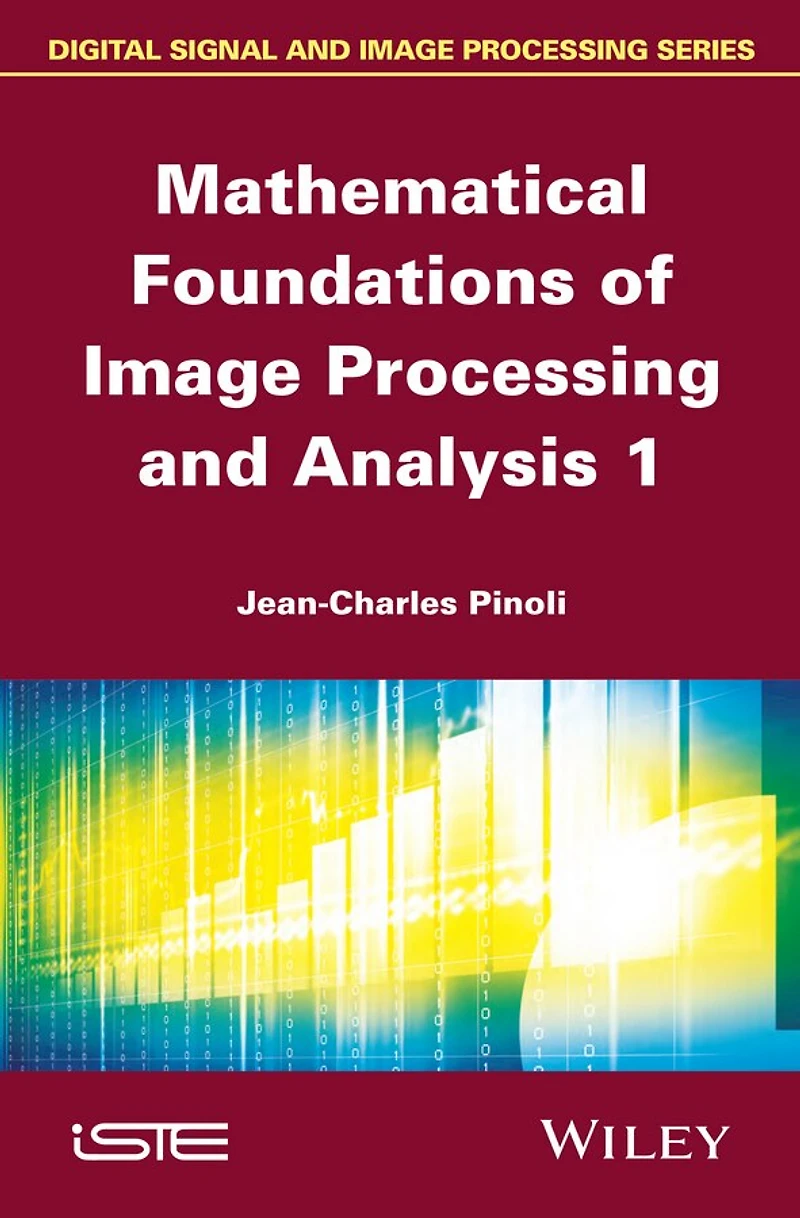
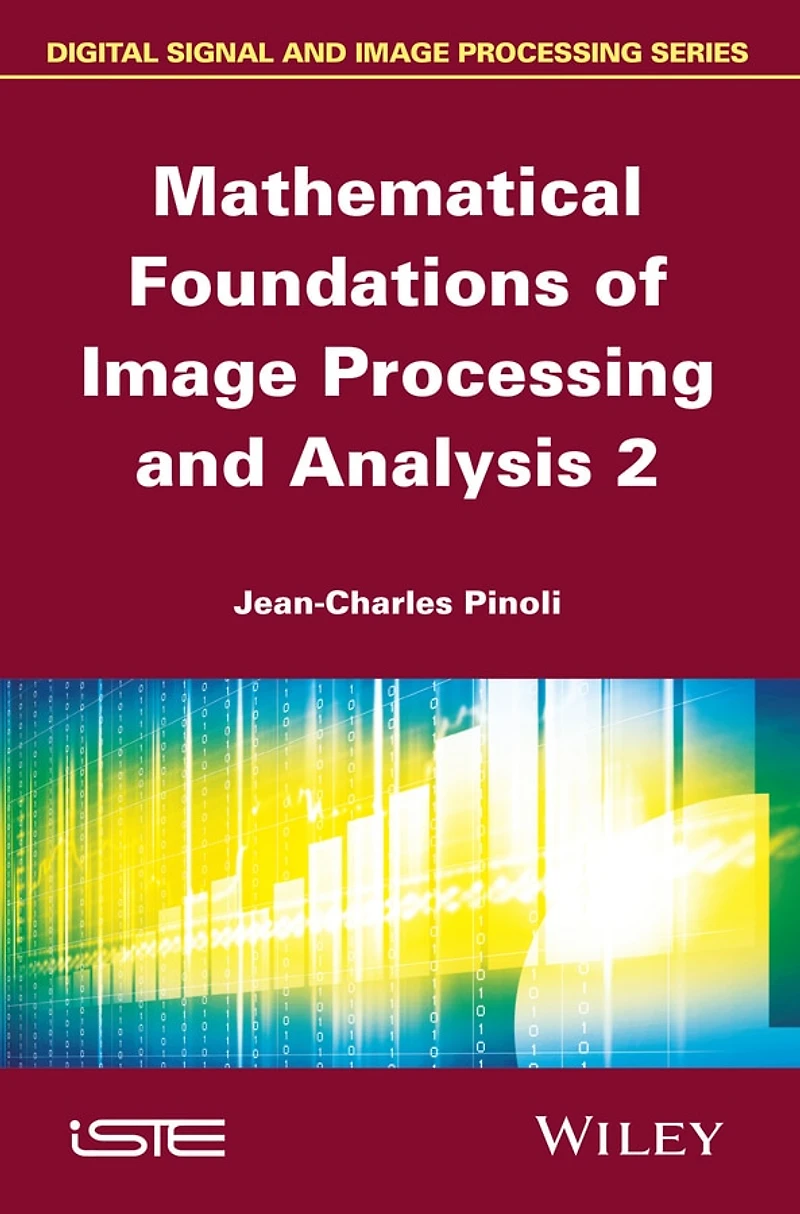
Mathematical Foundations of Image Processing and Analysis 2 in Grande Prairie, AB
Current price: $262.95
Coles
Mathematical Foundations of Image Processing and Analysis 2 in Grande Prairie, AB
Current price: $262.95
Loading Inventory...
Size: Hardcover (2014 A)
*Product information and pricing may vary - to confirm current pricing, availability, shipping, and return information please contact Coles. In the event of a pricing discrepancy, the retailer's price will apply.
Mathematical Imaging is currently a rapidly growing field in applied mathematics, with an increasing need for theoretical mathematics. This book, the second of two volumes, emphasizes the role of mathematics as a rigorous basis for imaging sciences. It provides a comprehensive and convenient overview of the key mathematical concepts, notions, tools and frameworks involved in the various fields of gray-tone and binary image processing and analysis, by proposing a large, but coherent, set of symbols and notations, a complete list of subjects and a detailed bibliography. It establishes a bridge between the pure and applied mathematical disciplines, and the processing and analysis of gray-tone and binary images. It is accessible to readers who have neither extensive mathematical training, nor peer knowledge in Image Processing and Analysis. It is a self-contained book focusing on the mathematical notions, concepts, operations, structures, and frameworks that are beyond or involved in Image Processing and Analysis. The notations are simplified as far as possible in order to be more explicative and consistent throughout the book and the mathematical aspects are systematically discussed in the image processing and analysis context, through practical examples or concrete illustrations. Conversely, the discussed applicative issues allow the role of mathematics to be highlighted. Written for a broad audience – students, mathematicians, image processing and analysis specialists, as well as other scientists and practitioners – the author hopes that readers will find their own way of using the book, thus providing a mathematical companion that can help mathematicians become more familiar with image processing and analysis, and likewise, image processing and image analysis scientists, researchers and engineers gain a deeper understanding of mathematical notions and concepts.
Mathematical Imaging is currently a rapidly growing field in applied mathematics, with an increasing need for theoretical mathematics. This book, the second of two volumes, emphasizes the role of mathematics as a rigorous basis for imaging sciences. It provides a comprehensive and convenient overview of the key mathematical concepts, notions, tools and frameworks involved in the various fields of gray-tone and binary image processing and analysis, by proposing a large, but coherent, set of symbols and notations, a complete list of subjects and a detailed bibliography. It establishes a bridge between the pure and applied mathematical disciplines, and the processing and analysis of gray-tone and binary images. It is accessible to readers who have neither extensive mathematical training, nor peer knowledge in Image Processing and Analysis. It is a self-contained book focusing on the mathematical notions, concepts, operations, structures, and frameworks that are beyond or involved in Image Processing and Analysis. The notations are simplified as far as possible in order to be more explicative and consistent throughout the book and the mathematical aspects are systematically discussed in the image processing and analysis context, through practical examples or concrete illustrations. Conversely, the discussed applicative issues allow the role of mathematics to be highlighted. Written for a broad audience – students, mathematicians, image processing and analysis specialists, as well as other scientists and practitioners – the author hopes that readers will find their own way of using the book, thus providing a mathematical companion that can help mathematicians become more familiar with image processing and analysis, and likewise, image processing and image analysis scientists, researchers and engineers gain a deeper understanding of mathematical notions and concepts.
You May Also Like










Find at Prairie Mall in Grande Prairie, AB
Visit at Prairie Mall in Grande Prairie, AB