


Gifting Made Simple
Give the Gift of ChoiceClick below to purchase a Prairie Mall eGift Card that can be used at participating retailers at Prairie Mall.Buy Gift CardHome
Massively Parallel Globalization: Explorations Self-Organization and World Politics
Coles
Loading Inventory...
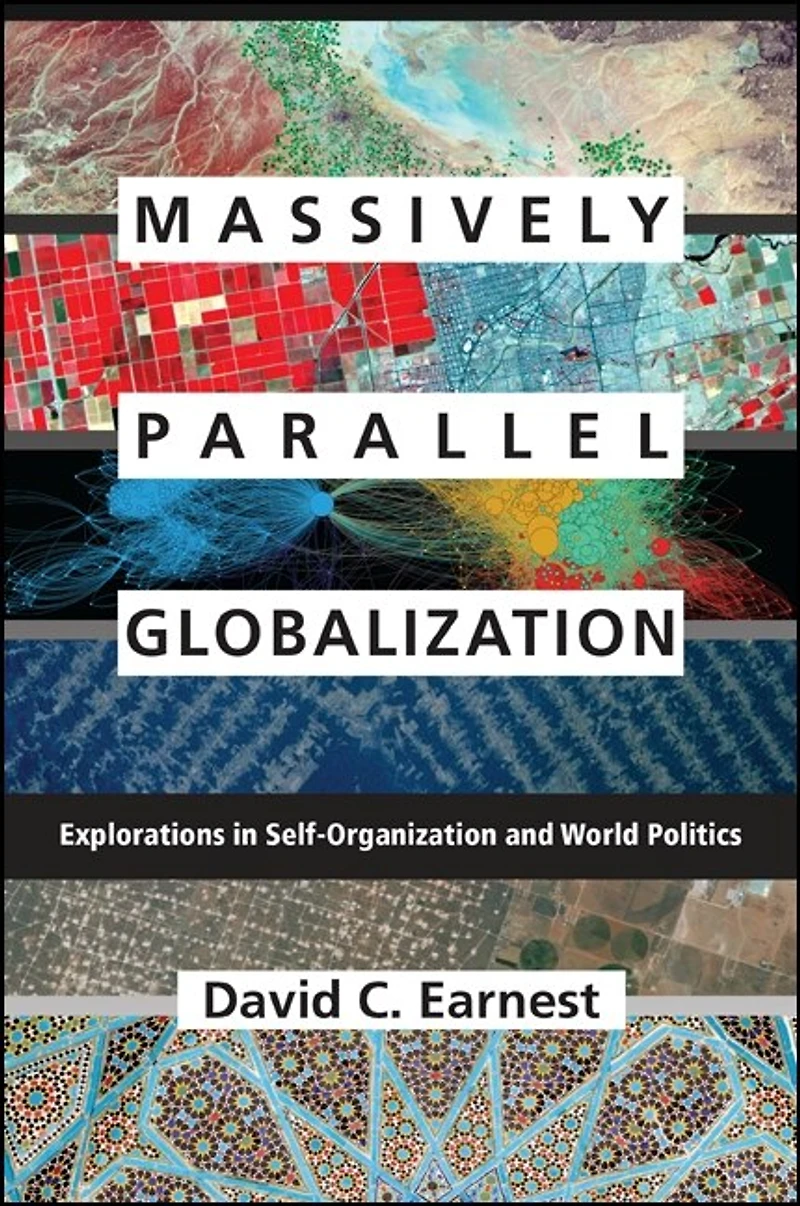
Massively Parallel Globalization: Explorations Self-Organization and World Politics in Grande Prairie, AB
Current price: $135.95
Coles
Massively Parallel Globalization: Explorations Self-Organization and World Politics in Grande Prairie, AB
Current price: $135.95
Loading Inventory...
Size: Hardcover
*Product information and pricing may vary - to confirm current pricing, availability, shipping, and return information please contact Coles. In the event of a pricing discrepancy, the retailer's price will apply.
Explores how individuals and groups adapt to the challenges of globalization.
In this era of globalization, people organize into fluid, adaptive networks to solve complex problems and provide resources that nation-states cannot. Examples include the Grameen Bank, mHealth, and the Ushahidi open source software project. Why do these networks succeed where nation-states fail? Only recently have social scientists developed tools to understand exactly how these complex networks self-organize, emerge, adapt, and solve collective problems. Three of these tools-agent-based modeling, social network analysis, and evolutionary computing-are converging in a field known as computational social science. In this provocative book, David C. Earnest discusses how computational social science helps us understand "massively parallel globalization." Using "explorations" of global systems ranging from fisheries to banking, Earnest illustrates the promise of computer models for explaining the surprises, cascades, and complexity that characterize global politics today. These examples of massively parallel globalization contrast sharply with the hierarchical and inflexible governmental bureaucracies that are poorly suited to solve many of today's transnational and global challenges.
Explores how individuals and groups adapt to the challenges of globalization.
In this era of globalization, people organize into fluid, adaptive networks to solve complex problems and provide resources that nation-states cannot. Examples include the Grameen Bank, mHealth, and the Ushahidi open source software project. Why do these networks succeed where nation-states fail? Only recently have social scientists developed tools to understand exactly how these complex networks self-organize, emerge, adapt, and solve collective problems. Three of these tools-agent-based modeling, social network analysis, and evolutionary computing-are converging in a field known as computational social science. In this provocative book, David C. Earnest discusses how computational social science helps us understand "massively parallel globalization." Using "explorations" of global systems ranging from fisheries to banking, Earnest illustrates the promise of computer models for explaining the surprises, cascades, and complexity that characterize global politics today. These examples of massively parallel globalization contrast sharply with the hierarchical and inflexible governmental bureaucracies that are poorly suited to solve many of today's transnational and global challenges.
You May Also Like


















Find at Prairie Mall in Grande Prairie, AB
Visit at Prairie Mall in Grande Prairie, AB