


Gifting Made Simple
Give the Gift of ChoiceClick below to purchase a Prairie Mall eGift Card that can be used at participating retailers at Prairie Mall.Buy Gift CardHome
Lingua Ex Machina: Media the Revitalization of Modern Hebrew
Coles
Loading Inventory...
Lingua Ex Machina: Media the Revitalization of Modern Hebrew in Grande Prairie, AB
Current price: $84.99
Coles
Lingua Ex Machina: Media the Revitalization of Modern Hebrew in Grande Prairie, AB
Current price: $84.99
Loading Inventory...
Size: Hardcover
*Product information and pricing may vary - to confirm current pricing, availability, shipping, and return information please contact Coles. In the event of a pricing discrepancy, the retailer's price will apply.
An investigation of the connections between the parallel rise of modern Hebrew and modern media
After lying dormant for two millennia as a mainly written language, Hebrew awoke from its literary slumber to become a living modern vernacular. This revitalization is unique and unprecedented in world history, and its success has been studied in fields from linguistics to cultural history. However, the role of modern technologies in mediating this revival has not yet been considered.
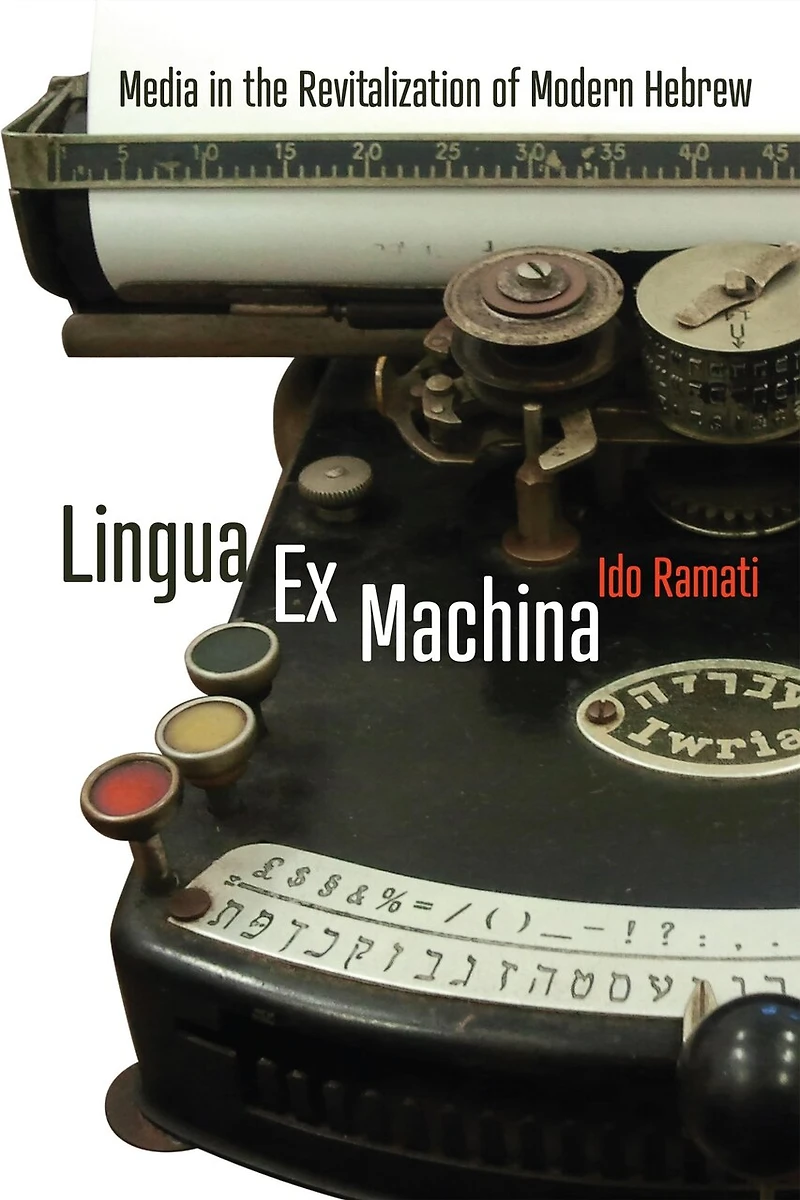
What happens when an ancient language meets modern technology? Lingua Ex Machina explores such a moment in its investigation of the role media technologies—including typewriters, phonographs, and computers—played in the revitalization and modernization of Hebrew from the end of the nineteenth century into the present day.
Ido Ramati examines the role sound recording technologies played in shaping the reemergence of modern Hebrew speech, reveals how the Hebraized typewriter pushed for the modernization of writing in Hebrew, and ultimately argues that these media—whose development and adoption paralleled the revitalization of Hebrew—were an active force in shaping the language as a modern communicative medium. This case study of Hebrew furnishes researchers with a rare opportunity to investigate the complex relation between language, its speakers, and technology at a decisive moment, and sheds new light on the study of media technologies and their theoretical, lingual, and social implications.
An investigation of the connections between the parallel rise of modern Hebrew and modern media
After lying dormant for two millennia as a mainly written language, Hebrew awoke from its literary slumber to become a living modern vernacular. This revitalization is unique and unprecedented in world history, and its success has been studied in fields from linguistics to cultural history. However, the role of modern technologies in mediating this revival has not yet been considered.
What happens when an ancient language meets modern technology? Lingua Ex Machina explores such a moment in its investigation of the role media technologies—including typewriters, phonographs, and computers—played in the revitalization and modernization of Hebrew from the end of the nineteenth century into the present day.
Ido Ramati examines the role sound recording technologies played in shaping the reemergence of modern Hebrew speech, reveals how the Hebraized typewriter pushed for the modernization of writing in Hebrew, and ultimately argues that these media—whose development and adoption paralleled the revitalization of Hebrew—were an active force in shaping the language as a modern communicative medium. This case study of Hebrew furnishes researchers with a rare opportunity to investigate the complex relation between language, its speakers, and technology at a decisive moment, and sheds new light on the study of media technologies and their theoretical, lingual, and social implications.
You May Also Like









Find at Prairie Mall in Grande Prairie, AB
Visit at Prairie Mall in Grande Prairie, AB