


Gifting Made Simple
Give the Gift of ChoiceClick below to purchase a Prairie Mall eGift Card that can be used at participating retailers at Prairie Mall.Buy Gift CardHome
Legislative Regulation of Railway Finance in England (Classic Reprint)
Coles
Loading Inventory...
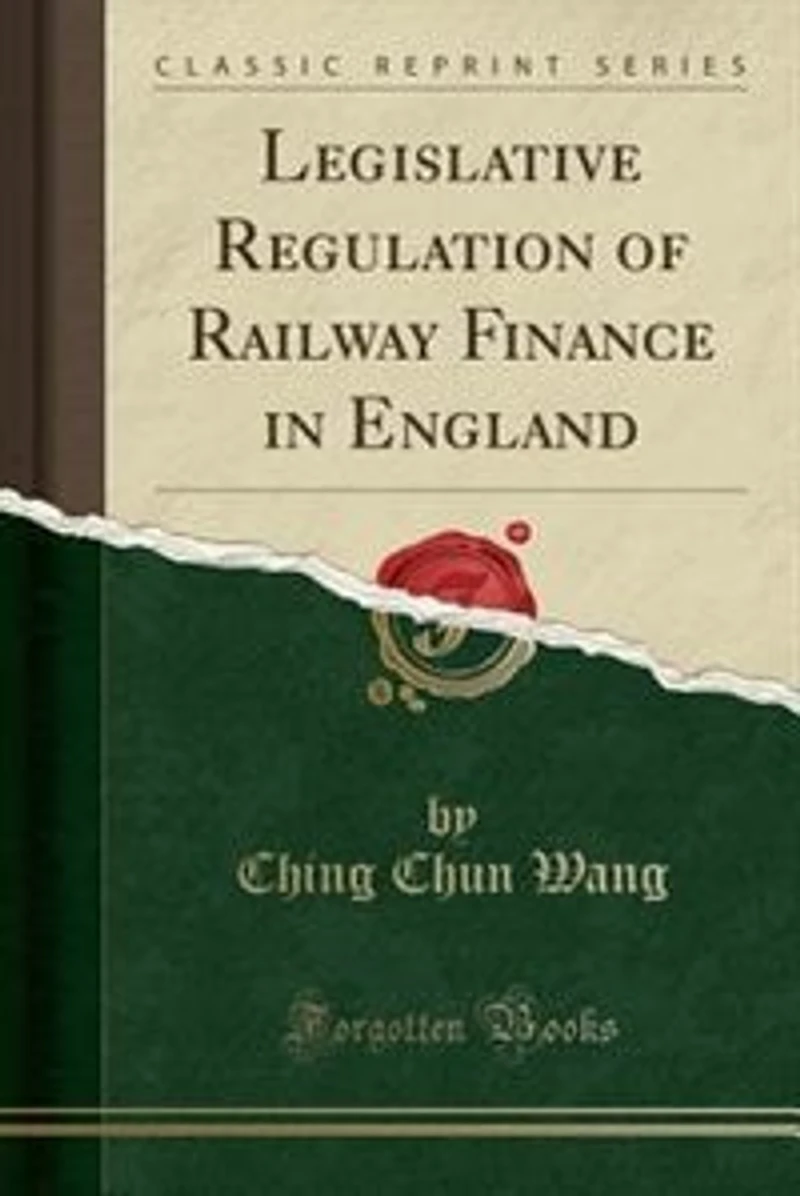
Legislative Regulation of Railway Finance in England (Classic Reprint) in Grande Prairie, AB
Current price: $10.57
Coles
Legislative Regulation of Railway Finance in England (Classic Reprint) in Grande Prairie, AB
Current price: $10.57
Loading Inventory...
Size: Paperback
*Product information and pricing may vary - to confirm current pricing, availability, shipping, and return information please contact Coles. In the event of a pricing discrepancy, the retailer's price will apply.
Excerpt from Legislative Regulation of Railway Finance in England The purpose of this study is to find out what rules the English Parliament has adopted from time to time for the regulation of railway finance, and to ascertain, as far as possible, why these rules were adopted, how they have been applied, and to what results they have led. In this study, the writer used the series of the so-called finance acts as the back bone. After having become familiar with the provisions in these finance acts and having classified these numerous provisions into a number of divisions, he then traced, as far as he could, the parliamentary debates upon these meas ures. He also endeavored to compare the original bills with the amended ones as well as to examine other contemporary bills which had anything to do with these finance bills, with the hope of understanding the position of the legislators. The writer also took care to examine the popular, the railway, as well as the expert financial writers' opinions prevailing during those years when these regulative measures were adopted or agitated. For this purpose the London Times, the Railway Times, and the Economist were most frequently consulted. In the following pages, the writer has endeavored first of all to trace the development of the general legislation on railway finance so that a fairly comprehensive idea of the nature of legislative regulation may be gained. Then follows a review of the efforts of parliament to secure proper restriction upon the issue of capital securities, attention being given, in the first place, to share capital. Although loan capital forms only about one-third of the total railway capital, the method of control has loomed large in the English system of regulation. Accordingly the questions of limitation upon the borrowing powers of the railway companies, the registration of railway securities, as well as the regulation of loan capital itself have been treated in some detail. The attitude of Parliament toward railway stock water ing is also shown. To the important features of control of ac counts, government audit, and inspection two chapters are de voted. About the Publisher Forgotten Books publishes hundreds of thousands of rare and classic books. Find more at www.forgottenbooks.com This book is a reproduction of an important historical work. Forgotten Books uses state-of-the-art technology to digitally reconstruct the work, preserving the original format whilst repairing imperfections present in the aged copy. In rare cases, an imperfection in the original, such as a blemish or missing page, may be replicated in our edition. We do, however, repair the vast majority of imperfections successfully; any imperfections that remain are intentionally left to preserve the state of such historical works.
Excerpt from Legislative Regulation of Railway Finance in England The purpose of this study is to find out what rules the English Parliament has adopted from time to time for the regulation of railway finance, and to ascertain, as far as possible, why these rules were adopted, how they have been applied, and to what results they have led. In this study, the writer used the series of the so-called finance acts as the back bone. After having become familiar with the provisions in these finance acts and having classified these numerous provisions into a number of divisions, he then traced, as far as he could, the parliamentary debates upon these meas ures. He also endeavored to compare the original bills with the amended ones as well as to examine other contemporary bills which had anything to do with these finance bills, with the hope of understanding the position of the legislators. The writer also took care to examine the popular, the railway, as well as the expert financial writers' opinions prevailing during those years when these regulative measures were adopted or agitated. For this purpose the London Times, the Railway Times, and the Economist were most frequently consulted. In the following pages, the writer has endeavored first of all to trace the development of the general legislation on railway finance so that a fairly comprehensive idea of the nature of legislative regulation may be gained. Then follows a review of the efforts of parliament to secure proper restriction upon the issue of capital securities, attention being given, in the first place, to share capital. Although loan capital forms only about one-third of the total railway capital, the method of control has loomed large in the English system of regulation. Accordingly the questions of limitation upon the borrowing powers of the railway companies, the registration of railway securities, as well as the regulation of loan capital itself have been treated in some detail. The attitude of Parliament toward railway stock water ing is also shown. To the important features of control of ac counts, government audit, and inspection two chapters are de voted. About the Publisher Forgotten Books publishes hundreds of thousands of rare and classic books. Find more at www.forgottenbooks.com This book is a reproduction of an important historical work. Forgotten Books uses state-of-the-art technology to digitally reconstruct the work, preserving the original format whilst repairing imperfections present in the aged copy. In rare cases, an imperfection in the original, such as a blemish or missing page, may be replicated in our edition. We do, however, repair the vast majority of imperfections successfully; any imperfections that remain are intentionally left to preserve the state of such historical works.
You May Also Like










Find at Prairie Mall in Grande Prairie, AB
Visit at Prairie Mall in Grande Prairie, AB