


Gifting Made Simple
Give the Gift of ChoiceClick below to purchase a Prairie Mall eGift Card that can be used at participating retailers at Prairie Mall.Buy Gift CardHome
Learning for Decision and Control in Stochastic Networks
Coles
Loading Inventory...
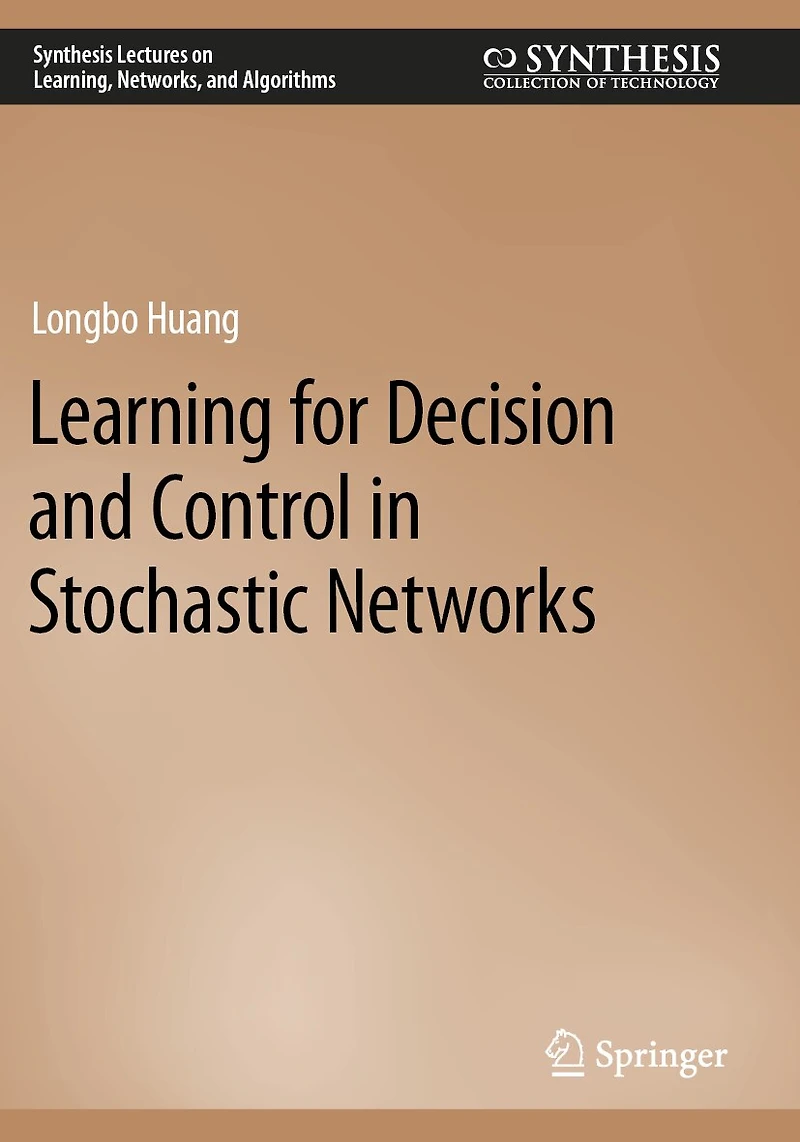
Learning for Decision and Control in Stochastic Networks in Grande Prairie, AB
Current price: $87.95
Coles
Learning for Decision and Control in Stochastic Networks in Grande Prairie, AB
Current price: $87.95
Loading Inventory...
Size: Paperback
*Product information and pricing may vary - to confirm current pricing, availability, shipping, and return information please contact Coles. In the event of a pricing discrepancy, the retailer's price will apply.
This book introduces the Learning-Augmented Network Optimization (LANO) paradigm, which interconnects network optimization with the emerging AI theory and algorithms and has been receiving a growing attention in network research. The authors present the topic based on a general stochastic network optimization model, and review several important theoretical tools that are widely adopted in network research, including convex optimization, the drift method, and mean-field analysis. The book then covers several popular learning-based methods, i.e., learning-augmented drift, multi-armed bandit and reinforcement learning, along with applications in networks where the techniques have been successfully applied. The authors also provide a discussion on potential future directions and challenges.
This book introduces the Learning-Augmented Network Optimization (LANO) paradigm, which interconnects network optimization with the emerging AI theory and algorithms and has been receiving a growing attention in network research. The authors present the topic based on a general stochastic network optimization model, and review several important theoretical tools that are widely adopted in network research, including convex optimization, the drift method, and mean-field analysis. The book then covers several popular learning-based methods, i.e., learning-augmented drift, multi-armed bandit and reinforcement learning, along with applications in networks where the techniques have been successfully applied. The authors also provide a discussion on potential future directions and challenges.
You May Also Like








Find at Prairie Mall in Grande Prairie, AB
Visit at Prairie Mall in Grande Prairie, AB