


Gifting Made Simple
Give the Gift of ChoiceClick below to purchase a Prairie Mall eGift Card that can be used at participating retailers at Prairie Mall.Buy Gift CardHome
Justification, Evaluation and Critique the Study of Organizations: Contributions from French Pragmatist Sociology
Coles
Loading Inventory...
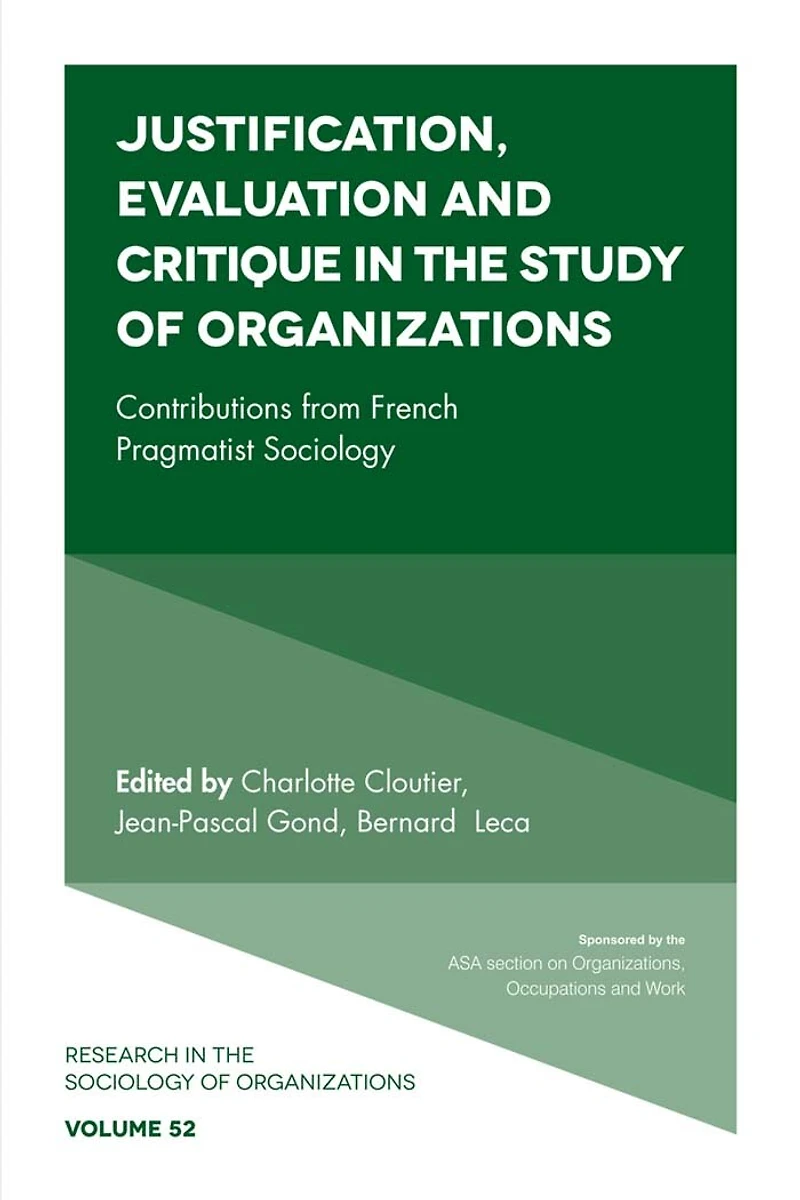
Justification, Evaluation and Critique the Study of Organizations: Contributions from French Pragmatist Sociology in Grande Prairie, AB
Current price: $247.99
Coles
Justification, Evaluation and Critique the Study of Organizations: Contributions from French Pragmatist Sociology in Grande Prairie, AB
Current price: $247.99
Loading Inventory...
Size: Hardcover
*Product information and pricing may vary - to confirm current pricing, availability, shipping, and return information please contact Coles. In the event of a pricing discrepancy, the retailer's price will apply.
The papers included in the volume explore how mobilizing Boltanski and Thévenot’s EW framework helps address questions regarding the premises and dynamics of agreement and disagreement in coordinated action, both within and across organizations, and by so doing, help advance our understanding of organizational processes more generally. The book is organized into four sections, each with contributions that address one of the four core theoretical objectives around which the volume is structured (1) to clarify how individuals manage the contradictions and compromises inherent to organizational pluralism; (2) to look at organizations critically by unpacking the roles of rhetoric and justification in the practice of critique; (3) to reconsider valuation and evaluation in organizations; and (4) to push the boundaries of the EW framework. These four objectives provide a scaffolding that helps further embed the framework in our contemporary thinking about organizations.
The papers included in the volume explore how mobilizing Boltanski and Thévenot’s EW framework helps address questions regarding the premises and dynamics of agreement and disagreement in coordinated action, both within and across organizations, and by so doing, help advance our understanding of organizational processes more generally. The book is organized into four sections, each with contributions that address one of the four core theoretical objectives around which the volume is structured (1) to clarify how individuals manage the contradictions and compromises inherent to organizational pluralism; (2) to look at organizations critically by unpacking the roles of rhetoric and justification in the practice of critique; (3) to reconsider valuation and evaluation in organizations; and (4) to push the boundaries of the EW framework. These four objectives provide a scaffolding that helps further embed the framework in our contemporary thinking about organizations.
You May Also Like










Find at Prairie Mall in Grande Prairie, AB
Visit at Prairie Mall in Grande Prairie, AB