


Gifting Made Simple
Give the Gift of ChoiceClick below to purchase a Prairie Mall eGift Card that can be used at participating retailers at Prairie Mall.Buy Gift CardHome
Jikaku: The Science of Self-Awareness
Coles
Loading Inventory...
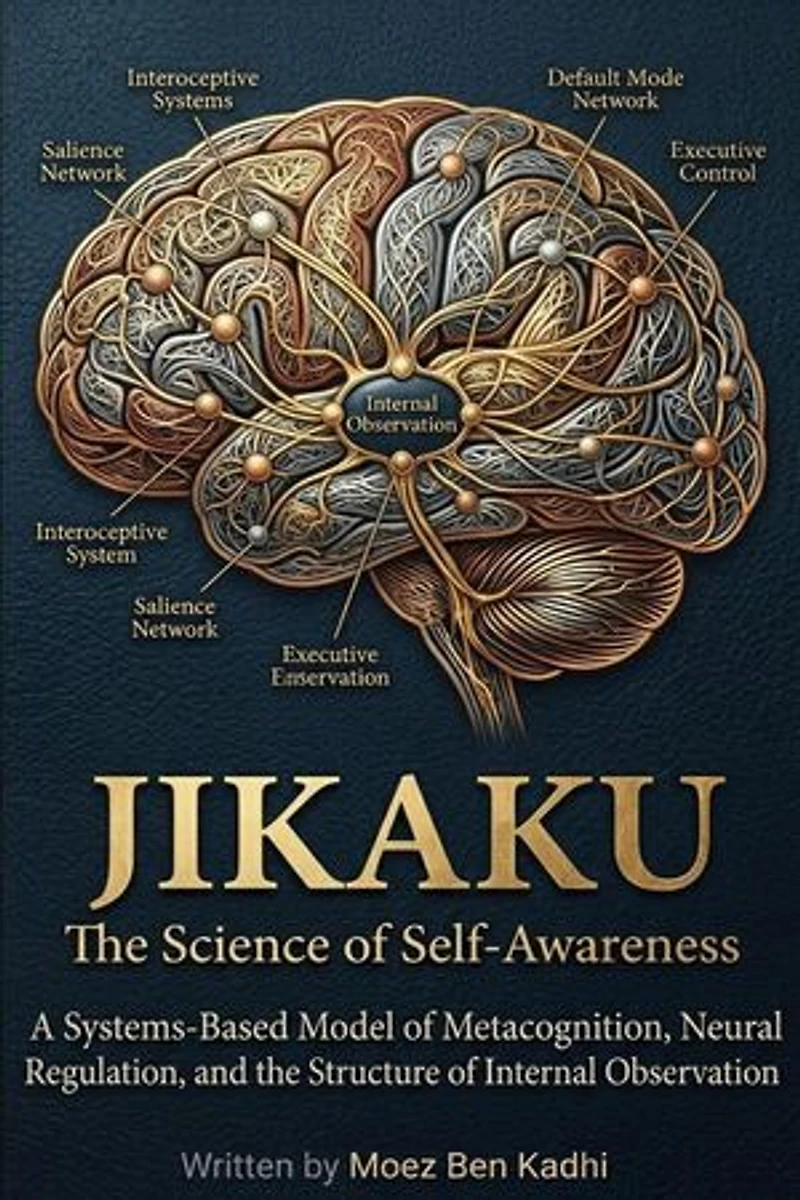
Jikaku: The Science of Self-Awareness in Grande Prairie, AB
Current price: $8.99
Coles
Jikaku: The Science of Self-Awareness in Grande Prairie, AB
Current price: $8.99
Loading Inventory...
Size: Kobo eBook
*Product information and pricing may vary - to confirm current pricing, availability, shipping, and return information please contact Coles. In the event of a pricing discrepancy, the retailer's price will apply.
The concept of self-awareness is frequently invoked yet rarely examined with precision. It appears across disciplines, philosophy, psychology, contemplative traditions, and neuroscience, often described as a desirable trait, a moral capacity, or a developmental milestone. However, in most treatments, it remains loosely defined, operationally inconsistent, and conceptually diluted. The present work begins from a different premise: that self-awareness is not a vague introspective ability, but a structured cognitive function that can be observed, analyzed, and systematically developed.
The term jikaku (自覚), drawn from Japanese, is commonly translated as "self-awareness" or "self-recognition." Yet such translations only partially capture its functional depth. Within its original context, jikaku does not refer merely to awareness of the self as an object, but to an active, ongoing recognition of one's internal state as it unfolds. It implies not only perception, but clarity; not only observation, but orientation. This distinction is central. The aim of this book is not to reinterpret jikaku culturally, but to reconstruct it as a scientific and clinical framework.
Modern cognitive science has produced detailed accounts of attention, perception, and decision-making, yet the mechanisms by which the mind becomes aware of its own processes remain comparatively underdeveloped. Metacognition, often defined as "thinking about thinking", offers an entry point, but in its current form it is insufficient. It tends to emphasize evaluation over perception, judgment over observation. Similarly, contemporary mindfulness research has demonstrated measurable effects on attention and emotional regulation, yet its theoretical integration with cognitive and neural models is still incomplete. The result is a fragmented landscape in which practices exist without unified mechanisms, and mechanisms are studied without practical coherence.
The concept of self-awareness is frequently invoked yet rarely examined with precision. It appears across disciplines, philosophy, psychology, contemplative traditions, and neuroscience, often described as a desirable trait, a moral capacity, or a developmental milestone. However, in most treatments, it remains loosely defined, operationally inconsistent, and conceptually diluted. The present work begins from a different premise: that self-awareness is not a vague introspective ability, but a structured cognitive function that can be observed, analyzed, and systematically developed.
The term jikaku (自覚), drawn from Japanese, is commonly translated as "self-awareness" or "self-recognition." Yet such translations only partially capture its functional depth. Within its original context, jikaku does not refer merely to awareness of the self as an object, but to an active, ongoing recognition of one's internal state as it unfolds. It implies not only perception, but clarity; not only observation, but orientation. This distinction is central. The aim of this book is not to reinterpret jikaku culturally, but to reconstruct it as a scientific and clinical framework.
Modern cognitive science has produced detailed accounts of attention, perception, and decision-making, yet the mechanisms by which the mind becomes aware of its own processes remain comparatively underdeveloped. Metacognition, often defined as "thinking about thinking", offers an entry point, but in its current form it is insufficient. It tends to emphasize evaluation over perception, judgment over observation. Similarly, contemporary mindfulness research has demonstrated measurable effects on attention and emotional regulation, yet its theoretical integration with cognitive and neural models is still incomplete. The result is a fragmented landscape in which practices exist without unified mechanisms, and mechanisms are studied without practical coherence.
You May Also Like


















Find at Prairie Mall in Grande Prairie, AB
Visit at Prairie Mall in Grande Prairie, AB