


Gifting Made Simple
Give the Gift of ChoiceClick below to purchase a Prairie Mall eGift Card that can be used at participating retailers at Prairie Mall.Buy Gift CardHome
Israel: Possible Military Strike Against Iran's Nuclear Facilities
Coles
Loading Inventory...
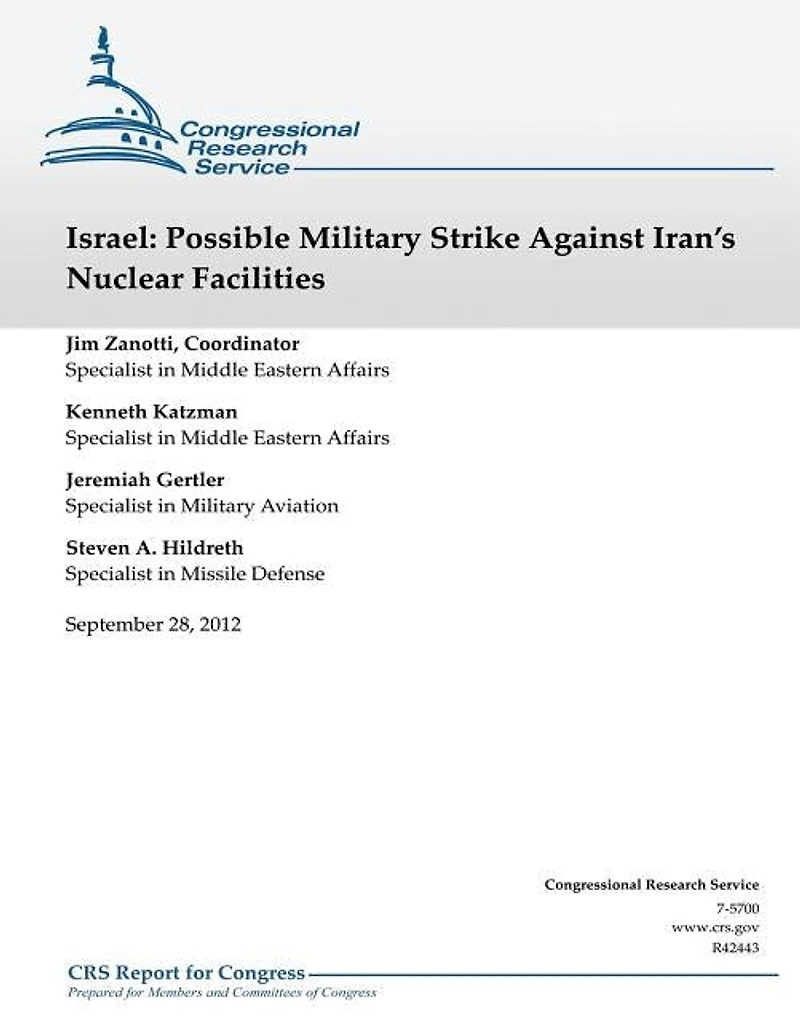
Israel: Possible Military Strike Against Iran's Nuclear Facilities in Grande Prairie, AB
Current price: $19.50
Coles
Israel: Possible Military Strike Against Iran's Nuclear Facilities in Grande Prairie, AB
Current price: $19.50
Loading Inventory...
Size: Paperback
*Product information and pricing may vary - to confirm current pricing, availability, shipping, and return information please contact Coles. In the event of a pricing discrepancy, the retailer's price will apply.
Several published reports indicate that top Israeli decisionmakers are seriously considering whether to order a military strike on Iran's nuclear facilities, and if so, when. Twice in Israel's history, it has conducted air strikes aimed at halting or delaying what Israeli policymakers believed to be efforts to acquire nuclear weapons by a Middle Eastern state-destroying Iraq's Osirak reactor in 1981 and a facility the Israelis identified as a reactor under construction in Syria in 2007. Today, Israeli officials generally view the prospect of a nuclear-armed Iran as an unacceptable threat to Israeli security-with some describing it as an existential threat. This report analyzes key factors that may influence Israeli political decisions relating to a possible strike on Iranian nuclear facilities. These include, but are not limited to, the views of and relationships among Israeli leaders; the views of the Israeli public; U.S., regional, and international stances and responses as perceived and anticipated by Israel; Israeli estimates of the potential effectiveness and risks of a possible strike; and responses Israeli leaders anticipate from Iran and Iranian-allied actors-including Hezbollah and Hamas-regionally and internationally.
Several published reports indicate that top Israeli decisionmakers are seriously considering whether to order a military strike on Iran's nuclear facilities, and if so, when. Twice in Israel's history, it has conducted air strikes aimed at halting or delaying what Israeli policymakers believed to be efforts to acquire nuclear weapons by a Middle Eastern state-destroying Iraq's Osirak reactor in 1981 and a facility the Israelis identified as a reactor under construction in Syria in 2007. Today, Israeli officials generally view the prospect of a nuclear-armed Iran as an unacceptable threat to Israeli security-with some describing it as an existential threat. This report analyzes key factors that may influence Israeli political decisions relating to a possible strike on Iranian nuclear facilities. These include, but are not limited to, the views of and relationships among Israeli leaders; the views of the Israeli public; U.S., regional, and international stances and responses as perceived and anticipated by Israel; Israeli estimates of the potential effectiveness and risks of a possible strike; and responses Israeli leaders anticipate from Iran and Iranian-allied actors-including Hezbollah and Hamas-regionally and internationally.
You May Also Like













Find at Prairie Mall in Grande Prairie, AB
Visit at Prairie Mall in Grande Prairie, AB