


Gifting Made Simple
Give the Gift of ChoiceClick below to purchase a Prairie Mall eGift Card that can be used at participating retailers at Prairie Mall.Buy Gift CardHome
Introductory Statistics for Business and Economics: Theory, Exercises Solutions
Coles
Loading Inventory...
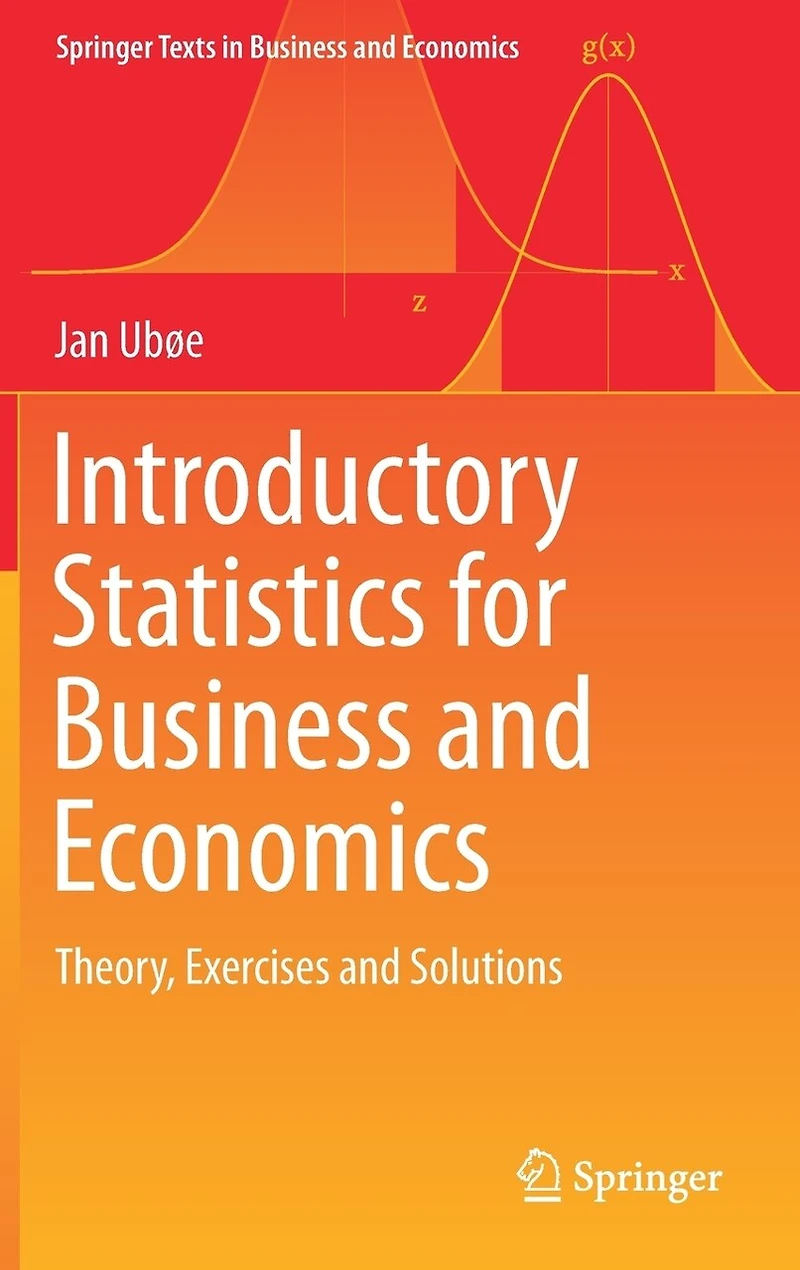
Introductory Statistics for Business and Economics: Theory, Exercises Solutions in Grande Prairie, AB
Current price: $145.95
Coles
Introductory Statistics for Business and Economics: Theory, Exercises Solutions in Grande Prairie, AB
Current price: $145.95
Loading Inventory...
Size: Hardcover
*Product information and pricing may vary - to confirm current pricing, availability, shipping, and return information please contact Coles. In the event of a pricing discrepancy, the retailer's price will apply.
This textbook discusses central statistical concepts and their use in business and economics. To endure the hardship of abstract statistical thinking, business and economics students need to see interesting applications at an early stage. Accordingly, the book predominantly focuses on exercises, several of which draw on simple applications of non-linear theory. The main body presents central ideas in a simple, straightforward manner; the exposition is concise, without sacrificing rigor. The book bridges the gap between theory and applications, with most exercises formulated in an economic context. Its simplicity of style makes the book suitable for students at any level, and every chapter starts out with simple problems. Several exercises, however, are more challenging, as they are devoted to the discussion of non-trivial economic problems where statistics plays a central part.
This textbook discusses central statistical concepts and their use in business and economics. To endure the hardship of abstract statistical thinking, business and economics students need to see interesting applications at an early stage. Accordingly, the book predominantly focuses on exercises, several of which draw on simple applications of non-linear theory. The main body presents central ideas in a simple, straightforward manner; the exposition is concise, without sacrificing rigor. The book bridges the gap between theory and applications, with most exercises formulated in an economic context. Its simplicity of style makes the book suitable for students at any level, and every chapter starts out with simple problems. Several exercises, however, are more challenging, as they are devoted to the discussion of non-trivial economic problems where statistics plays a central part.
You May Also Like










Find at Prairie Mall in Grande Prairie, AB
Visit at Prairie Mall in Grande Prairie, AB