


Gifting Made Simple
Give the Gift of ChoiceClick below to purchase a Prairie Mall eGift Card that can be used at participating retailers at Prairie Mall.Buy Gift CardHome
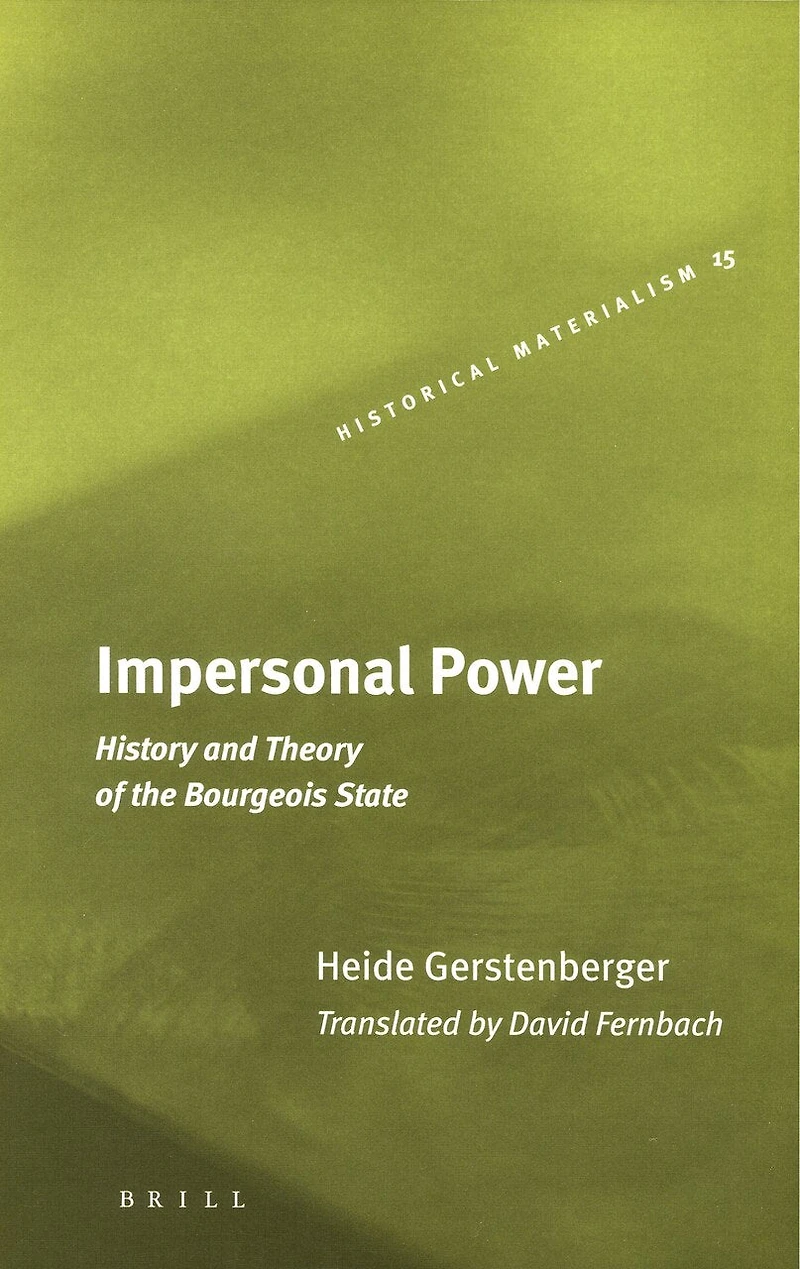
Impersonal Power: History and Theory of the Bourgeois State
Coles
Loading Inventory...
Impersonal Power: History and Theory of the Bourgeois State
By None
Current price: $407.99
Coles
Impersonal Power: History and Theory of the Bourgeois State
By None
Current price: $407.99
Loading Inventory...
Size: Hardcover
*Product information and pricing may vary - to confirm current pricing, availability, shipping, and return information please contact Coles. In the event of a pricing discrepancy, the retailer's price will apply.
The point of departure of Heide Gerstenberger’s path-breaking work is a critique of structural-functionalist theory of the state, in both its modernisation theory and materialist variants. Prof. Gerstenberger opposes to these a historical-theoretical explanation that proceeds from the long-term structuring effect of concrete social practice. This is elucidated by detailed investigation of the development of bourgeois state power in the two key examples of England and France. The different complexions that the bourgeois state assumed are presented as the results of processes of social and cultural formation, and thus irreducible to a simple function of capitalism. This approach culminates in the thesis that the bourgeois form of capitalist state power arose only where capitalist societies developed out of already rationalised structures of the Ancien Régime type.
The point of departure of Heide Gerstenberger’s path-breaking work is a critique of structural-functionalist theory of the state, in both its modernisation theory and materialist variants. Prof. Gerstenberger opposes to these a historical-theoretical explanation that proceeds from the long-term structuring effect of concrete social practice. This is elucidated by detailed investigation of the development of bourgeois state power in the two key examples of England and France. The different complexions that the bourgeois state assumed are presented as the results of processes of social and cultural formation, and thus irreducible to a simple function of capitalism. This approach culminates in the thesis that the bourgeois form of capitalist state power arose only where capitalist societies developed out of already rationalised structures of the Ancien Régime type.
You May Also Like









More About Coles at Prairie Mall
11801 100 St #104, Grande Prairie, AB T8V 3Y2, Canada
Find Coles at Prairie Mall in Grande Prairie, AB
Visit Coles at Prairie Mall in Grande Prairie, AB