


Gifting Made Simple
Give the Gift of ChoiceClick below to purchase a Prairie Mall eGift Card that can be used at participating retailers at Prairie Mall.Buy Gift CardHome
Ideology, Strategy and Party Change: Spatial Analyses of Post-War Election Programmes 19 Democracies
Coles
Loading Inventory...
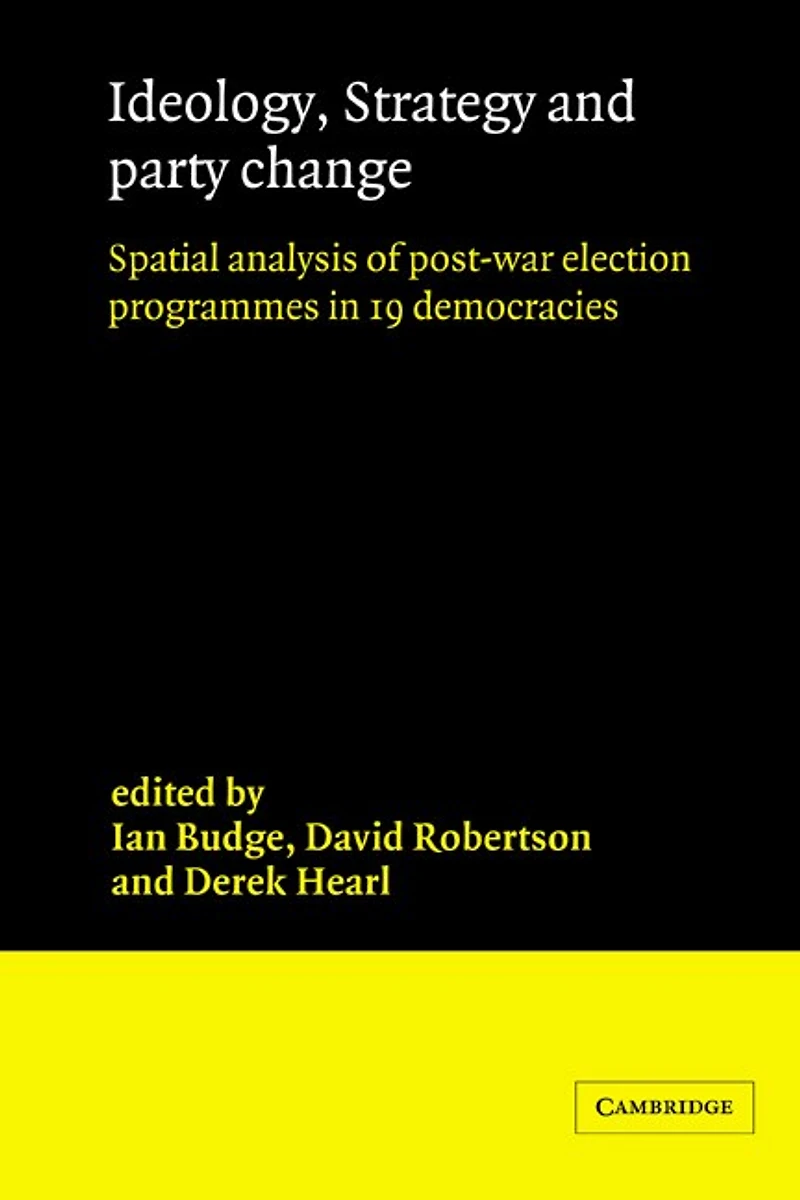
Ideology, Strategy and Party Change: Spatial Analyses of Post-War Election Programmes 19 Democracies in Grande Prairie, AB
Current price: $197.95
Coles
Ideology, Strategy and Party Change: Spatial Analyses of Post-War Election Programmes 19 Democracies in Grande Prairie, AB
Current price: $197.95
Loading Inventory...
Size: Hardcover
*Product information and pricing may vary - to confirm current pricing, availability, shipping, and return information please contact Coles. In the event of a pricing discrepancy, the retailer's price will apply.
The relevance of this book to central concerns of political and social science hardly needs emphasizing. Parties are the organizing force of democratic governments, giving coherence and direction to their policies and relating them to popular preferences. Election programmes are crucial to this role, providing electors with some insight into the policies they are voting for, and parties themselves with a starting point for their activity in government. Discussion begins with a comparative assessment of the impact of election pledges on government action. The book goes on to describe systematically the place of the programmes in the political process of nineteen democracies. It subjects them to detailed qualitative, quantitative and spatial analyses to answer such questions as: Who prepares election programmes and how? What is the nature of modern party divisions? Do they differ across countries? Is there indeed an 'end of ideology' or an intensification? Does the need to attract votes weaken old partisan attachments? Combining individual studies of each country with comparative analyses on a scale never previously undertaken, the book will interest country specialists and comparativists and prove indispensable to research on voting and party behaviour, coalition formation, ideology, and rational choice.
The relevance of this book to central concerns of political and social science hardly needs emphasizing. Parties are the organizing force of democratic governments, giving coherence and direction to their policies and relating them to popular preferences. Election programmes are crucial to this role, providing electors with some insight into the policies they are voting for, and parties themselves with a starting point for their activity in government. Discussion begins with a comparative assessment of the impact of election pledges on government action. The book goes on to describe systematically the place of the programmes in the political process of nineteen democracies. It subjects them to detailed qualitative, quantitative and spatial analyses to answer such questions as: Who prepares election programmes and how? What is the nature of modern party divisions? Do they differ across countries? Is there indeed an 'end of ideology' or an intensification? Does the need to attract votes weaken old partisan attachments? Combining individual studies of each country with comparative analyses on a scale never previously undertaken, the book will interest country specialists and comparativists and prove indispensable to research on voting and party behaviour, coalition formation, ideology, and rational choice.
You May Also Like



















Find at Prairie Mall in Grande Prairie, AB
Visit at Prairie Mall in Grande Prairie, AB